Water Mist Fire Suppression Systems: A Comprehensive Guide for Indian Facility Managers
In the evolving landscape of fire safety, the transition from traditional fire sprinkler systems to advanced technology is no longer a luxury—it is a necessity for high-stakes environments. As facility managers in sectors ranging from data centers in Bengaluru to pharmaceutical warehouses in Gujarat grapple with increasing regulatory pressure, water mist technology has emerged as a superior alternative. Safex established 1972, and throughout our five decades of experience, we have witnessed the shift from basic fire suppression to sophisticated, high-efficiency solutions that prioritize both asset protection and life safety.
Water mist systems are defined by their ability to discharge fine water droplets, typically less than 1,000 microns in diameter. This creates a massive surface area that absorbs heat rapidly while displacing oxygen, effectively suppressing fires with significantly less water than conventional systems. For Indian industries, where water conservation and collateral damage prevention are critical, water mist represents the cutting edge of fire engineering.
The Technical Superiority of Water Mist in Indian Infrastructure
The National Building Code (NBC 2016), specifically Part 4 on Fire and Life Safety, emphasizes the need for rapid response and minimal fire damage. Traditional sprinkler systems often cause significant water damage to sensitive electronics, archives, or high-value machinery. Water mist systems solve this by utilizing high-pressure pumps to atomize water, requiring up to 80-90% less water than traditional sprinklers.
From a compliance perspective, the design and installation of these systems must align with international and local standards. While IS 15683 governs the requirements for portable fire extinguishers, the broader fire suppression ecosystem in India is increasingly adopting NFPA 750 standards, which are often referenced in conjunction with NBC 2016 guidelines for high-hazard areas. By deploying water mist, facility managers are not only meeting the prescriptive requirements of the local fire department but are also proactively mitigating the risk of total loss due to water-induced secondary damage.
Compliance, Standards, and Regulatory Frameworks
Navigating the regulatory landscape in India requires a rigorous adherence to both local fire safety bylaws and national codes. When installing fire suppression systems, it is vital to understand that water mist is not a direct substitute for all scenarios; it is a specialized tool.
According to IS 2190, which provides the code of practice for selection, installation, and maintenance, the primary objective is the selection of the correct medium for the specific fire risk. Water mist is exceptionally effective for Class A (solid combustibles), Class B (flammable liquids), and Class C (electrical fires). In industrial settings, the installation must be documented and verified by a licensed fire safety contractor. Failure to comply with these standards can lead to severe legal liabilities, the invalidation of fire insurance policies, and, in the event of an incident, criminal negligence charges against facility management.
At Safex, we emphasize that a system is only as good as its maintenance schedule. Whether you are using traditional portable extinguishers or complex water mist systems, regular audits against IS 15683:2018 criteria are mandatory to ensure that the equipment is operational when the need arises.
Operational Efficacy: Why Water Mist Outperforms Alternatives
For facility managers comparing suppression mediums, the primary metrics are suppression speed, cleanup time, and environmental impact. Water mist excels in all three. In a server room, for instance, a traditional deluge system would destroy the hardware. A water mist system, however, suppresses the fire while the fine droplets evaporate into steam, leaving minimal residue on sensitive circuit boards.
When considering the cost, facility managers should look at the Total Cost of Ownership (TCO). While the initial capital expenditure for a high-pressure water mist system is higher than a standard sprinkler system, the long-term savings are significant. You avoid the high costs of water damage remediation and the potential for extended business interruption.
For smaller localized risks, portable extinguishers are still essential. A standard 2kg ABC powder extinguisher might cost between ₹2,000 and ₹5,000, whereas specialized water mist portable units can range from ₹8,000 to ₹15,000 depending on the capacity and pressure specifications. Investing in quality equipment is the first line of defense in any Indian industrial facility.
Emergency Response: The PASS Method
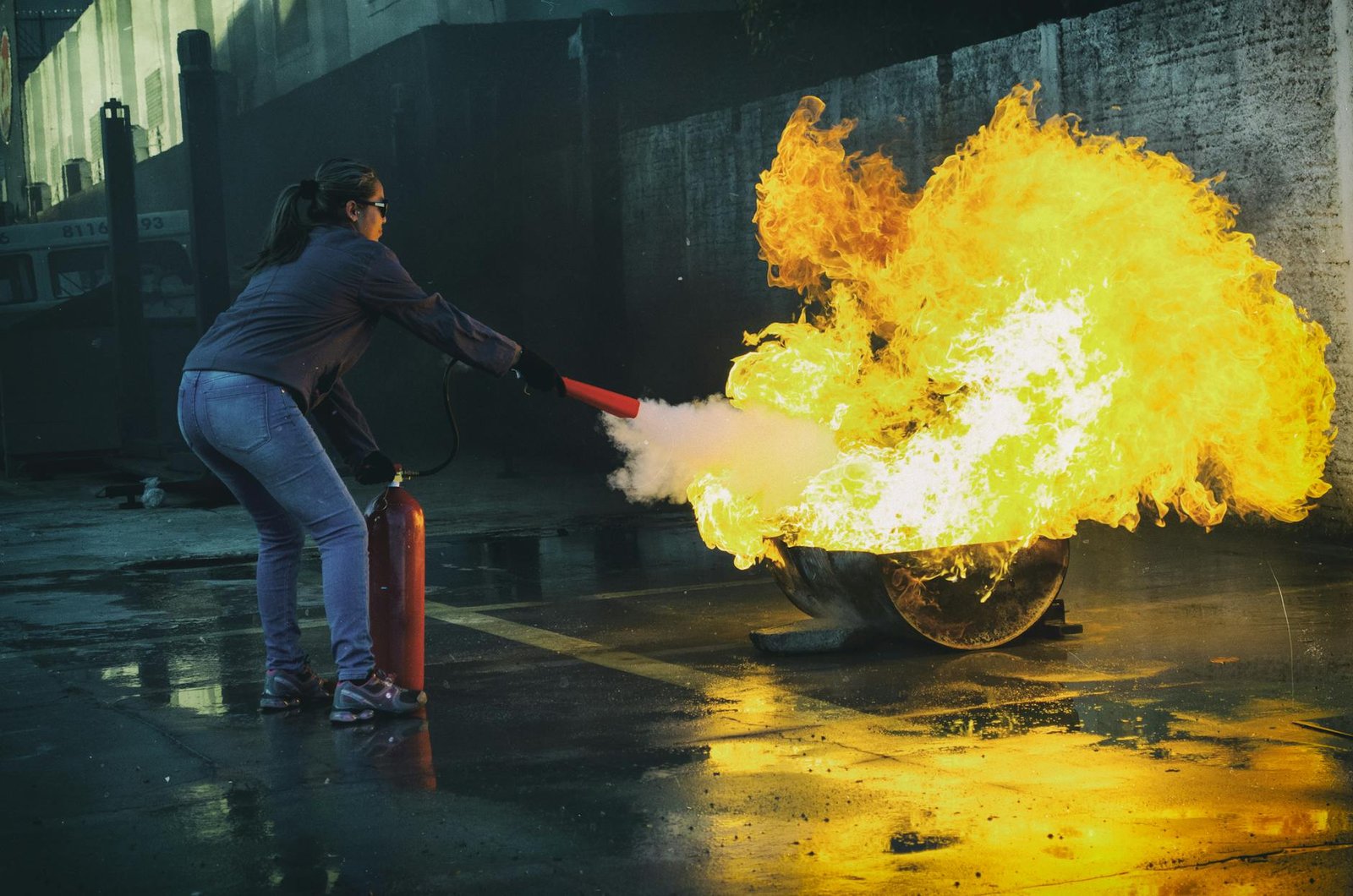
Regardless of the sophistication of your installed systems, human intervention remains a vital component of fire safety. Every employee, from the security guard to the floor manager, must be trained in the PASS method for operating portable fire extinguishers:
1. Pull: Pull the pin at the top of the extinguisher to break the tamper seal.
2. Aim: Aim the nozzle or hose at the base of the fire, not the flames.
3. Squeeze: Squeeze the handle to release the extinguishing agent.
4. Sweep: Sweep the nozzle from side to side at the base of the fire until it appears to be extinguished.
If you are using water mist extinguishers, the technique remains the same. However, ensure that the operator is trained to maintain a safe distance, as water mist systems can sometimes generate high-velocity output that may scatter debris if not handled correctly.
Comparison of Fire Suppression Systems
| Feature | Traditional Sprinklers | Water Mist Systems | Clean Agent (Gas) |
| Water Usage | High | Very Low | None |
| Damage Potential | High (Water Damage) | Low | None |
| Installation Cost | Low | High | Very High |
| Maintenance | Moderate | High | Moderate |
Frequently Asked Questions
Q: Is water mist safe to use on electrical fires?
A: Yes, water mist systems are highly effective for electrical fires because the fine droplets are non-conductive, provided the system is tested and approved for such use.
Q: How does the cost of water mist compare to other systems?
A: A typical industrial water mist installation can range from ₹5,00,000 to over ₹25,00,000 depending on the square footage. For portable units, expect to pay ₹8,000–₹15,000.
Q: Does NBC 2016 mandate the use of water mist?
A: The NBC 2016 provides guidelines for fire suppression based on hazard classification. While it does not mandate water mist specifically, it requires systems that minimize life and property risk, which often makes water mist the preferred compliant choice.
Q: How often should I inspect my fire suppression equipment?
A: Per IS 2190, inspections should be conducted at least once a month for portable units, and annual professional maintenance audits are required to remain compliant with local fire safety norms.
Q: What is the primary advantage of the PASS method?
A: The PASS method provides a simple, memorable sequence that minimizes panic during an emergency, ensuring that the fire extinguisher is used correctly to suppress the fire at its source.
Q: Is IS 15683 relevant to water mist systems?
A: IS 15683 specifically covers portable fire extinguishers. While water mist technology often falls under broader system standards, portable water mist extinguishers must still comply with the performance and safety testing protocols outlined in Indian Standards.
Resources
As an industry leader, Safex Fire Services India encourages facility managers to stay updated through verified channels:
1. Bureau of Indian Standards (BIS) Official Website for IS Code downloads.
2. National Building Code of India (NBC) 2016 Part 4 documentation.
Conclusion
Fire safety is an ongoing commitment to the protection of human life and industrial assets. As we have outlined, the adoption of advanced technologies like water mist, when combined with a strict adherence to IS 15683, IS 2190, and the NBC 2016, creates a robust defense against fire hazards. Safex established 1972, and our legacy is built on providing reliable, compliant, and cutting-edge fire safety solutions to the Indian market. By integrating these systems and ensuring regular staff training through methods like PASS, facility managers can significantly reduce their risk profile and ensure long-term operational continuity.