In the complex landscape of fire safety management across India, the selection of the correct extinguishing agent is not merely a operational choice—it is a legal and safety mandate. For facility managers, architects, and compliance officers, understanding the specific application of water-type fire extinguishers is critical. Whether you are managing a high-rise residential complex in Mumbai, an IT park in Bengaluru, or a manufacturing warehouse in the industrial belts of Gujarat, the National Building Code (NBC) 2016 provides the framework for life safety that every organization must adhere to.
At Safex Fire Services, we have been at the forefront of fire protection engineering since our inception in 1972. Over the past five decades, we have observed that while sophisticated fire suppression systems like gas-based clean agents and foam systems have their place, the humble water-type fire extinguisher remains the first line of defense for Class A fires. This guide aims to demystify the technical requirements, maintenance protocols, and operational standards for water-type extinguishers in the Indian context.
The Role of Water-Type Extinguishers in Class A Fire Suppression
Class A fires, which involve common combustible materials such as wood, paper, textiles, and certain plastics, are the most frequent type of fire incidents reported in commercial and residential buildings in India. Water-type extinguishers are specifically engineered to combat these fires through the principle of cooling. By absorbing the heat from the burning material, water lowers the temperature below the ignition point, effectively extinguishing the flames.
According to IS 15683:2018, which is the Indian Standard for portable fire extinguishers, water-type extinguishers (often referred to as water-expelled or water-CO2 type) must meet stringent performance criteria. These units use stored pressure or a gas cartridge to discharge water at a controlled rate. In high-occupancy environments, such as shopping malls or office buildings, the placement and availability of these units are dictated by the NBC 2016 Part 4, which outlines the required fire load calculations based on the building’s occupancy class.
For facility managers, the investment in high-quality, IS-marked equipment is a matter of both insurance compliance and moral responsibility. A standard 9-liter water-type extinguisher typically ranges from ₹2,500 to ₹4,500 depending on the construction material (mild steel or stainless steel) and the certification level. Investing in substandard, non-ISI equipment not only risks failure during a critical moment but also exposes the building owner to severe legal liability under local fire department bylaws and the Indian Penal Code if negligence is proven during an inspection or post-fire investigation.
Understanding IS 15683 and Regulatory Compliance
Compliance in India is not a suggestion; it is a regulatory requirement enforced by local fire services. IS 15683:2018 serves as the benchmark for the design, construction, and testing of portable fire extinguishers. When sourcing equipment, facility managers must ensure that every unit bears the ISI mark. This mark is your assurance that the extinguisher has undergone rigorous testing, including hydrostatic pressure tests, discharge time verification, and throw range measurements.
The installation and maintenance of these units are governed by IS 2190. This code of practice dictates that extinguishers must be placed in conspicuous locations, free from obstruction, and mounted at heights that are accessible to all occupants. In a typical office floor, you should expect to see water-type extinguishers placed in corridors, near exits, and in areas with high-density paper storage or furniture.
Failure to maintain these units according to IS 2190—such as neglecting the annual pressure check or failing to replace the water charge within the stipulated timeframe—can lead to the rejection of fire safety certificates (NOC) by local fire authorities. In many Indian states, the penalty for non-compliance with fire safety audits can result in the immediate sealing of the premises. Therefore, treat your fire safety equipment as a critical asset rather than a line item for cost-cutting.
Operational Protocol: The PASS Method
Having the right equipment is only half the battle. The efficacy of a water-type extinguisher is entirely dependent on the user’s ability to operate it under pressure. At Safex Fire Services, we conduct regular drills for our clients to ensure that staff members are familiar with the PASS method. This universal technique is the gold standard for operating portable extinguishers:
1. Pull: Pull the safety pin located at the top of the extinguisher. This action breaks the tamper seal and allows the operating handle to be compressed.
2. Aim: Aim the nozzle or hose at the base of the fire. Many novices make the mistake of aiming at the flames; however, water must be directed at the fuel source to be effective.
3. Squeeze: Squeeze the operating handle firmly. This releases the pressurized water from the cylinder.
4. Sweep: Sweep the nozzle from side to side at the base of the fire until the flames appear to be extinguished. Continue to monitor the area for any signs of re-ignition.
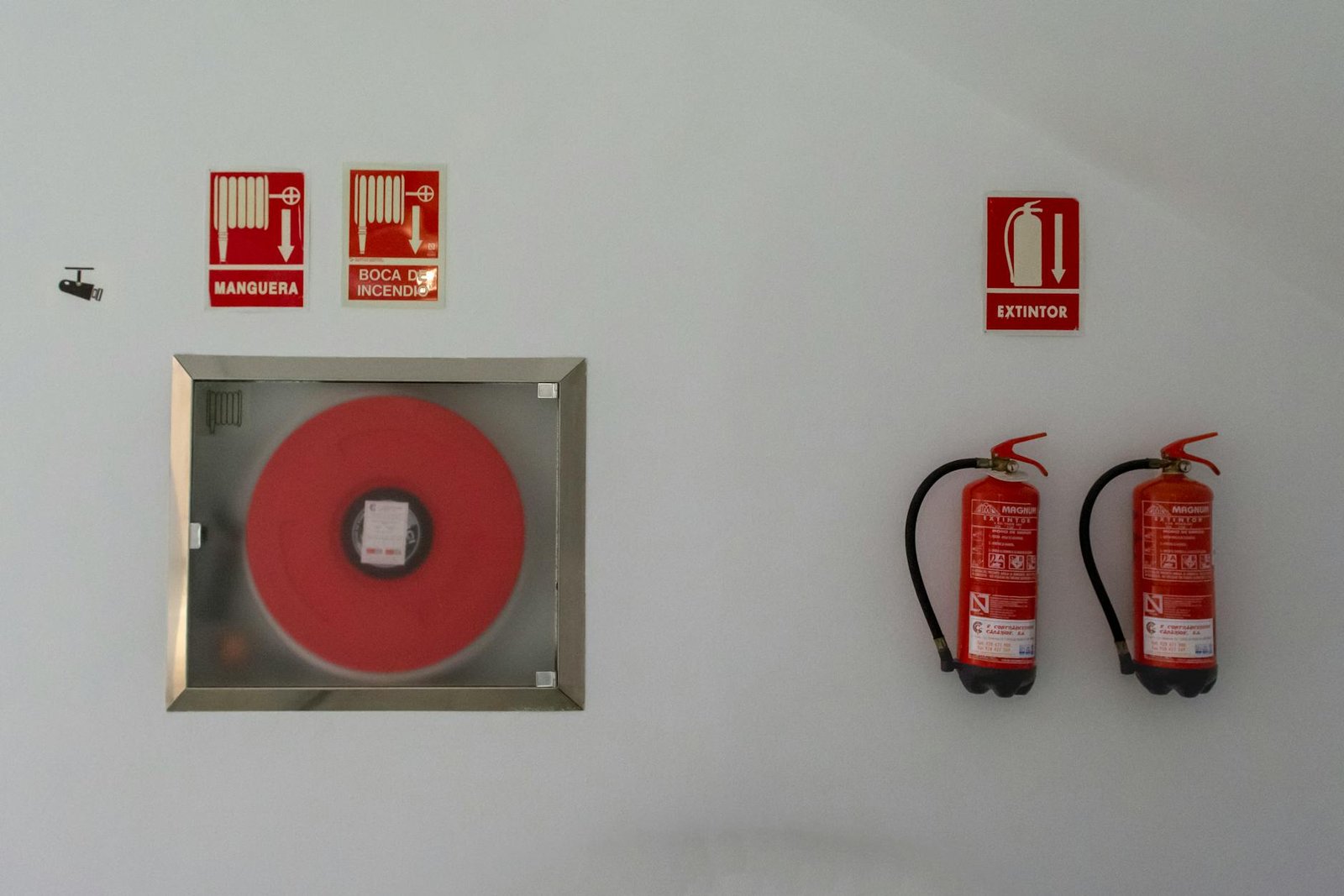
It is essential to remember that water-type extinguishers are strictly for Class A fires. They must never be used on electrical fires (Class C) or grease/liquid fires (Class B/D), as this can lead to electrocution or the spread of the fire. Clear, durable signage should be placed above every extinguisher station to remind occupants of these limitations.
Comparative Analysis: Fire Suppression Equipment
Choosing the right equipment for your facility requires a clear understanding of the fire classes. Below is a comparison of water-type extinguishers against other common suppression methods.
| Equipment Type | Suitable Fire Class | Primary Mechanism | Typical Price Range (India) |
| Water-Type (9L) | Class A (Solids) | Cooling | ₹2,500 – ₹4,500 |
| CO2 Extinguisher | Class B & C (Electrical) | Smothering | ₹3,500 – ₹8,000 |
| ABC Powder | Class A, B, C | Chemical Inhibition | ₹2,000 – ₹6,000 |
| Foam Extinguisher | Class A & B | Smothering/Cooling | ₹3,000 – ₹7,500 |
Note: Prices are estimates based on standard industrial-grade units available in the Indian market as of 2024. Prices vary based on brand, capacity, and bulk order discounts.
Strategic Placement and Maintenance for Indian Environments
In the Indian climate, environmental factors play a significant role in the degradation of fire safety equipment. High humidity in coastal cities like Chennai or Mumbai, and extreme heat in northern regions, can accelerate the corrosion of mild steel cylinders. This is why IS 2190 mandates regular inspections.
For facilities in dusty or industrial environments, such as manufacturing units in Gujarat or warehouses near Delhi, the valves and nozzles of water-type extinguishers are prone to clogging. A monthly visual inspection should be performed by the facility manager to ensure that the pressure gauge is in the green zone, the nozzle is clear, and the safety pin is intact.
Furthermore, the “annual maintenance contract” (AMC) is not a luxury; it is a necessity. A professional fire service provider will perform a discharge test, check the internal condition of the cylinder, and ensure that the water charge is replaced according to the manufacturer’s instructions. When you engage with a service provider, ensure they provide a detailed service report that can be presented to fire safety inspectors during audits. Documentation is the bedrock of compliance.
Addressing Common Concerns: Frequently Asked Questions
Q: Why is it dangerous to use a water-type extinguisher on an electrical fire?
A: Water is an excellent conductor of electricity. If you spray water on an energized electrical panel or appliance, the current can travel through the stream of water back to the user, causing severe or fatal electric shock. Always use CO2 or dry chemical powder for electrical hazards.
Q: How often must I replace the water in my extinguishers?
A: According to IS 2190, the extinguishing medium in water-type extinguishers should generally be replaced during the annual maintenance schedule. Always follow the manufacturer’s specific guidelines regarding the shelf life of the chemical additives used in the water charge.
Q: What is the significance of the PASS method in a professional setting?
A: The PASS method (Pull, Aim, Squeeze, Sweep) provides a standardized, easy-to-remember sequence that reduces panic during a fire emergency. Implementing this in your facility’s fire drill training ensures that employees act instinctively when seconds matter.
Q: Are there any tax benefits or insurance incentives for maintaining high-quality fire safety equipment?
A: While tax benefits vary by state, most insurance providers in India offer significant discounts on premiums for properties that maintain valid fire safety certifications and use ISI-certified equipment. Keeping your systems compliant is a direct cost-saving measure for your facility insurance.
Q: What happens if I use non-ISI marked extinguishers in my office?
A: Using non-ISI marked equipment is a violation of the NBC 2016 and local fire safety codes. In the event of an inspection, you may be fined, or your occupancy certificate could be revoked. More importantly, non-certified equipment is prone to failure, which could lead to catastrophic loss of life and property.
Q: How do I calculate the number of water-type extinguishers required for my floor?
A: The number of extinguishers is determined by the “fire load” of your space, which is calculated based on the total area, the type of materials stored, and the occupancy classification defined in the National Building Code (NBC) 2016. It is highly recommended to have a professional fire safety audit conducted to determine the exact number, spacing, and placement required for your specific site.
Conclusion
Fire safety is an ongoing commitment to the protection of life and assets. As we have discussed, the water-type extinguisher is a vital tool in the Indian fire safety arsenal, provided it is selected, installed, and maintained according to the rigorous standards set by IS 15683 and the National Building Code.
At Safex Fire Services, established in 1972, we have seen firsthand how proper preparation changes the outcome of an emergency. By adhering to the guidelines provided in this guide and ensuring that your facility management team is well-versed in the PASS method, you are taking proactive steps toward a safer workplace. Remember, compliance is not just about avoiding fines; it is about ensuring that when an emergency arises, your equipment performs exactly as it was designed to.
For further inquiries regarding the selection of fire safety equipment or to schedule a professional audit of your facility, please consult the resources below.
Resources
For more information on fire safety standards and compliance in India, please refer to the following official resources: