
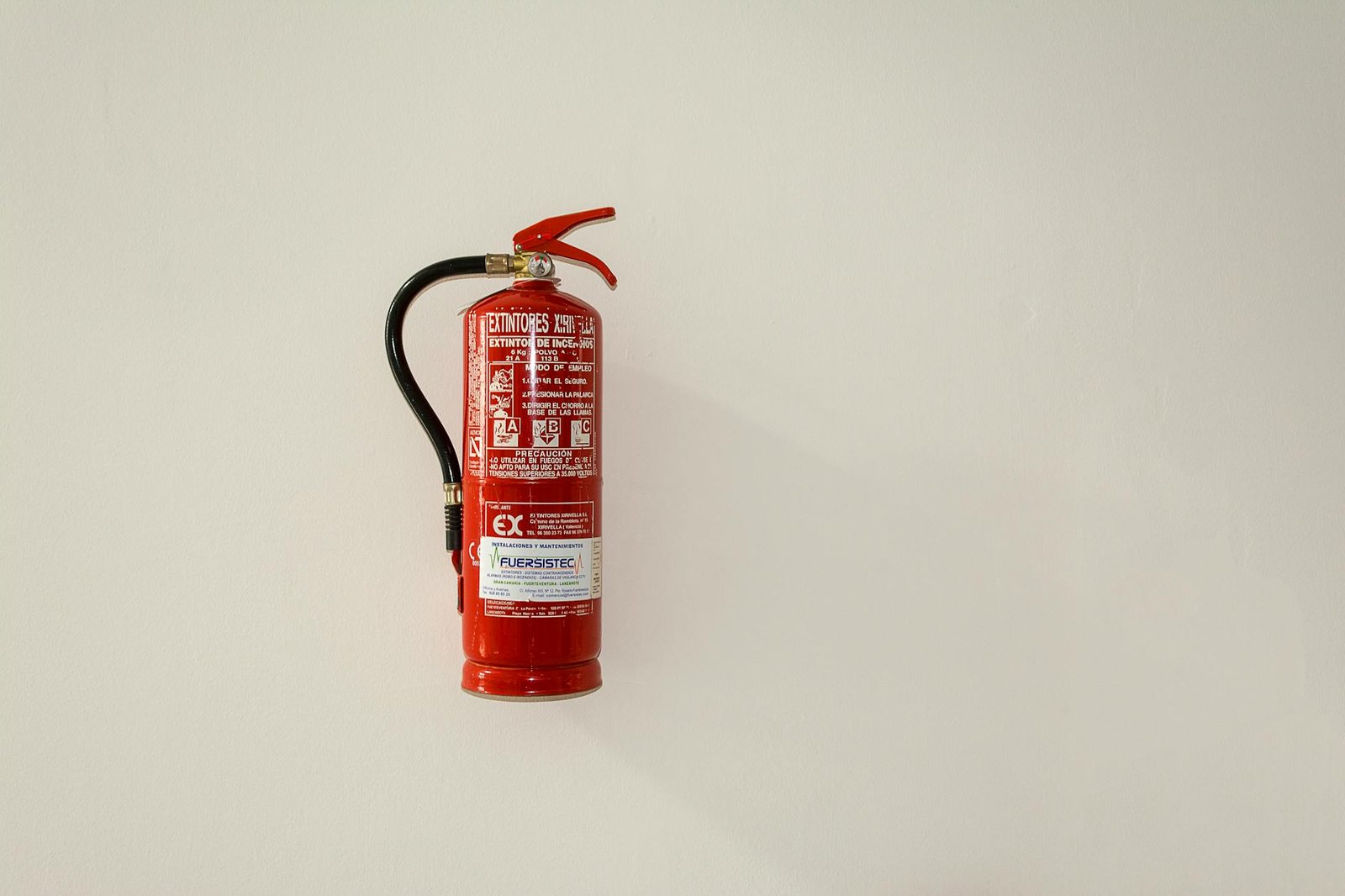
Fire safety is not merely a regulatory burden for building owners and facility managers in India; it is a fundamental pillar of operational continuity and human safety. Among the various types of fire suppression tools available, the water fire extinguisher remains a staple in commercial, industrial, and residential settings. While modern fire suppression technology has evolved to include clean agents and specialized chemical powders, the reliability of water fire extinguishers for Class A fires remains undisputed.
At Safex Fire Services, we have been at the forefront of the Indian fire safety industry since our inception in 1972. Over the past five decades, we have witnessed the evolution of building codes and the increasing complexity of industrial fire risks. This guide aims to provide a comprehensive analysis of water fire extinguishers, their compliance with Indian Standards (IS), and their role within the broader framework of the National Building Code (NBC) of India.
Understanding the Role of Water Extinguishers in Class A Fires
Water fire extinguishers are specifically designed for Class A fires, which involve common combustible materials such as wood, paper, textiles, and certain plastics. In the Indian context, where warehouses, office complexes, and housing societies frequently house high quantities of paper and fabric, these extinguishers serve as the first line of defense.
The mechanism of a water extinguisher is simple yet effective: it works by cooling the burning material, thereby removing the heat element of the fire triangle. According to IS 15683:2018, which governs the specification for portable fire extinguishers, water-based units must meet stringent manufacturing and performance criteria to be considered compliant for use in India.
For facility managers in high-density areas like the IT parks of Bengaluru or the textile hubs of Gujarat, the strategic placement of water extinguishers is non-negotiable. NBC 2016 Part 4 (Fire and Life Safety) mandates specific placement intervals and travel distances for extinguishers. Failure to adhere to these standards can result in severe liability, increased insurance premiums, and, most importantly, compromised safety during a fire event. A standard 9-liter water extinguisher is typically the baseline requirement for most office environments, providing a sufficient discharge duration to control incipient-stage fires.
Compliance and Technical Specifications: IS 15683 and NBC 2016
Compliance in the Indian fire safety landscape is governed by the Bureau of Indian Standards (BIS). When procuring fire safety equipment, decision-makers must ensure that every unit bears the ISI mark. IS 15683:2018 is the primary standard for portable fire extinguishers, outlining the requirements for construction, testing, and performance.
When you invest in equipment that meets IS 15683, you are ensuring that the extinguisher has undergone rigorous testing for pressure retention, discharge range, and durability. For instance, the cylinder material must be capable of withstanding the test pressure specified in the standard to prevent ruptures during emergency use.
Furthermore, the National Building Code (NBC) 2016 provides the overarching guidelines for fire protection systems in buildings. NBC 2016 emphasizes that while water extinguishers are essential, they must never be used on electrical fires (Class C) or fires involving flammable liquids (Class B). Using water on an electrical fire poses a severe risk of electrocution, while using it on flammable liquids can cause the fire to spread rapidly. Therefore, training staff to identify the fire class is as critical as the installation of the equipment itself.
In terms of market pricing, the cost of compliance is relatively modest compared to the potential loss of life and property. A standard 9-liter water-type fire extinguisher typically ranges from ₹2,000 to ₹4,500, depending on the brand and specific certification features. Investing in high-quality, ISI-certified hardware is a cost-effective way to ensure long-term compliance and reliability.
Operational Proficiency: The PASS Method
Having the right equipment is only half the battle. The efficacy of a water fire extinguisher in a real-world scenario depends entirely on the operator’s ability to use it correctly. At Safex Fire Services, we emphasize the universal PASS method for all personnel training:
1. Pull: Pull the safety pin located at the top of the extinguisher. This breaks the tamper seal and allows the handle to be squeezed.
2. Aim: Aim the nozzle or hose at the base of the fire, not the flames themselves. Aiming at the flames will only disperse the fire and render the extinguishing agent ineffective.
3. Squeeze: Squeeze the operating lever slowly and evenly to release the pressurized water.
4. Sweep: Sweep the nozzle from side to side at the base of the fire until the flames appear to be extinguished. Continue to monitor the area for re-ignition.
This method should be part of the standard operating procedure (SOP) for every facility. Regular drills are essential. In an industrial environment, such as a manufacturing plant, employees should be trained to perform these steps under pressure. The psychological element of fighting a fire cannot be replicated in a manual; therefore, hands-on training using dummy extinguishers or controlled fire scenarios is highly recommended.
Maintenance and Lifecycle Management (IS 2190)
The installation of an extinguisher is not a “set and forget” activity. IS 2190, the code of practice for the selection, installation, and maintenance of portable fire extinguishers, dictates that these units must be inspected monthly and serviced annually by qualified professionals.
During a maintenance check, several factors are evaluated:
For facility managers, keeping a detailed logbook of these inspections is a requirement for fire safety audits conducted by local fire departments. Neglecting maintenance can lead to the “failure-to-operate” scenario, where an extinguisher is present but fails to discharge when needed. Given that a basic service visit costs between ₹500 and ₹1,500 per unit, it is a small price to pay for ensuring that your safety infrastructure is functional.
Comparison of Fire Extinguisher Types
Choosing the right equipment depends on the nature of the fire hazard. While water extinguishers are excellent for Class A fires, they are insufficient for modern, complex environments containing sensitive electronics or chemicals.
| Feature | Water Extinguisher | Dry Chemical Powder (DCP) | CO2 Extinguisher |
| Primary Use | Class A (Solids) | Class A, B, C (Multi-purpose) | Class B, C (Electrical) |
| Cooling Effect | High | Low | Low |
| Residue | Minimal | High (Powder) | None |
| Safety on Electrical | Dangerous | Safe (Non-conductive) | Safe (Non-conductive) |
| Typical Cost | ₹2,000 – ₹4,500 | ₹1,500 – ₹6,000 | ₹3,000 – ₹8,000 |
As shown in the table above, the water extinguisher is specialized. In an office with a high density of computers and server rooms, a water extinguisher should be accompanied by CO2 or clean-agent units to address electrical risks. Relying solely on water in such environments is a violation of safety best practices.
Strategic Placement and Capacity Planning
Planning the placement of water extinguishers involves analyzing the “travel distance” as defined by the National Building Code. For ordinary hazard occupancies, the travel distance to an extinguisher should not exceed 15 to 20 meters. This ensures that an occupant can reach an extinguisher within seconds of discovering a fire.
In large warehouses, consider mounting extinguishers on columns or designated stands that are clearly visible and unobstructed by stock or machinery. In India, environmental factors such as humidity and high temperatures can accelerate the degradation of fire equipment. If your facility is located in a coastal region or a high-heat industrial zone, more frequent inspections (perhaps bi-annually) are advisable, even if the minimum legal requirement is annual.
Furthermore, ensure that the signage for these units is reflective and placed at a height that is visible even in smoky conditions. The cost of proper signage and mounting brackets is often overlooked but is essential for compliance. A high-quality wall bracket can cost between ₹200 and ₹500, a minor investment compared to the risk of an extinguisher being misplaced or buried under clutter during a crisis.
FAQ: Common Concerns for Facility Managers
Q: Can I use a water fire extinguisher on an electrical panel?
A: Absolutely not. Water is a conductor of electricity. Using a water extinguisher on an electrical fire creates an immediate risk of fatal electric shock. Use a CO2 or dry chemical powder (DCP) extinguisher for electrical fires.
Q: How often must I replace my water extinguisher?
A: While they do not have a fixed “expiry date” in the way food does, IS 2190 suggests that cylinders should be discarded or decommissioned after a certain number of years, typically 10 to 12, depending on their physical condition and the results of periodic hydrostatic testing.
Q: What is the price range for a standard 9-liter water extinguisher?
A: In the Indian market, a high-quality, ISI-marked 9-liter water fire extinguisher typically costs between ₹2,000 and ₹4,500. Prices vary based on the manufacturer, the quality of the nozzle assembly, and the finish of the cylinder.
Q: Does the PASS method apply to all fire extinguishers?
A: The PASS method (Pull, Aim, Squeeze, Sweep) is the standard procedure for almost all portable fire extinguishers, including water, foam, and powder types. It is the most effective way to ensure the agent is applied correctly.
Q: What does “Class A” mean in the context of fire safety?
A: Class A fires involve ordinary combustible materials such as wood, paper, cloth, rubber, and many plastics. Water is the most effective cooling agent for these types of fires.
Q: Where can I find the specific requirements for my building type?
A: You should refer to the National Building Code (NBC) 2016, specifically Part 4, which covers Fire and Life Safety. Additionally, check with your local municipal fire department for any state-specific amendments or local bylaws that may be stricter than the national guidelines.
Conclusion
Fire safety is an ongoing commitment to the protection of lives and assets. As a professional, your responsibility is to ensure that your facility is not only compliant with IS 15683 and NBC 2016 but is also prepared for real-world emergencies through proper training and maintenance.
Water fire extinguishers remain a fundamental component of a robust fire safety strategy. By understanding their limitations, ensuring they are serviced according to IS 2190, and training your staff in the PASS method, you create a safer environment for everyone. Since Safex established 1972, we have remained dedicated to providing the expertise and equipment necessary to keep Indian businesses safe. If you have questions regarding your current fire safety setup or require an audit of your existing equipment, we are here to support your mission of safety and compliance.
Resources
For further information on fire safety standards and regulatory guidelines in India, please refer to the following resources: