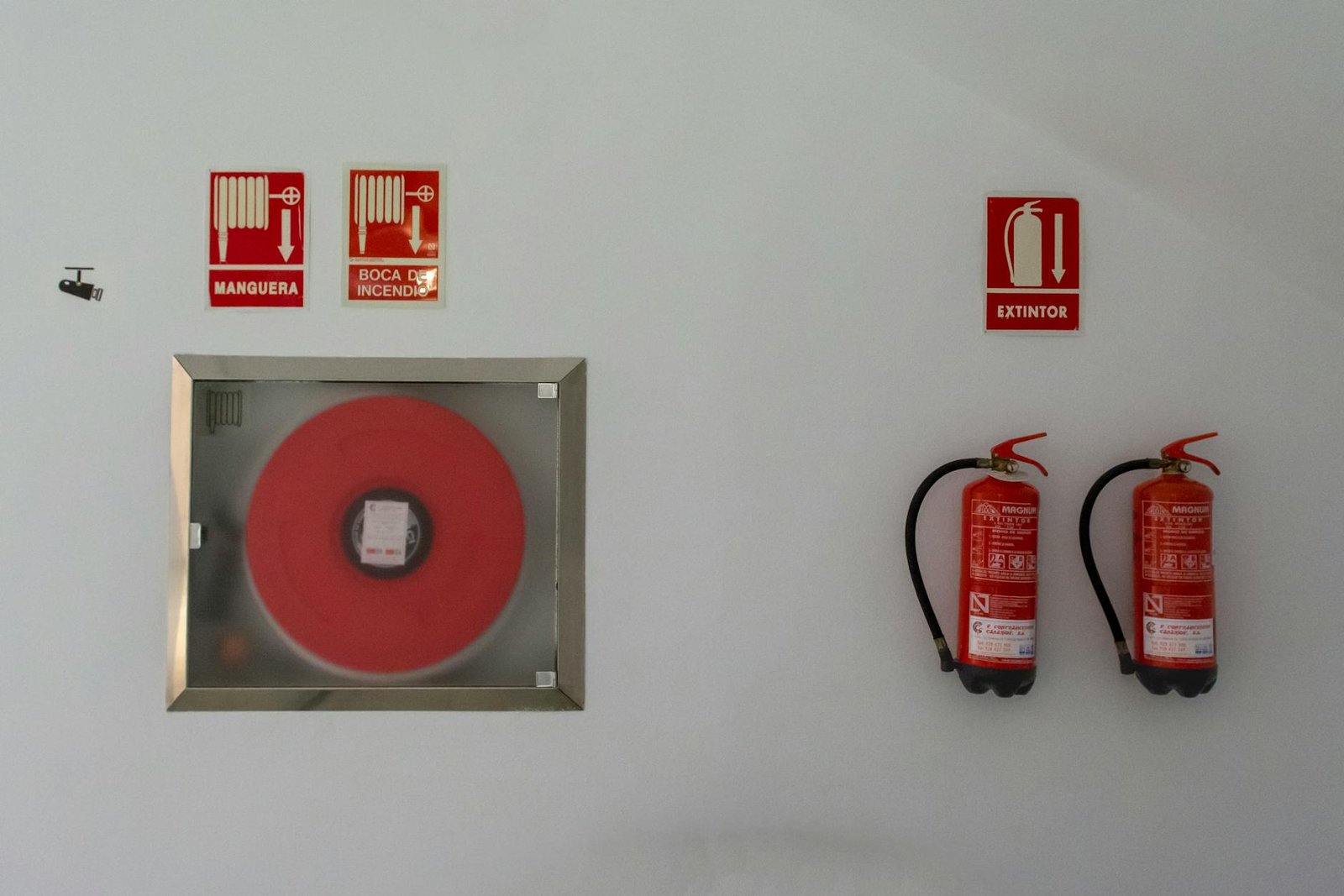
When someone searches for fire extinguisher types, they’re usually trying to answer one practical question: Which extinguisher should I actually use for my specific risk? The wrong choice doesn’t just fail—it can make the fire worse. In real environments—factories, server rooms, even home kitchens—the difference between CO2, foam, or ABC powder is not theoretical. It directly impacts safety, damage, and downtime.
This guide breaks down each type of fire extinguisher based on how it performs in real situations, not just textbook definitions. Understanding the mechanics of a fire hydrant system or local extinguishers is the first step toward comprehensive safety.
What Is a Fire Extinguisher
A fire extinguisher is a pressurized device that releases an extinguishing agent to control or put out small fires by removing heat, oxygen, or interrupting the chemical reaction.
Types of Fire Extinguishers (Practical Breakdown)
1. ABC Dry Powder Fire Extinguisher
Most commonly used across India because it handles multiple fire classes.
- Best for: Class A (solid), B (liquid), C (gas)
- Where it works: Offices, factories, warehouses
- Limitation: Leaves heavy residue, damages electronics
- Explore options: ABC fire extinguisher
2. CO2 Fire Extinguisher
Used where electrical safety is critical.
- Best for: Electrical fires, server rooms
- Where it works: Data centers, panels, labs
- Limitation: No cooling effect, fire can reignite
- Explore options: CO2 fire extinguisher
3. Foam Fire Extinguisher
Works well on flammable liquids.
- Best for: Petrol, diesel fires
- Where it works: Parking areas, fuel storage
- Limitation: Not suitable for electrical fires
- Explore options: foam fire extinguisher
4. Water Fire Extinguisher
Basic but effective for certain risks.
- Best for: Wood, paper, cloth (Class A)
- Where it works: Homes, schools
- Limitation: Dangerous for electrical and liquid fires
5. Clean Agent Fire Extinguisher
Advanced solution where damage must be minimized.
- Best for: Electronics, sensitive equipment
- Where it works: Server rooms, telecom setups
- Limitation: Higher cost
- Explore options: clean agent fire extinguisher
6. Water Mist / Kitchen Fire Extinguisher
Designed for high-temperature oil fires.
- Best for: Kitchen fires (Class K)
- Where it works: Restaurants, home kitchens
- Limitation: Limited to specific use
- Explore options: kitchen fire extinguisher
7. Specialized Lithium Battery Extinguisher
Increasingly important with EVs and battery storage.
- Best for: Lithium-ion battery fires
- Where it works: EV stations, battery storage
- Limitation: Not multi-purpose
- Explore options: lithium battery fire extinguisher
Fire Classes Explained (Why Type Matters)
Fire extinguishers are designed around fire behavior:
- Class A: Solid materials like wood, paper
- Class B: Flammable liquids
- Class C: Electrical fires (Involving energized equipment)
- Class D: Combustible metals
- Class K: Cooking oils and fats
In real scenarios, misidentifying the fire class is the most common failure point. Proper installation of fire safety valves and the correct extinguisher type ensures a robust defense.
Real-World Use Cases
Home
Most homes rely on ABC extinguishers, but kitchens need water mist. Using powder in a kitchen creates more mess than the fire itself.
Office
CO2 is critical near electrical panels. Many offices make the mistake of installing only ABC extinguishers.
Factory
In manufacturing setups, ABC trolley units are common, but foam is required near fuel storage. A single type rarely covers all risks.
Kitchen
Oil fires spread rapidly. Water makes it worse. This is where kitchen-specific extinguishers are non-negotiable.
Electrical Panels
CO2 or clean agent is preferred. Powder damages components and increases downtime.
Server Rooms
Clean agent systems are ideal. In many cases, companies combine extinguishers with fire suppression systems for automatic protection.
How Fire Extinguishers Actually Work
Each extinguisher works by targeting one of three fire elements:
- Heat removal: Water-based extinguishers
- Oxygen displacement: CO2 extinguishers
- Chain reaction interruption: Dry chemical powder
The key is matching the extinguishing agent to the fire chemistry.
Comparison Table
| Type | Best For | Limitation | Cost Range (India) |
| ABC Powder | Multi-purpose | Residue damage | ₹1,000 – ₹6,000 |
| CO2 | Electrical | No cooling | ₹2,000 – ₹10,000 |
| Foam | Liquid fires | Not electrical safe | ₹2,500 – ₹8,000 |
| Water | Solid fires | Limited use | ₹1,000 – ₹4,000 |
| Clean Agent | Electronics | Expensive | ₹5,000 – ₹15,000 |
| Kitchen Mist | Oil fires | Specific use | ₹3,000 – ₹12,000 |
Price and Selection Advice (India)
In India, most buyers focus only on price, which is a mistake. Selection should depend on risk:
- For homes: ABC + kitchen extinguisher
- For offices: ABC + CO2
- For factories: Combination of ABC, foam, and CO2
- For critical setups: Add clean agent or suppression systems
- Explore full range: fire extinguishers
Common Mistakes People Make
- Buying only one type for all risks
- Using water on electrical or oil fires
- Ignoring refill and maintenance schedules
- Installing extinguishers but not training staff
- Choosing based on price instead of application
In many audits, the issue is not absence of extinguishers—it’s wrong selection.
FAQ
Which fire extinguisher is best for home use in India?
An ABC extinguisher for general use, plus a kitchen extinguisher for cooking areas.
Can CO2 extinguishers be used on all fires?
No. They are mainly for electrical and Class B fires. They lack the cooling agent needed for Class A fires.
What is the difference between ABC and BC fire extinguishers?
ABC handles solid fires (wood/paper) as well as liquids and gases, whereas BC does not handle solids effectively.
How often should fire extinguishers be refilled?
Typically every 1–2 years or immediately after any use, even if partially discharged.
Are clean agent extinguishers worth it?
Yes, for environments where equipment damage and data loss are more costly than the extinguisher itself.
What happens if I use the wrong extinguisher?
It can worsen the fire (e.g., water on oil), cause electrocution, or fail to suppress the flames entirely.
Conclusion
There is no single “best” fire extinguisher. The right choice depends entirely on the type of fire risk. In practical environments, a combination approach works best—ABC for general coverage, CO2 for electrical safety, and specialized extinguishers where needed.
If you’re setting up fire safety seriously, selection should be based on real risk assessment, not assumptions. For tailored guidance or bulk requirements, you can always contact Safex.
Image Prompt: Realistic comparison of different fire extinguisher types placed side by side with labels (ABC, CO2, Foam, Water, Clean Agent) in an industrial setting
Alt Text: Different types of fire extinguishers used for various fire classes in real environments
Focus Keyword: fire extinguisher types
SEO Title: Types of Fire Extinguishers Explained: Best Options for Every Fire Class in India
Meta Description: Learn different fire extinguisher types, their uses, limitations, and price in India. Find the right extinguisher for home, office, and industrial safety.
Slug: fire-extinguisher-types-guide-india