
In the complex landscape of fire safety, the speed of human intervention is often the difference between a minor incident and a catastrophic loss of property or life. While automated detection systems like smoke and heat sensors form the backbone of modern fire safety, the manual call point (MCP) remains an indispensable component of any robust fire alarm system. Whether you are managing a high-rise IT park in Bengaluru, a manufacturing unit in the industrial belts of Gujarat, or a commercial complex in Delhi, the strategic placement and functional integrity of manual call points are non-negotiable.
Safex established 1972, and throughout our decades of experience in the Indian fire protection industry, we have observed that reliance solely on automated sensors often leads to a false sense of security. The human element—the ability for a person to identify a fire in its incipient stage and trigger an immediate building-wide evacuation—is a fundamental requirement under the National Building Code (NBC 2016). This article explores the technical requirements, placement strategies, and compliance mandates surrounding manual call points in India.
Understanding the Functionality and Standards of Manual Call Points
A manual call point is an electromechanical device designed to allow occupants to initiate a fire alarm signal manually. Unlike automatic detectors that rely on physical changes in the environment, such as smoke density or temperature rise, an MCP relies on human observation. According to the guidelines set forth in the National Building Code (NBC 2016) Part 4, every building must be equipped with a means to manually trigger the fire alarm system, particularly in areas where personnel are present.
When an individual identifies a fire, they trigger the MCP, which immediately sends a signal to the Fire Alarm Control Panel (FACP). This action performs two critical functions: it alerts the building occupants to begin evacuation and notifies the security or fire control room of the specific zone where the incident is occurring. In India, these devices must adhere to stringent quality standards to ensure they do not fail when called upon. While IS 15683:2018 primarily governs the specifications for portable fire extinguishers, the design and performance criteria for fire alarm components are governed by equivalent IS standards like IS 2189 (Code of practice for selection, installation, and maintenance of automatic fire alarm systems).
In the Indian market, the cost of installing a manual call point system is relatively modest compared to the potential liability of non-compliance. A standard addressable manual call point typically ranges from ₹1,500 to ₹3,500 per unit, depending on the brand and technical specifications (such as IP rating or housing material). For larger industrial installations, bulk procurement of high-durability, weather-resistant MCPs can cost between ₹4,000 and ₹7,000 per unit. Investing in quality hardware is essential, as cheap, uncertified units often suffer from contact failure or false alarms, which can lead to “alarm fatigue” among staff.
Strategic Placement and Compliance Requirements
The effectiveness of an MCP is entirely dependent on its accessibility. If an occupant has to travel long distances or navigate through obstacles to reach a call point, the delay can be fatal. NBC 2016 provides clear guidance on the placement of these devices. Generally, they should be located at all exit doors, stairwell entrances, and along designated escape routes.
In a typical facility, no occupant should have to travel more than 30 meters to reach a manual call point. In high-risk environments, such as chemical storage areas or server rooms, this distance should be reduced significantly. Furthermore, the height at which an MCP is mounted is crucial. It should be placed at a height of 1.2 to 1.5 meters from the finished floor level to ensure it is accessible to all occupants, including those with physical disabilities.
Compliance officers must also consider the visual and auditory environment. In noisy industrial settings, the MCP must be paired with high-decibel hooters and visual strobes. If a manual call point is triggered, the entire building’s integrated system must react instantaneously. Failure to maintain these systems according to IS 2189 can lead to severe legal repercussions. Under Indian fire safety laws, building owners and facility managers can be held personally liable for negligence if a fire safety system fails during an emergency. This includes fines, the revocation of No Objection Certificates (NOCs), and potential criminal charges in the event of a fatality.
Integrating MCPs with Fire Suppression Systems
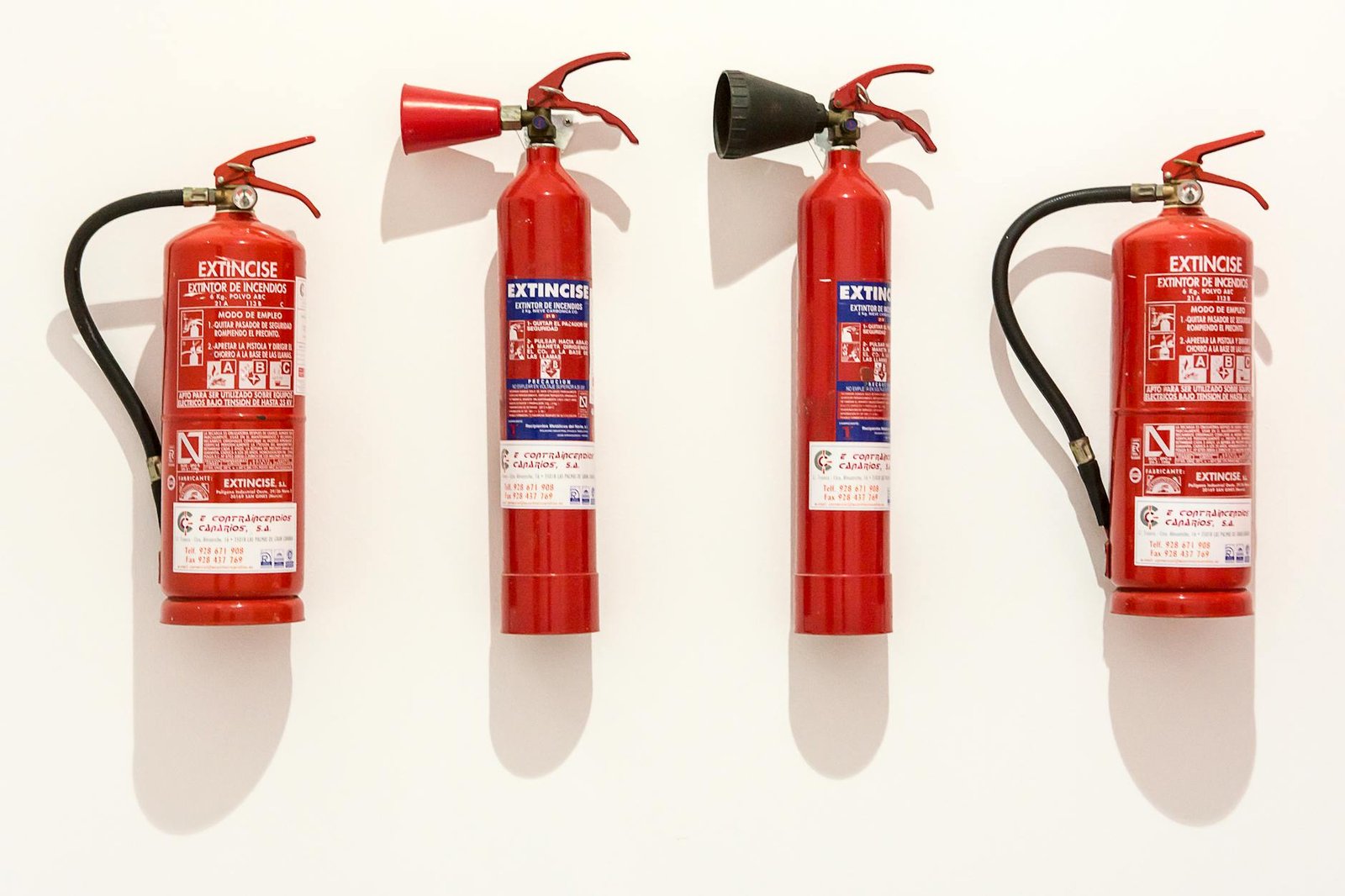
While a manual call point alerts people, it does not extinguish the fire. Therefore, it is essential to have fire extinguishers located in close proximity to MCPs. When a fire is detected and the alarm is raised via the MCP, the person who triggered the alarm should be able to quickly access a fire extinguisher to combat the fire if it is safe to do so.
When training staff on fire safety, we always emphasize the PASS method for using fire extinguishers:
1. Pull: Pull the pin on the extinguisher to break the tamper seal.
2. Aim: Aim the nozzle or hose at the base of the fire, not at the flames.
3. Squeeze: Squeeze the handle to release the extinguishing agent.
4. Sweep: Sweep from side to side at the base of the fire until it appears to be out.
By pairing the manual alarm initiation with the immediate availability of fire extinguishers, you create a two-layered defense system. For instance, a 2kg ABC powder extinguisher, which typically costs between ₹1,200 and ₹2,500, is a standard requirement near exits and MCPs. Larger 6kg or 9kg units, costing between ₹3,000 and ₹6,000, are necessary for high-risk industrial zones. Ensuring that these extinguishers are serviced annually, as per IS 15683 standards, is just as critical as testing the manual call points themselves.
Comparison of Fire Alarm Initiation Methods
To understand where manual call points fit into a broader strategy, it is useful to compare them with automatic detection systems.
| Feature | Manual Call Point (MCP) | Smoke Detector | Heat Detector |
| Activation | Human Intervention | Automatic (Particulate) | Automatic (Temperature) |
| Response Time | Dependent on presence | Very Fast | Moderate |
| False Alarm Rate | Extremely Low | Moderate (Dust/Steam) | Low |
| Best Use Case | Escape routes, exits | Offices, server rooms | Kitchens, boiler rooms |
The table above illustrates that while automated systems are superior for detection, manual call points provide a verification layer that helps reduce false alarms. In large commercial complexes, relying solely on smoke detectors can lead to massive disruptions due to false triggers caused by dust or cooking fumes. By incorporating manual call points, you ensure that the alarm is only sounded when a human has confirmed a potential threat, or alternatively, the manual trigger provides an immediate “panic” option for occupants who see smoke before the sensor does.
Maintenance and Operational Testing
A manual call point that is not maintained is a liability. Dust ingress, corrosion from humidity (common in coastal cities like Mumbai or Chennai), and mechanical wear can render the device useless. According to standard fire safety protocols, MCPs should be tested on a monthly basis. This test involves using a test key to activate the device, ensuring the signal is received by the FACP, and verifying that the hooters or notification appliances are activated.
Documentation is the cornerstone of compliance. Every test conducted must be recorded in a maintenance logbook. This logbook is often the first document requested by fire department officials during a surprise inspection. If the logbook shows consistent testing and prompt repairs of faulty units, it demonstrates a commitment to safety that can mitigate legal risks.
For facility managers, it is also important to consider the durability of the MCP housing. In high-traffic areas, break-glass units are common, but they require the replacement of the glass element after every test or incident. Many modern facilities are switching to resettable manual call points, which use a plastic element that can be pushed in and reset with a key. While the initial cost might be slightly higher—roughly ₹2,000 to ₹4,000—the long-term savings on maintenance and the increased reliability make them a preferred choice for modern infrastructure.
FAQ: Common Questions from Facility Managers
Q: Are manual call points mandatory in all commercial buildings under NBC 2016?
A: Yes, the National Building Code (NBC 2016) mandates the installation of manual alarm initiation devices in all buildings categorized as public or commercial, especially near exit routes and stairwells, to ensure life safety.
Q: How often should I test my manual call points?
A: You should perform a functional test at least once a month. This ensures that the electrical contacts are functional and that the alarm signal is correctly received by your Fire Alarm Control Panel.
Q: What is the difference between break-glass and resettable manual call points?
A: Break-glass units require a physical glass element to be shattered to activate the alarm, which then needs replacement. Resettable units use a flexible plastic element that can be pushed inward and reset with a special key, making them more cost-effective for frequent testing.
Q: How much does it cost to install a complete manual fire alarm system?
A: For a medium-sized office, the cost of MCPs, wiring, and integration with a control panel typically falls in the range of ₹50,000 to ₹2,00,000, depending on the complexity, the number of zones, and the brand of the equipment used.
Q: Can I install manual call points myself to save costs?
A: It is strongly advised against. Fire safety equipment installation must be performed by certified professionals who understand IS 2189 and local building codes. Improper installation can lead to system failures, voids in insurance coverage, and severe legal liability.
Q: How does the PASS method relate to manual call points?
A: The PASS method (Pull, Aim, Squeeze, Sweep) is for using fire extinguishers. Since extinguishers are often mounted near manual call points, the two systems work in tandem: the MCP alerts the building to the fire, while the extinguisher provides the immediate means to suppress it.
Resources
For further information on fire safety standards and compliance, please refer to the following official resources:
Conclusion
The manual call point is a simple yet vital piece of technology that empowers building occupants to take charge of their safety. In an emergency, every second counts, and having a reliable, well-placed, and properly maintained MCP ensures that the fire alarm system is initiated without delay. Compliance with NBC 2016 and adherence to Indian Standards is not merely a box-ticking exercise for an NOC; it is a fundamental duty of every facility manager to ensure the safety of the people within their premises.
Safex established 1972, and our commitment to providing high-quality, reliable fire safety solutions remains unchanged. We understand the unique challenges faced by Indian industries and commercial spaces, from fluctuating climate conditions to the complexities of high-rise construction. By prioritizing the installation of compliant, durable, and well-maintained manual call points, you are building a foundation of safety that protects your assets and, more importantly, your people. Do not wait for an inspection to realize your system is inadequate; audit your fire safety infrastructure today and ensure your facility is prepared for any eventuality.