In the landscape of industrial and commercial safety across India, the importance of immediate, informed response cannot be overstated. When a fire breaks out, the first few minutes—often called the “golden window”—determine the difference between a minor incident and a catastrophic loss of life and property. At Safex Fire Services, we have observed that while most facilities are equipped with fire extinguishers, the actual ability of personnel to deploy them correctly remains a significant gap in safety protocols. Safex established 1972, and since our inception, we have been dedicated to bridging this gap through education, high-quality equipment, and strict adherence to Indian safety standards.
Understanding how to use a fire extinguisher is not merely a technical skill; it is a critical component of your facility’s fire safety management system. Whether you are managing an IT park in Bengaluru, a textile warehouse in Gujarat, or a high-rise residential complex in Mumbai, your equipment must be compliant with the National Building Code (NBC) 2016 and maintained according to the rigorous guidelines set forth in IS 2190.
The Regulatory Framework: Why Compliance Matters in India
Fire safety in India is governed by a robust framework of standards. The National Building Code (NBC) 2016, Part 4, provides the blueprint for fire and life safety in buildings. It mandates that every occupant must have access to appropriate fire-fighting equipment, and more importantly, that this equipment must be maintained in a ready-to-use state.
When we talk about portable fire extinguishers, the benchmark is IS 15683:2018. This Indian Standard specifies the requirements for the performance, construction, and testing of portable fire extinguishers. As a facility manager or business owner, purchasing equipment that is not certified to IS 15683 standards is a massive liability. In the event of an inspection or, worse, a fire incident, non-compliant equipment can lead to severe legal penalties, voided insurance policies, and criminal liability under various state fire acts.
Beyond the equipment itself, the installation must follow IS 2190. This code dictates the selection, installation, and maintenance of fire extinguishers. It requires that extinguishers be placed in conspicuous, easily accessible locations, free from obstruction, and inspected at regular intervals by qualified professionals. Investing in quality equipment is a modest expense compared to the potential losses. For instance, a standard 2kg ABC powder extinguisher typically ranges from ₹1,500 to ₹3,000, while larger industrial-grade 6kg to 9kg units for high-risk areas often fall in the ₹5,000 to ₹15,000 range. These costs are negligible when weighed against the protection of your assets and workforce.
The PASS Method: Your Protocol for Emergency Response
The most effective way to ensure that your staff can handle an emergency is to standardize the training process. The internationally recognized and industry-standard method for operating a fire extinguisher is the PASS method. This acronym is designed to be easy to remember under the high-stress conditions of an actual fire.
1. Pull the Pin: Every extinguisher is equipped with a safety pin that prevents accidental discharge. By pulling this pin, you break the tamper seal and arm the extinguisher for use. Ensure you are pulling the pin while keeping the extinguisher in an upright position.
2. Aim at the Base: One of the most common mistakes beginners make is aiming the nozzle at the flames themselves. This is ineffective because the fire is fueled by the material burning, not the flames in the air. You must aim the nozzle or hose at the base of the fire, where the fuel source is located.
3. Squeeze the Handle: Squeezing the handle releases the extinguishing agent. Do this with a steady, firm motion. Start from a safe distance—typically 6 to 8 feet away—and move closer as the fire begins to diminish.
4. Sweep Side to Side: Use a sweeping motion to cover the entire area of the fire. Continue this motion until the fire appears to be extinguished. Watch the area closely for any signs of re-ignition, as many fires can flare up again if the material is still hot.
Training your team on the PASS method should be a recurring activity. At Safex, we recommend quarterly drills where employees are shown how to handle the weight and pressure of an extinguisher. Theoretical knowledge is rarely enough when the adrenaline of a real emergency takes over.
Choosing the Right Extinguisher for the Right Hazard
Not all fires are the same, and using the wrong extinguisher can be dangerous. Fire safety professionals categorize fires based on the fuel source, and your extinguisher selection must align with these categories as defined by Indian Standards.
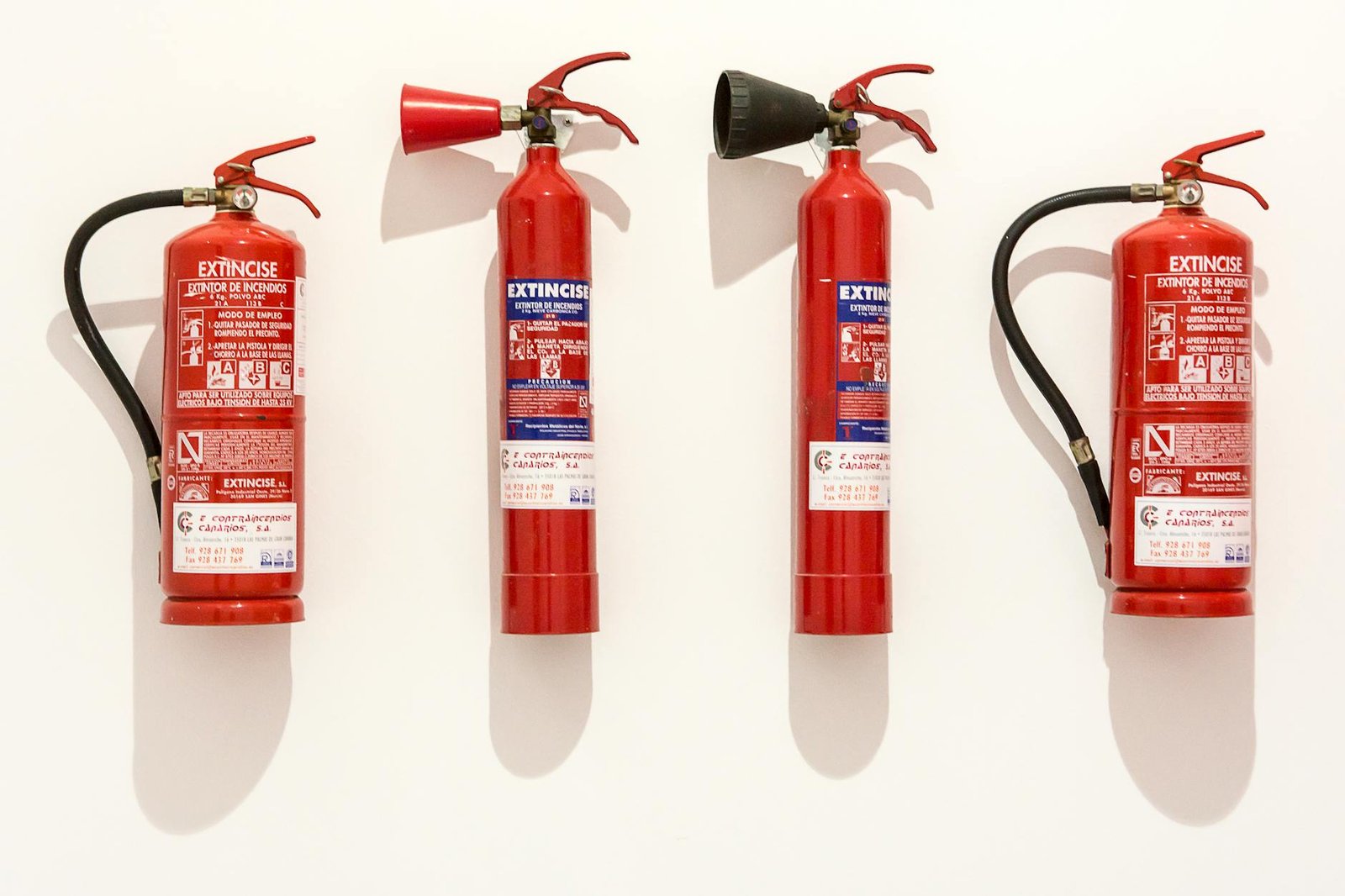
For a typical office environment, a combination of ABC fire extinguisher (for general areas) and CO2 extinguishers (for server rooms and electrical panels) is standard. In industrial warehouses, where chemical hazards might be present, specialized foam or clean agent extinguishers may be required. Always consult a fire safety expert to conduct a fire load assessment before finalizing your procurement list.
Maintenance and Inspections: The IS 2190 Standard
Equipment is only as good as its maintenance schedule. IS 2190 provides the guidelines for the routine inspection and servicing of fire extinguishers. A “ready-to-use” extinguisher must have a fully charged pressure gauge, an intact safety seal, and a clear, readable instruction label.
Monthly inspections should be conducted by an internal safety officer to ensure that:
Annual servicing must be performed by a professional agency. This involves a more thorough check, including hydrostatic testing of the cylinder if it has reached its age limit, and recharging the extinguishing agent if it has been used or if the pressure has dropped. Ignoring these maintenance intervals is a violation of building safety codes and can result in the equipment failing at the precise moment you need it most.
Comparison of Fire Extinguisher Types
To assist facility managers in procurement, the following table summarizes the common types of extinguishers used in Indian industrial and commercial settings.
| Extinguisher Type | Primary Use Case | Best For | Typical Price Range |
| ABC Dry Powder | General Purpose | Paper, Wood, Oil, Electrical | ₹1,500 – ₹5,000 |
| CO2 Extinguisher | Electrical Hazards | Server Rooms, Panels | ₹2,500 – ₹8,000 |
| Foam (AFFF) | Liquid Fires | Kitchens, Fuel Storage | ₹2,000 – ₹6,000 |
| Water (Stored Pressure) | Ordinary Combustibles | Offices, Warehouses | ₹1,200 – ₹4,000 |
Note: Prices are estimates based on market rates for ISI-marked equipment and may vary based on capacity and brand.
Frequently Asked Questions (FAQ)
Q: How often should I have my fire extinguishers serviced?
A: According to IS 2190, a professional inspection and service must be performed at least once a year. However, you should perform visual inspections monthly to ensure the equipment is accessible and the pressure gauge is in the green zone.
Q: Can I use a water extinguisher on an electrical fire?
A: Absolutely not. Water is a conductor of electricity. Using water on an energized electrical fire can result in severe electric shock. Always use a CO2 extinguisher or a dry powder extinguisher labeled for Class E fires.
Q: What is the PASS method?
A: PASS is the standard operating procedure for extinguishers: Pull the pin, Aim at the base of the fire, Squeeze the handle, and Sweep from side to side. This ensures the agent is applied correctly to the fuel source.
Q: Why is IS 15683 important for my purchase?
A: IS 15683 is the Indian Standard for portable fire extinguishers. Equipment that carries this certification has been tested for performance, pressure integrity, and safety. Purchasing non-ISI marked equipment poses a significant safety risk and may lead to legal complications.
Q: How much does it cost to equip a small office with fire extinguishers?
A: For a small office (approx. 500-1000 sq. ft.), a basic setup including two 4kg ABC powder extinguishers and one 2kg CO2 extinguisher would typically cost between ₹7,000 and ₹12,000, depending on the brand and specific requirements.
Q: What does the NBC 2016 say about fire safety in buildings?
A: The National Building Code (NBC) 2016 provides comprehensive guidelines for fire prevention and life safety. It mandates specific fire-fighting installations, access routes for fire tenders, and the requirement for regular mock drills and maintenance of all safety equipment to ensure the safety of occupants.
Resources
For further guidance on maintaining compliance and implementing safety standards, please refer to the following official resources:
Conclusion
Fire safety is not a static requirement but a continuous commitment to the protection of lives and assets. Whether it is ensuring your facility meets the stringent requirements of the NBC 2016 or training your staff in the correct application of the PASS method, the proactive approach is always the most cost-effective. At Safex Fire Services, we recognize that our clients rely on our expertise to navigate the complexities of fire safety regulations and equipment maintenance.
Since Safex established 1972, we have remained at the forefront of the Indian fire safety industry, providing not just products, but the knowledge required to use them under pressure. Do not wait for a fire to realize that your safety protocols are inadequate. Invest in certified, IS 15683-compliant equipment, train your team, and ensure that your facility is prepared for any eventuality. Safety is an investment that pays for itself by preventing the unthinkable. For professional consultation or to audit your current fire safety systems, reach out to a trusted fire safety provider who understands the nuances of the Indian regulatory landscape and the practical realities of your business.