In the rapidly evolving landscape of Indian infrastructure, the necessity for robust fire protection systems has transitioned from a mere regulatory checkbox to a cornerstone of operational resilience. Whether you are managing a high-rise IT park in Bengaluru, a sprawling chemical warehouse in Gujarat, or a manufacturing unit in the industrial belts of Pune, the integrity of your fire safety infrastructure is the only barrier between business continuity and catastrophic loss.
Safex established 1972, and since our inception, we have witnessed the evolution of fire safety from basic bucket-and-sand protocols to sophisticated, integrated automated systems. Today, compliance is not just about avoiding penalties; it is about protecting human life and securing long-term assets against the volatile risks inherent in modern commercial and industrial environments.
The Regulatory Framework: Understanding NBC 2016 and IS Standards
Fire safety in India is governed by a rigorous framework designed to mitigate risks in diverse climatic and structural conditions. The primary document for all facility managers, architects, and safety officers is the National Building Code (NBC) 2016. Part 4 of the NBC 2016 provides the definitive guidelines for fire and life safety, covering everything from building classification and occupancy types to the specific fire resistance ratings required for structural elements.
When designing a fire protection system, one cannot simply select equipment based on aesthetic or budgetary preferences. Compliance with Indian Standards (IS) is mandatory. For instance, when procuring portable fire extinguishers, you must ensure they adhere strictly to IS 15683:2018. This standard dictates the performance requirements, construction materials, and testing protocols for extinguishers, ensuring that when an emergency strikes, the equipment functions as intended.
Furthermore, IS 2190 serves as the code of practice for the selection, installation, and maintenance of first-aid fire fighting appliances. Ignoring these standards during the procurement phase often leads to failed fire safety audits, which can result in the revocation of No Objection Certificates (NOCs) from local fire departments. In states like Maharashtra or Karnataka, the liability for non-compliance often rests squarely on the shoulders of the facility head or the designated safety officer. Understanding these standards is the first step in building a system that is not only legal but also effective.
Components of an Effective Fire Protection System
A comprehensive fire protection system is composed of two primary categories: passive and active systems. Passive fire protection includes fire-rated doors, compartmentation, and flame-retardant coatings, which prevent the spread of smoke and fire. Active systems, on the other hand, are the mechanisms designed to detect and suppress fire.
The heart of an active system is the fire detection and alarm network. In modern buildings, this includes multi-sensor smoke detectors, heat detectors, and manual call points connected to a centralized Fire Alarm Control Panel (FACP). Once a fire is detected, the suppression system must engage immediately. This includes the hydrant system, fire sprinkler system, and the strategic placement of portable fire extinguishers.
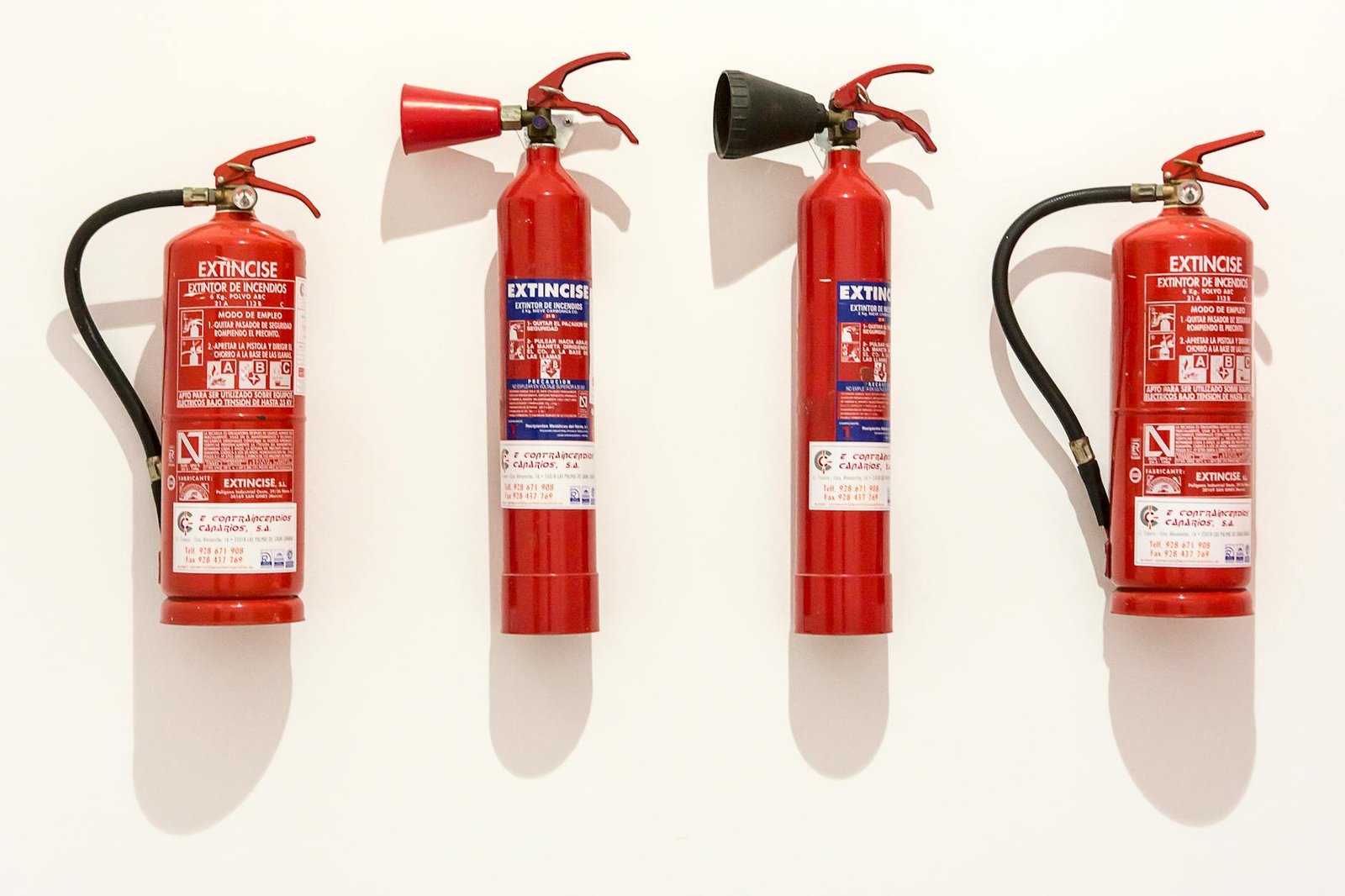
For portable units, the cost varies based on capacity and agent type. For a standard 2kg dry chemical powder (DCP) extinguisher, you can expect to pay in the range of ₹1,500–₹3,000. Larger industrial-grade 6kg or 9kg units typically range from ₹3,000 to ₹6,000, while specialized CO2 or clean agent extinguishers for server rooms can cost between ₹5,000 and ₹15,000. It is vital to remember that the cheapest option is rarely the safest. Investing in ISI-marked equipment ensures that the pressure vessels and chemical agents have passed stringent quality checks, which is essential for reliability in high-temperature Indian environments.
Operational Excellence: The PASS Method and Staff Training
Even the most advanced fire protection system is only as effective as the people operating it. If your staff does not know how to handle an initial fire outbreak, the time taken for the fire brigade to arrive can lead to total loss. Every employee should be trained on the PASS method, which is the industry-standard technique for using fire extinguishers:
1. Pull: Pull the pin at the top of the extinguisher. This breaks the tamper seal and allows you to discharge the extinguisher.
2. Aim: Aim low, pointing the nozzle or hose at the base of the fire, not at the flames themselves.
3. Squeeze: Squeeze the handle to release the extinguishing agent.
4. Sweep: Sweep from side to side at the base of the fire until the fire appears to be out.
Beyond the PASS method, regular mock drills are essential. The NBC 2016 emphasizes the importance of evacuation planning and the clear demarcation of fire exits. In high-density office environments, your fire safety strategy should include quarterly training sessions where staff members are physically shown the location of the nearest fire alarm and extinguisher. Practical familiarity with the equipment reduces panic and increases the probability of containing a small fire before it develops into a conflagration.
Maintenance and Auditing: Preventing System Failure
The most common failure in fire protection systems is not the equipment itself, but the lack of maintenance. A fire hydrant system system that has not been pressure-tested for two years is a liability. According to IS 2190, extinguishers must be inspected regularly to ensure the pressure gauge is in the green zone and the nozzle is unobstructed.
Facility managers should maintain a rigorous logbook for all fire safety equipment. This logbook should record the date of the last inspection, the findings, and the signature of the technician. In the event of a fire incident, insurance companies and legal authorities will request these maintenance records. If the records are missing or show gaps in service, your insurance claim may be denied, and you could face criminal negligence charges.
For a mid-sized commercial building, an annual maintenance contract (AMC) is the most efficient way to ensure compliance. An AMC typically covers the testing of fire pumps, the recharging of fire extinguishers, and the verification of alarm sensors. While the cost of an AMC might seem like an additional overhead, it is a fraction of the cost of a fire-related shutdown or the loss of human life. Regularly auditing your system against the requirements laid out in the NBC 2016 ensures that your facility remains a safe environment for your employees and stakeholders.
Comparison of Fire Suppression Technologies
Choosing the right equipment for specific hazard classes is critical for effective mitigation. The following table provides a comparison of common fire safety solutions used in Indian industrial and commercial sectors.
| Technology | Best Use Case | Typical Cost Range | Maintenance Interval |
| DCP Extinguisher | General fires (Class A, B, C) | ₹1,500 – ₹5,000 | 6 Months |
| CO2 Extinguisher | Electrical panels/Server rooms | ₹3,000 – ₹8,000 | 6 Months |
| Automatic Sprinklers | Large warehouses/High-rises | Varies by scale | 12 Months |
| Fire Hydrant System | Large campuses/Factories | ₹1 Lakh+ (Project) | Quarterly |
Note: Prices are estimates based on current market rates in India and may vary by brand and capacity.
Frequently Asked Questions (FAQ)
Q: What is the significance of IS 15683 in my procurement process?
A: IS 15683 is the Indian Standard for portable fire extinguishers. It ensures that the equipment you purchase is manufactured to withstand the specific environmental and pressure conditions of Indian buildings, providing a guarantee of safety and performance.
Q: How often should we conduct fire drills in an office?
A: According to the guidelines in NBC 2016, fire drills should be conducted at least twice a year. However, for high-risk industrial environments, quarterly drills are highly recommended to ensure all staff are proficient in the PASS method.
Q: Are there heavy penalties for not having valid fire safety equipment?
A: Yes. Non-compliance can lead to the cancellation of your building’s NOC, heavy fines, and in extreme cases, the sealing of the premises by the fire department. Furthermore, liability for injury or death during a fire is severe under Indian law.
Q: Can I use the same fire extinguisher for all types of fires?
A: No. Different fires require different agents. For example, CO2 is ideal for electrical fires because it leaves no residue, whereas DCP is better for solid combustibles. Always refer to your fire safety plan to ensure you have the correct type for each zone.
Q: What is the PASS method?
A: The PASS method is an acronym for Pull, Aim, Squeeze, and Sweep. It is the standard procedure for effectively using a portable fire extinguisher during an emergency.
Q: What is the approximate cost to equip a small office with basic fire safety?
A: For a standard small office, you should budget between ₹10,000 and ₹25,000 to cover the purchase of ISI-marked extinguishers, signage, and basic smoke detection units, depending on the size of the floor plate.
Resources
For further information on fire safety protocols and standards in India, please refer to the following official resources:
Conclusion
Fire safety is an ongoing commitment rather than a one-time investment. The landscape of fire risks in India is changing with the advent of high-density data centers, complex chemical processing units, and tall residential structures. As a decision-maker, your priority must be to bridge the gap between regulatory requirements and actual field performance.
By adhering to the standards set forth in the National Building Code (NBC) 2016 and ensuring all portable equipment meets IS 15683, you create a foundation of safety that protects your most valuable assets. Remember that Safex established 1972, and our decades of experience have shown us that the most successful companies are those that view fire safety as a core component of their business strategy. If you require assistance in conducting a fire risk assessment or setting up a compliant system for your facility, ensure that you engage with authorized experts who understand the nuances of the Indian regulatory environment. Protect your people, protect your business, and stay compliant.