
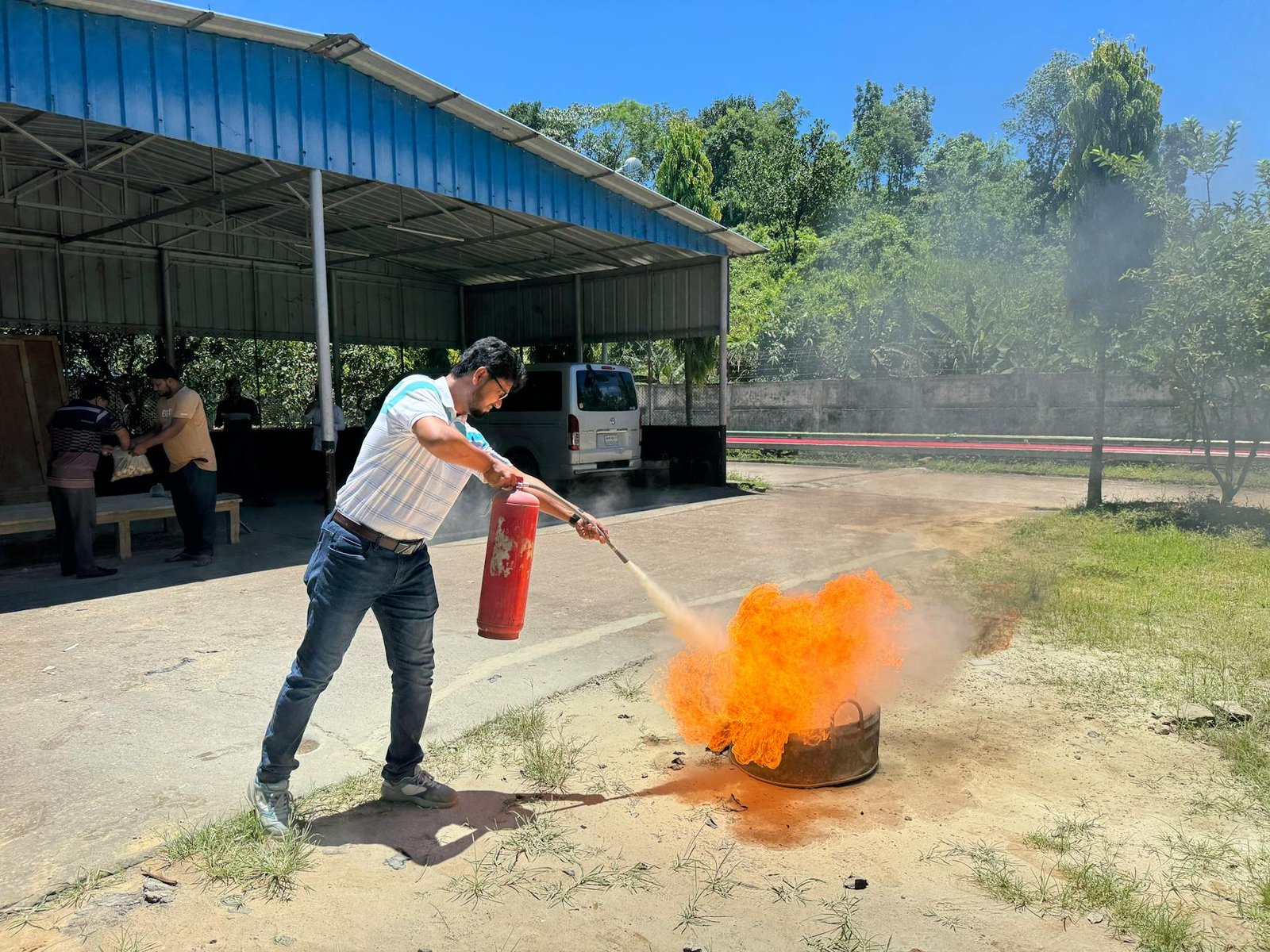
Most people assume that a fire extinguisher refill simply means “filling it up again.” That assumption is exactly where things go wrong. In India, improper refilling is one of the biggest hidden risks in fire safety. The reality is that fire extinguisher refill is a controlled technical process involving pressure testing, internal inspection, and correct agent replacement. [cite_start]If this is skipped or done cheaply, the extinguisher may fail when you actually need it. [cite: 4, 5]
If you are searching for fire extinguisher refill in India, the real question is not where to refill, but whether it is being done correctly. [cite_start]This article breaks that down clearly. [cite: 11]
What Is Fire Extinguisher Refill?
[cite_start]Fire extinguisher refill is the process of emptying, inspecting, testing, and recharging an extinguisher with the correct extinguishing agent and pressure, ensuring it meets safety standards and functions reliably. [cite: 11]
Types of Fire Extinguishers and Their Refill Differences
Not all extinguishers are refilled the same way. [cite_start]This is where many vendors cut corners. [cite: 11]
- ABC Dry Powder Extinguisher: Used for multi-purpose fires. Refilling involves replacing dry chemical powder and re-pressurizing with nitrogen.
- CO2 Fire Extinguisher: Refilling requires liquid CO2 charging under high pressure. No margin for error here.
- Foam Fire Extinguisher: Needs correct foam solution ratio. Wrong mix reduces effectiveness.
- Water Extinguisher: Simplest, but still requires internal cleaning to prevent corrosion.
- Clean Agent Extinguisher: Used in server rooms. Requires precise gas handling and leak-proof sealing.
[cite_start]If you’re sourcing new or serviced units, you can explore certified options like fire extinguishers. [cite: 6, 7]
How Fire Extinguisher Refill Actually Works
Most people never see the real process. [cite_start]A proper refill includes: [cite: 11]
- Complete Discharge: The extinguisher is fully emptied. Partial refill is a major mistake.
- Internal Inspection: Cylinder is opened and checked for rust, moisture, and powder clogging. In many factories, this step is skipped entirely to save time.
- Hydrostatic Pressure Testing: This is critical. The cylinder is tested to ensure it can withstand pressure. Without this, the cylinder can burst.
- Refilling with Correct Agent: Each extinguisher type requires a specific agent like ABC powder, CO2 gas, or foam solution.
- Re-pressurization: Nitrogen or CO2 is added to the required pressure level.
- Leak Testing: Valves, seals, and hoses are checked.
- [cite_start]Tagging & Certification: A refill date and next service date must be marked to ensure ISI compliance. [cite: 10]
Fire Classes and Why Refill Accuracy Matters
[cite_start]Fire extinguishers are designed for different fire classes: [cite: 11]
- Class A: Solid materials (wood, paper)
- Class B: Flammable liquids
- Class C: Electrical fires
- Class D: Metals
- Class K: Kitchen oils
If the wrong agent is refilled, the extinguisher becomes useless for its intended fire class. [cite_start]For example, using a water-based refill in an electrical area is dangerous. [cite: 11]
Real-World Use Cases
- Home: Most homes use ABC extinguishers. Poor refilling leads to powder hardening, making it unusable.
- Office: CO2 extinguishers protect electronics. Incorrect refill can cause pressure loss over time.
- Factory: Heavy usage areas need strict refill cycles. Many factories skip hydro testing, which is risky.
- Kitchen: Oil fires require specific extinguishers. Using incorrectly refilled units can worsen the fire.
- Electrical Panels: Only CO2 or clean agent works. Powder contamination from bad refilling can damage equipment.
- Server Rooms: Precision matters. Clean agent extinguishers must be perfectly sealed. Even minor leakage makes them ineffective.
[cite_start]For sensitive environments, using a certified clean agent fire extinguisher is critical. [cite: 6, 7]
Comparison Table
| Type | Best For | Limitation | Cost Range (India) |
|---|---|---|---|
| ABC | General use | Leaves residue | ₹800–₹3,500 |
| CO2 | Electrical fires | No cooling effect | ₹2,000–₹6,000 |
| Foam | Liquid fires | Not for electrical | ₹1,500–₹4,000 |
| Water | Solid fires | Limited use | ₹1,000–₹2,500 |
| Clean Agent | Server rooms | Expensive | ₹4,000–₹12,000 |
Price of Fire Extinguisher Refill in India
[cite_start]Typical refill costs in the Indian market: [cite: 10]
- ABC extinguisher: ₹300–₹800
- CO2 extinguisher: ₹600–₹1,500
- Foam extinguisher: ₹500–₹1,200
Low pricing often indicates shortcuts. [cite_start]If someone offers extremely cheap refilling, they are likely skipping testing or using substandard material. [cite: 11]
Common Mistakes People Make
- Choosing Price Over Safety: Cheap refill services often skip hydro testing.
- Not Checking Certification: Many refill vendors are not authorized.
- Ignoring Refill Timeline: Extinguishers should be serviced annually.
- Partial Refilling: Some vendors top up instead of fully replacing contents.
- Wrong Agent Usage: Using incorrect powder or gas reduces effectiveness.
- No Pressure Testing: This is one of the most dangerous mistakes.
[cite_start]In commercial setups, it is better to work with professionals or even explore integrated systems like fire suppression systems. [cite: 6, 7]
How to Choose the Right Refill Service
Look for:
- ISI or BIS compliance
- Proper tagging after refill
- Hydrostatic testing facility
- Experience with multiple extinguisher types
[cite_start]If you’re unsure, it’s better to consult experts via contact Safex rather than risking improper servicing. [cite: 6, 7]
FAQs
- [cite_start]How often should a fire extinguisher be refilled? Typically once a year, or immediately after use. [cite: 11]
- [cite_start]Can I refill a fire extinguisher myself? No. It requires specialized equipment and safety testing. [cite: 11]
- [cite_start]What happens if I don’t refill on time? Pressure drops or agent degrades, making it ineffective. [cite: 11]
- Is hydrostatic testing mandatory? Yes, especially for older cylinders. [cite_start]It ensures safety under pressure. [cite: 11]
- [cite_start]Why does powder harden inside extinguishers? Moisture ingress and poor sealing during refill. [cite: 11]
- [cite_start]Are all refill services the same? No. Quality varies significantly based on process and expertise. [cite: 11]
Conclusion
Fire extinguisher refill is not a routine task; it’s a critical safety procedure. Most failures happen not because extinguishers are absent, but because they were improperly serviced. [cite_start]In real situations, especially in factories and offices, this difference becomes life-threatening. [cite: 11]
Do not treat refill as a cost-saving exercise. [cite_start]Treat it as a safety investment. [cite: 11]
]Image Prompt: Technician performing fire extinguisher refill with pressure gauge and safety inspection in industrial setup [cite: 8]
Alt Text: Fire extinguisher refill process with inspection and pressure testing in India [cite: 8]
SEO Details
- [cite_start]Focus Keyword: fire extinguisher refill [cite: 8]
- [cite_start]SEO Title: Fire Extinguisher Refill Process in India: Mistakes to Avoid [cite: 8]
- [cite_start]Meta Description: Learn the correct fire extinguisher refill process in India, common mistakes, costs, and how to choose the right service provider. [cite: 8]
- [cite_start]Slug: fire-extinguisher-refill-process-india [cite: 8]