
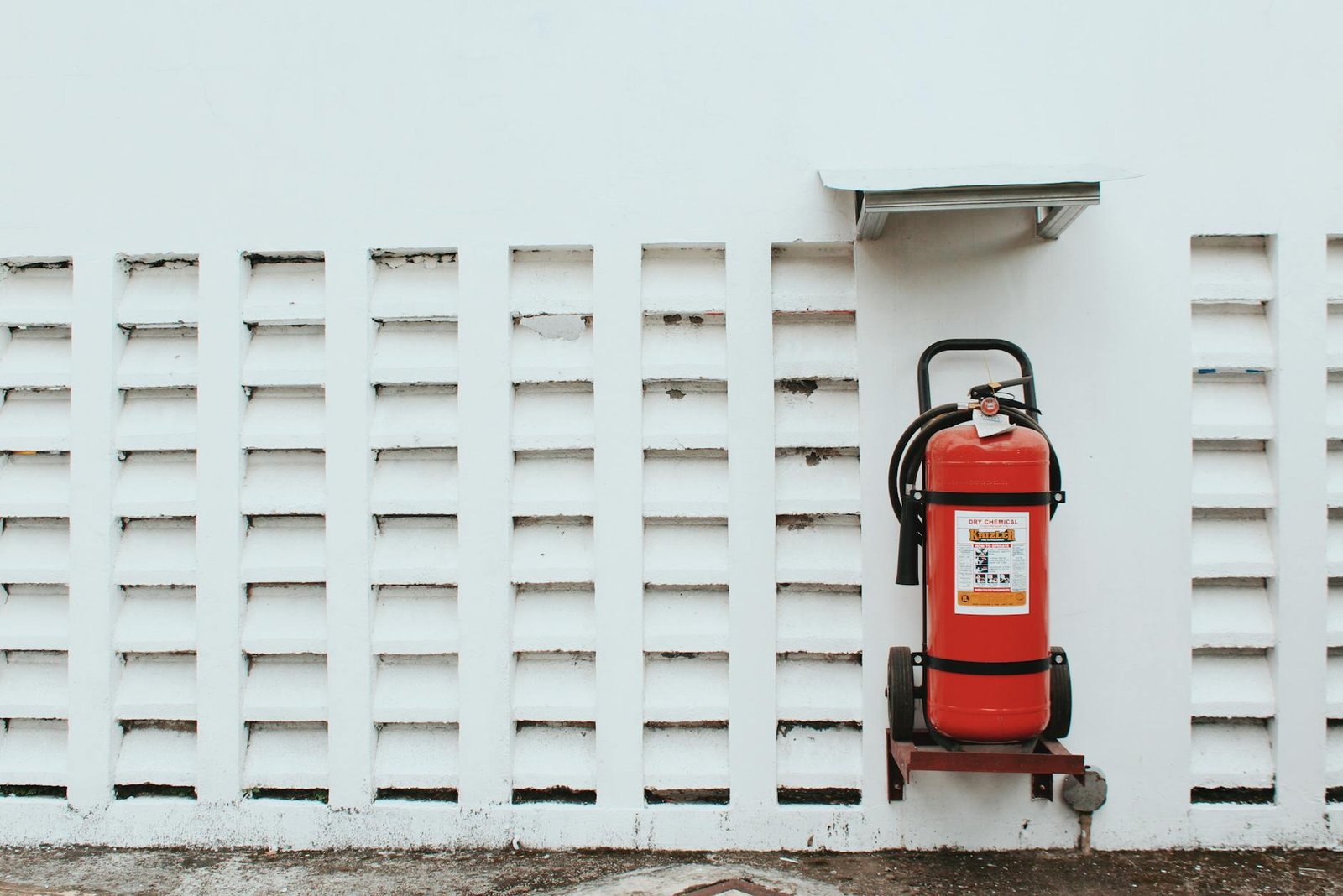
In the complex landscape of industrial and commercial fire safety, the physical presence of an extinguisher is only half the battle. The other half lies in the strategic placement, mounting, and documentation of these assets. Facility managers across India, from the sprawling warehouses in Gujarat to the high-rise IT parks in Bengaluru, often overlook the technical requirements of fire extinguisher drawing and layout planning. Compliance with the National Building Code (NBC) 2016 and relevant Indian Standards is not merely a bureaucratic hurdle; it is a critical life-safety imperative.
Safex established 1972, and over the past five decades, we have observed that most fire safety failures are not due to faulty equipment, but due to poor planning—specifically, the lack of a precise “fire extinguisher drawing” or installation layout plan. This guide serves as a professional manual for architects, safety officers, and facility managers to ensure their premises remain compliant, functional, and safe.
The Importance of Precision in Fire Extinguisher Layout Planning
When designing a fire safety plan for a building, the fire extinguisher drawing is the foundational document. It dictates where each unit must be placed, the specific type of extinguisher required based on the fire load, and the accessibility of these units during an emergency. Under the guidelines stipulated by the NBC 2016 (Part 4: Fire and Life Safety), every floor of a building must have a clearly defined fire safety plan that includes the location of first-aid firefighting appliances.
A professional fire extinguisher drawing must be drafted to scale. It should identify high-risk zones, such as electrical server rooms, kitchen areas, and chemical storage units. For example, a server room requires CO2-based extinguishers to avoid damaging sensitive electronic hardware, whereas a general office area might suffice with an ABC powder-based unit. If the layout drawing is inaccurate, the facility may face severe penalties during audits by the local Fire and Emergency Services departments. Furthermore, in the event of a fire, every second counts. If a staff member has to search for an extinguisher because the layout was poorly planned or the signage is incorrect, the risk of a minor incident escalating into a catastrophe increases exponentially.
Understanding Compliance: IS 15683 and IS 2190
Any discussion on fire extinguisher placement must begin with IS 15683:2018, which is the Indian Standard for portable fire extinguishers. This standard outlines the design, testing, and performance requirements for extinguishers. When you are drafting your fire extinguisher drawing, you must ensure that the equipment specified matches these standards. An extinguisher that is not IS-certified may fail when needed most, or worse, cause injury to the operator.
Equally important is IS 2190, the code of practice for the selection, installation, and maintenance of portable fire extinguishers. This standard specifies that extinguishers should be mounted in a way that they are easily accessible and visible. Typically, the carrying handle of an extinguisher should be no more than 1.5 meters from the floor for smaller units and 1 meter for larger, heavier units. Your fire extinguisher drawing must reflect these mounting heights precisely.
In India, the cost of non-compliance can be devastating. Beyond the legal liabilities, businesses face the risk of insurance claims being rejected if the installation does not meet the standards set forth in the NBC 2016. For a medium-sized facility, investing in professional planning and high-quality equipment is a cost-effective measure. You can expect to invest between ₹1,500 and ₹3,000 for standard 2kg to 4kg ABC powder extinguishers, while heavy-duty industrial units can range from ₹5,000 to ₹15,000. These costs are negligible compared to the potential loss of life and property.
The PASS Method: Essential Training for Occupants
An accurate fire extinguisher drawing is useless if the building occupants do not know how to operate the equipment. Once the extinguishers are installed according to your layout plan, the next step is training. The industry-standard technique for using a fire extinguisher is the PASS method:
1. Pull: Pull the pin at the top of the extinguisher. This breaks the tamper seal and allows you to discharge the agent.
2. Aim: Aim the nozzle or hose at the base of the fire, not the flames. The goal is to extinguish the fuel source.
3. Squeeze: Squeeze the handle to release the extinguishing agent.
4. Sweep: Sweep from side to side at the base of the fire until it appears to be out.
Every fire extinguisher drawing should be accompanied by clear signage near the unit, explaining the PASS method. In environments like busy manufacturing plants or high-footfall shopping malls, simple visual aids can prevent panic and ensure that the first responder acts effectively.
Strategic Placement and Environmental Considerations
When creating a fire extinguisher drawing for a facility in India, you must account for local environmental factors. In coastal cities like Mumbai or Chennai, corrosion is a significant concern. Extinguishers should be placed in areas that are protected from direct salt-laden winds, or they should be housed in corrosion-resistant cabinets. In contrast, in the dusty, hot environments of Rajasthan or industrial hubs in Haryana, the focus should be on ensuring that the nozzle and safety pin are protected from dust accumulation, which could render the unit inoperable.
Your drawing should indicate the “travel distance” to the nearest fire extinguisher. According to Indian Standards, the maximum travel distance should not exceed 15 to 20 meters, depending on the fire hazard classification of the area. For high-hazard areas, this distance is significantly lower. By mapping these distances on your drawing, you ensure that no corner of your building is left unprotected.
Comparison of Fire Extinguisher Types for Layout Planning
To assist in your decision-making process, the following table outlines the common types of extinguishers that should be represented in your facility’s fire safety drawing.
| Extinguisher Type | Best Suited For | Typical Price Range (INR) | Maintenance Requirement |
| ABC Powder | Wood, Paper, Cloth, Electrical | ₹1,500 – ₹4,500 | Annual Hydrostatic Test |
| CO2 | Electrical Panels, Server Rooms | ₹3,500 – ₹9,000 | Weight check every 6 months |
| Water (Stored Pressure) | Class A Fires (Solid Combustibles) | ₹2,000 – ₹5,000 | Regular pressure gauge check |
| Foam (AFFF) | Liquid Fires (Petrol, Oil, Solvents) | ₹2,500 – ₹6,000 | Annual foam concentrate check |
Frequently Asked Questions (FAQ)
Q: How often must we review our fire extinguisher drawing?
A: You should review your fire extinguisher drawing annually or whenever there is a change in the floor layout, renovation, or significant change in the fire load of a specific area. This ensures compliance with NBC 2016.
Q: What is the recommended mounting height for an extinguisher?
A: Per IS 2190, the carrying handle of an extinguisher should be placed at a height of approximately 1.0 to 1.5 meters from the floor to ensure it is accessible to most adults during an emergency.
Q: Are there specific penalties for not having a fire safety plan?
A: Yes. In India, local municipal authorities and Fire Services departments can impose heavy fines, seal premises, or revoke occupancy certificates if fire safety compliance—including proper extinguisher placement—is not met.
Q: Can I use the same extinguisher for all types of fires?
A: No. While ABC powder extinguishers are versatile, they can cause damage to sensitive electronics. Always refer to your fire extinguisher drawing, which should specify the correct type for the specific risk area (e.g., CO2 for server rooms).
Q: What is the PASS method?
A: PASS stands for Pull (the pin), Aim (at the base of the fire), Squeeze (the handle), and Sweep (side to side). This is the standard procedure for using portable fire extinguishers effectively.
Q: How much should I budget for a standard office floor?
A: For a standard office floor of 2,000 sq. ft., you should budget roughly ₹15,000 to ₹30,000 for a mix of high-quality extinguishers, signage, and protective cabinets, ensuring you meet IS 15683 standards.
Conclusion
Fire safety is a continuous process, not a one-time setup. A well-drafted fire extinguisher drawing acts as the blueprint for your facility’s resilience against fire hazards. By adhering to the standards set by the NBC 2016 and ensuring all equipment complies with IS 15683, you are not just protecting your assets; you are safeguarding your workforce.
At Safex, we understand the nuances of the Indian regulatory environment. Safex established 1972, and our commitment to providing reliable, compliant, and high-performance fire safety solutions remains our top priority. Whether you are a facility manager overseeing a small office or a large industrial complex, the precision of your fire safety layout is the most critical factor in emergency preparedness. Do not treat your fire safety plan as a secondary document—make it the cornerstone of your facility’s operational safety.
Resources
For further information on fire safety standards and guidelines, please consult the following official resources:
(Note: Ensure all installation and maintenance activities are performed by certified professionals to maintain the integrity of your fire safety systems.)