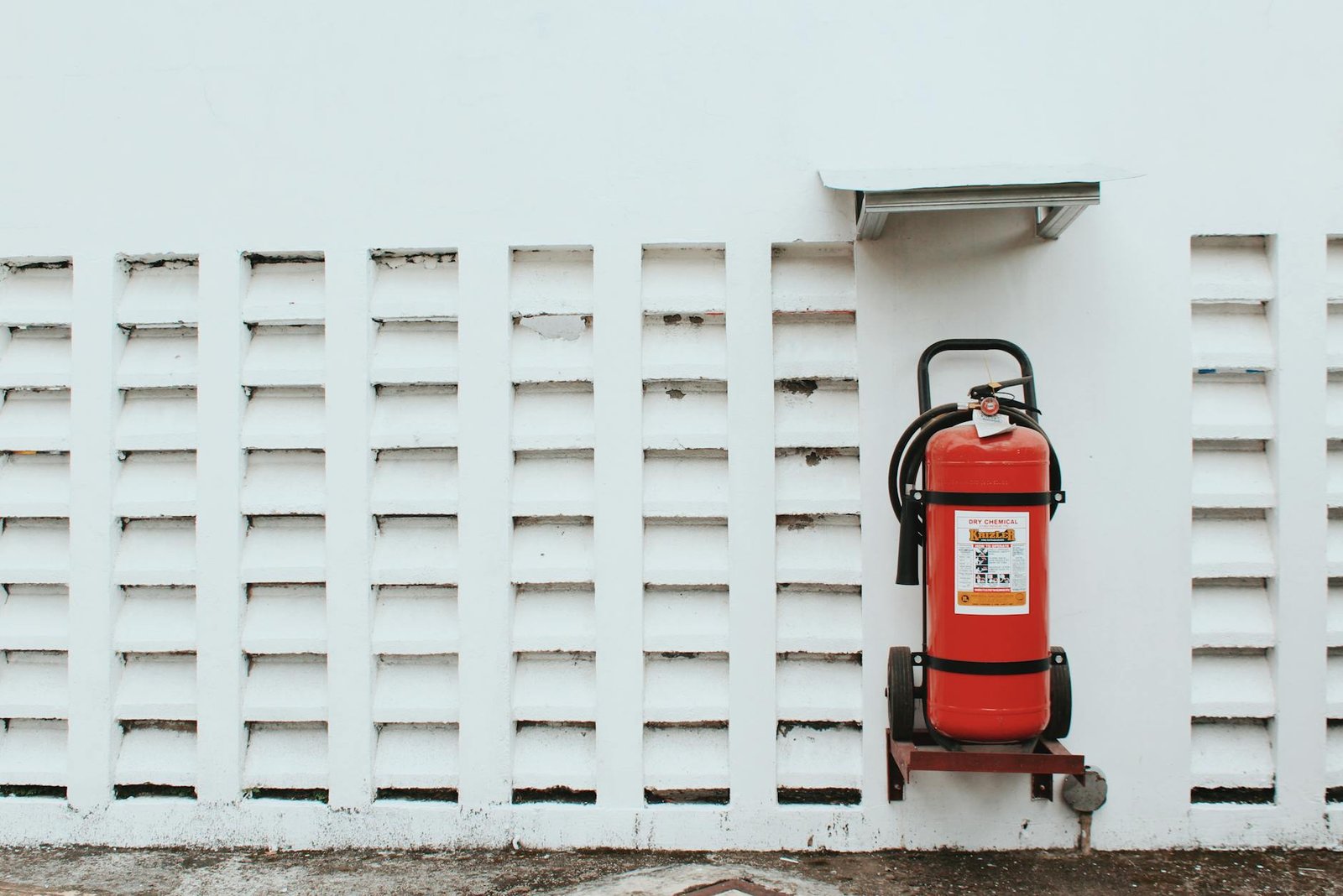
If you’ve ever looked at a fire extinguisher and wondered what the different colours mean, you’re not alone. In India, fire extinguisher colour codes are not random—they indicate the type of extinguishing agent inside and the kind of fire it is designed to fight. Choosing the wrong one in an actual fire situation can make things worse instead of better. This guide breaks down the meaning behind each colour, where they are used in real environments like factories and offices, and how to select the right one based on actual risks and BIS guidelines.
What Are Fire Extinguisher Colour Codes?
Fire extinguisher colour codes in India are visual indicators that identify the extinguishing agent inside the cylinder. These codes help users quickly recognize whether the extinguisher is suitable for specific fire classes like electrical, flammable liquids, or solid materials. Following these industrial safety standards ensures that even in high-stress situations, the correct tool is selected immediately.
Fire Extinguisher Colour Codes Explained
1. Red (Water Extinguisher)
The base colour of most extinguishers is red, but a fully red body typically indicates a water-based extinguisher.
- Best for: Class A fires (wood, paper, cloth)
- Where used: Warehouses, schools, offices
- Limitation: Not safe for electrical or oil fires
2. Cream (Foam Extinguisher)
Cream band indicates foam-based extinguishers.
- Best for: Class A and B fires (solids and flammable liquids)
- Where used: Petrol pumps, paint shops
- Limitation: Not suitable for electrical fires
- Explore foam options here: foam fire extinguisher
3. Blue (Dry Powder / ABC Extinguisher)
Blue marking represents dry chemical powder extinguishers.
- Best for: Class A, B, C fires (multi-purpose)
- Where used: Factories, homes, commercial buildings
- Real-world insight: In many industrial setups, ABC extinguishers are the default choice because they handle mixed fire risks.
- Check available options: ABC fire extinguisher
4. Black (CO2 Fire Extinguisher)
Black band indicates carbon dioxide extinguishers.
- Best for: Electrical fires and flammable liquids
- Where used: Server rooms, electrical panels, offices
- Practical note: CO2 leaves no residue, which is why it’s preferred around electronics.
- See product range: CO2 fire extinguisher
5. Yellow (Wet Chemical / Kitchen Extinguisher)
Yellow marking is used for wet chemical extinguishers.
- Best for: Class K fires (cooking oils, fats)
- Where used: Commercial kitchens, restaurants
- Important: Using water on oil fires can cause flare-ups—this is where wet chemical is critical.
- Explore kitchen-specific units: kitchen fire extinguisher
Real-World Use Cases
- Home: Most homes benefit from ABC extinguishers because they cover multiple fire types—especially electrical and small kitchen fires.
- Office: CO2 extinguishers are commonly placed near electrical panels and server rooms to prevent equipment damage.
- Factory: Factories usually require a combination—ABC for general risk, foam for liquid storage areas, and CO2 for machinery.
- Kitchen: Wet chemical extinguishers are essential in commercial kitchens where oil fires are a real risk.
- Electrical Panels: CO2 is the only safe and effective choice here due to its non-conductive and residue-free nature.
- Server Rooms: CO2 or clean agent fire extinguisher systems are used to avoid damaging sensitive electronics.
How It Works (Technical Overview)
Fire extinguishers work by removing one or more elements of the fire triangle: heat, fuel, or oxygen. In India, these devices must comply with the IS 15683 standard to ensure reliability.
- Fire classes:
- Class A: Solid materials
- Class B: Flammable liquids
- Class C: Gases
- Class D: Metals
- Class K: Cooking oils
- Extinguishing agents:
- Water cools
- Foam smothers
- Dry powder interrupts chemical reaction
- CO2 displaces oxygen
- Wet chemical cools and forms a barrier
Comparison Table
| Type | Best For | Limitation | Cost Range (India) |
| Water (Red) | Paper, wood | Not for electrical | ₹1,500–₹3,000 |
| Foam (Cream) | Liquids, solids | Limited electrical use | ₹2,000–₹4,500 |
| ABC Powder (Blue) | Multi-purpose | Leaves residue | ₹1,800–₹5,000 |
| CO2 (Black) | Electrical | Limited duration | ₹3,000–₹7,000 |
| Wet Chemical (Yellow) | Kitchen fires | Specific use only | ₹4,000–₹8,000 |
Price and Selection in India
When selecting a fire extinguisher, don’t just look at price. Match it with your risk. For a complete range of options, you can explore: fire extinguishers
- Homes: ABC extinguisher is the safest choice.
- Offices: Combine ABC + CO2.
- Factories: Risk-based selection (multiple types).
- Kitchens: Wet chemical is non-negotiable.
Common Mistakes
- Buying only one type for all risks.
- Using water on electrical or oil fires.
- Ignoring refill and maintenance schedules.
- Placing extinguishers in inaccessible locations.
- Not training staff on usage.
In real incidents, the biggest failure is not the equipment—it’s improper selection and lack of awareness regarding Indian safety protocols.
FAQs
What is the most common fire extinguisher colour in India?
Blue (ABC type) is the most common because it handles multiple fire classes.
Can I use a red extinguisher for electrical fires?
No. Water-based extinguishers can cause electric shock.
Why is CO2 black in colour coding?
The black band indicates carbon dioxide gas, used mainly for electrical fires.
Are colour codes mandatory in India?
Yes, they follow BIS guidelines for identification and safety.
Which extinguisher is best for home use?
ABC fire extinguisher is generally the safest and most versatile.
Do colour codes differ internationally?
Yes, but many countries follow similar conventions with slight variations.
Conclusion
Fire extinguisher colour codes are not just labels—they are decision-making tools during emergencies. In real-world situations, seconds matter, and recognizing the right extinguisher can prevent escalation. For most environments in India, a combination approach works best rather than relying on a single type. If you’re setting up safety for your home, office, or facility, focus on risk-based selection and consult with experts to become a Safex distributor or partner.
Image Prompt: Realistic image showing multiple fire extinguishers with different colour bands (red, cream, blue, black, yellow) placed side by side in an industrial setting.
Alt Text: Fire extinguisher colour codes in India showing different types and their markings.
SEO Details
- Focus Keyword: Fire extinguisher colour codes in India
- SEO Title: Fire Extinguisher Colour Codes in India Explained (Complete Guide)
- Meta Description: Learn fire extinguisher colour codes in India, what each colour means, and how to choose the right type for home, office, and industrial use.
- Slug: fire-extinguisher-colour-codes-india
- Word Count: ~1500 words