Clean Agent Fire Suppression Systems: A Comprehensive Guide for Indian Facilities
In the modern landscape of high-value infrastructure, the traditional approach of using water-based sprinklers or dry chemical powder for every fire hazard is no longer sufficient. For server rooms, data centers, archives, and control rooms, the priority is not just extinguishing the fire, but doing so without damaging the sensitive assets themselves. This is where Clean Agent Fire Suppression Systems have become the gold standard.
Safex established 1972, and throughout our five decades of operation, we have witnessed the evolution of fire safety from simple bucket-and-sand protocols to sophisticated, automated gaseous suppression systems. As a facility manager or business owner in India, understanding the nuances of clean agents is critical to maintaining compliance with the National Building Code (NBC 2016) and ensuring business continuity.
Understanding Clean Agent Technology and Its Necessity
A clean agent is an electrically non-conductive, volatile, or gaseous fire extinguishant that does not leave a residue upon evaporation. Unlike water, which causes irreversible electrical shorts and corrosion, or dry chemical powder, which creates a cleanup nightmare in sensitive electronic environments, clean agents are designed to suppress fire at the molecular level.
Under the guidelines provided in NBC 2016 Part 4, fire safety in commercial and institutional buildings requires specific protection for high-risk zones. Clean agents like HFC-227ea (clean agent fire extinguisher) or FK-5-1-12 (Novec 1230) work by absorbing heat and interrupting the chemical chain reaction of a fire. These systems are typically deployed in total flooding configurations. When a fire is detected, the agent is discharged into the protected space, reaching the design concentration within seconds.
For an IT park in Bengaluru or a high-end financial archive in Mumbai, the cost of downtime caused by a fire—or the collateral damage caused by an ineffective extinguishing agent—far outweighs the initial investment in a clean agent system. These systems are inherently safe for human-occupied spaces when designed to the correct concentration, making them the preferred choice for 24/7 mission-critical operations.
Regulatory Compliance: IS Standards and NBC 2016
Compliance in India is not merely a suggestion; it is a legal imperative. Fire safety audits conducted by local fire departments and insurance providers heavily scrutinize the installation and maintenance of suppression systems. While IS 15683:2018 governs the specifications for portable fire extinguishers, the design and installation of gaseous suppression systems generally follow international benchmarks like NFPA 2001, which are widely accepted and mandated by the NBC 2016 framework.
When installing a clean agent system, it is vital to ensure that the room is adequately sealed. A “door fan test” or room integrity test is an essential part of the commissioning process. If a room is not airtight, the agent will leak out before it can suppress the fire, leading to a failure that could result in total asset loss.
Facility managers must also consider the periodic maintenance of these systems. This involves checking cylinder pressures, inspecting piping integrity, and ensuring that the electrical control panels—the “brains” of the system—are fully functional. Neglecting these maintenance protocols can lead to significant liabilities, including the voiding of insurance policies and potential legal action in the event of a fire-related casualty.
The PASS Method and First-Response Safety
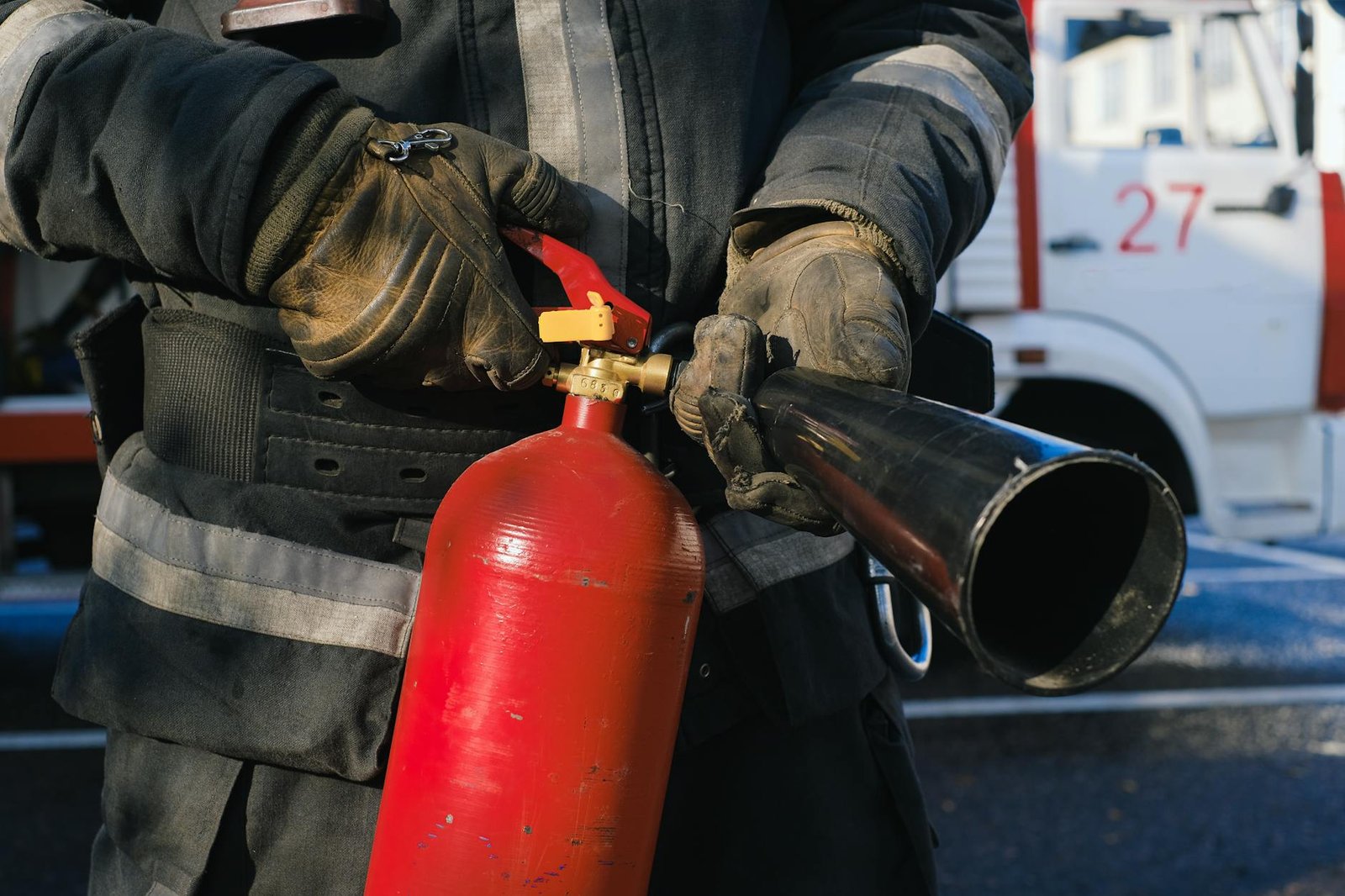
While clean agent systems are automated, they are often supplemented by portable extinguishers for small, localized fire incidents. According to IS 15683, portable extinguishers must be readily accessible and regularly inspected. When using any portable fire extinguisher, personnel must be trained in the PASS method:
1. Pull: Pull the pin at the top of the extinguisher. This releases the locking mechanism and allows you to discharge the extinguisher.
2. Aim: Aim at the base of the fire, not the flames. The fuel source is what needs to be extinguished.
3. Squeeze: Squeeze the handle slowly and evenly. This releases the extinguishing agent.
4. Sweep: Sweep the nozzle from side to side at the base of the fire until the flames appear to be out.
In an industrial setting, such as a warehouse in Gujarat, having the right class of extinguisher is as important as knowing how to use it. Clean agent portable extinguishers (often using Halon alternatives) are available for small, high-value equipment zones, though they are significantly more expensive than standard ABC powder units.
Investment Costs and Economic Considerations
One of the primary questions we encounter at Safex is the cost associated with clean agent systems. Because these systems are highly engineered, there is no “one-size-fits-all” price. However, to provide a realistic budgetary framework for Indian procurement:
The price variance is driven by the volume of the space, the required concentration of the agent, and the sophistication of the detection system (smoke sensors, cross-zoning, and manual abort switches). While this is a significant capital expenditure, it is an insurance policy against catastrophic data loss.
Comparison of Fire Suppression Approaches
| Feature | Water Sprinklers | Dry Chemical Powder | Clean Agent Systems |
| Residue | High (Water damage) | High (Powder cleanup) | None (Evaporates) |
| Conductivity | Conductive | Non-conductive | Non-conductive |
| Primary Use | General occupancy | Open areas/Industrial | Server rooms/Archives |
| Cost | Low | Low | High |
Frequently Asked Questions (FAQ)
Q: What is the primary advantage of using a clean agent over a traditional water sprinkler in a server room?
A: Clean agents are non-conductive and leave no residue. Water sprinklers cause irreversible short-circuiting and corrosion to sensitive electronics, whereas clean agents extinguish the fire without damaging the hardware.
Q: Are clean agent systems safe for people working in the room?
A: Yes, when designed according to engineering standards and maintained properly, clean agents like Novec 1230 and FM-200 are safe for human exposure at design concentrations.
Q: What does IS 15683 specify regarding portable fire extinguishers?
A: IS 15683:2018 sets the requirements for the construction, performance, and testing of portable fire extinguishers, ensuring they provide reliable protection in commercial and industrial settings.
Q: How much should I budget for a standard 2kg clean agent portable extinguisher?
A: You should budget approximately ₹5,000 to ₹10,000 for a high-quality 2kg clean agent extinguisher suitable for small electrical hazards.
Q: What is the PASS method, and when should I use it?
A: The PASS method (Pull, Aim, Squeeze, Sweep) is the industry-standard technique for operating a portable fire extinguisher during the initial stages of a fire.
Q: Why is the “door fan test” important for a total flooding clean agent system?
A: The door fan test verifies the room’s integrity. If the room is not airtight, the clean agent will escape before it can reach the concentration necessary to suppress the fire, rendering the system ineffective.
Resources
For further technical specifications and guidance on fire safety compliance, please refer to the following official documentation:
Conclusion
Fire safety is a pillar of operational resilience. As we have explored, the transition to clean agent suppression systems is a strategic necessity for any organization relying on sensitive electronic infrastructure. By adhering to the standards set forth by the National Building Code and ensuring your staff is trained in basic response techniques like the PASS method, you create a robust defense against fire hazards.
Safex established 1972, and our commitment to providing world-class fire safety solutions remains as steadfast today as it was at our inception. We understand the unique challenges faced by Indian businesses—from the humidity of coastal cities to the high-density requirements of metropolitan IT hubs. Whether you are upgrading your fire suppression infrastructure or seeking a comprehensive safety audit, our expertise is dedicated to protecting your assets, your people, and your future.