In the modern landscape of high-value infrastructure, from server rooms in Bengaluru’s IT corridors to high-end manufacturing units in Gujarat’s industrial belts, the risk of fire is not merely a threat to property—it is a threat to business continuity. Traditional water-based fire sprinkler systems, while effective for general fire suppression, can be catastrophic when deployed in environments housing sensitive electronic equipment, archives, or high-precision machinery. This is where Clean Agent fire suppression systems become indispensable.
At Safex Fire Services, we have observed a significant shift in how Indian facility managers approach fire safety. The transition from legacy systems to advanced gaseous suppression is driven by the need to protect assets without leaving behind residues that could cause secondary damage. Since Safex established 1972, we have remained at the forefront of this evolution, ensuring that Indian industries align their safety protocols with both international best practices and the rigorous requirements of the National Building Code (NBC) of India.
Understanding Clean Agent Technology and Compliance
Clean agents are electrically non-conductive, volatile, or gaseous fire extinguishants that do not leave a residue upon evaporation. Unlike carbon dioxide, which can be hazardous to human life in high concentrations, or water, which causes irreversible damage to hardware, clean agents provide a sophisticated solution for enclosed spaces.
Under the guidance of the National Building Code (NBC 2016) Part 4, fire protection strategies for critical areas must prioritize the integrity of the installation. For server rooms, data centers, and control rooms, the objective is “Total Flooding.” This involves releasing the agent into a protected volume to reach a design concentration that extinguishes the fire at a molecular level.
Compliance in India is not merely a suggestion; it is a legal imperative. Facility managers must ensure that their fire protection systems adhere to the relevant Indian Standards. While IS 15683:2018 governs the specifications for portable fire extinguishers, the design and installation of gaseous suppression systems generally follow international standards like NFPA 2001, which are widely accepted and integrated into the broader framework of the NBC 2016. Failure to maintain these systems can lead to severe liability issues, invalidation of insurance policies, and, in the event of a fire, catastrophic operational downtime.
Why Clean Agents Outperform Traditional Suppression
The primary advantage of a clean agent system is its ability to suppress a fire in its incipient stage without human intervention or equipment damage. When a fire occurs in a server rack, every second of delay increases the risk of data loss. Clean agents like clean agent fire extinguisher (HFC-227ea) or Novec 1230 are designed to extinguish fires in under 10 seconds.
From a financial perspective, the initial investment in a clean agent system is higher than standard water-based systems. However, when you factor in the cost of potential downtime and the replacement of destroyed IT hardware, the return on investment is clear. For a typical small server room (approx. 100-200 sq. ft.), a complete clean agent suppression setup might range from ₹1,50,000 to ₹4,00,000 depending on the agent type and cylinder capacity. In contrast, a portable extinguisher, which serves as a secondary line of defense, typically ranges from ₹2,000–₹5,000 for a 2kg unit, depending on the specifications compliant with IS 15683.
The PASS Method for Manual Intervention
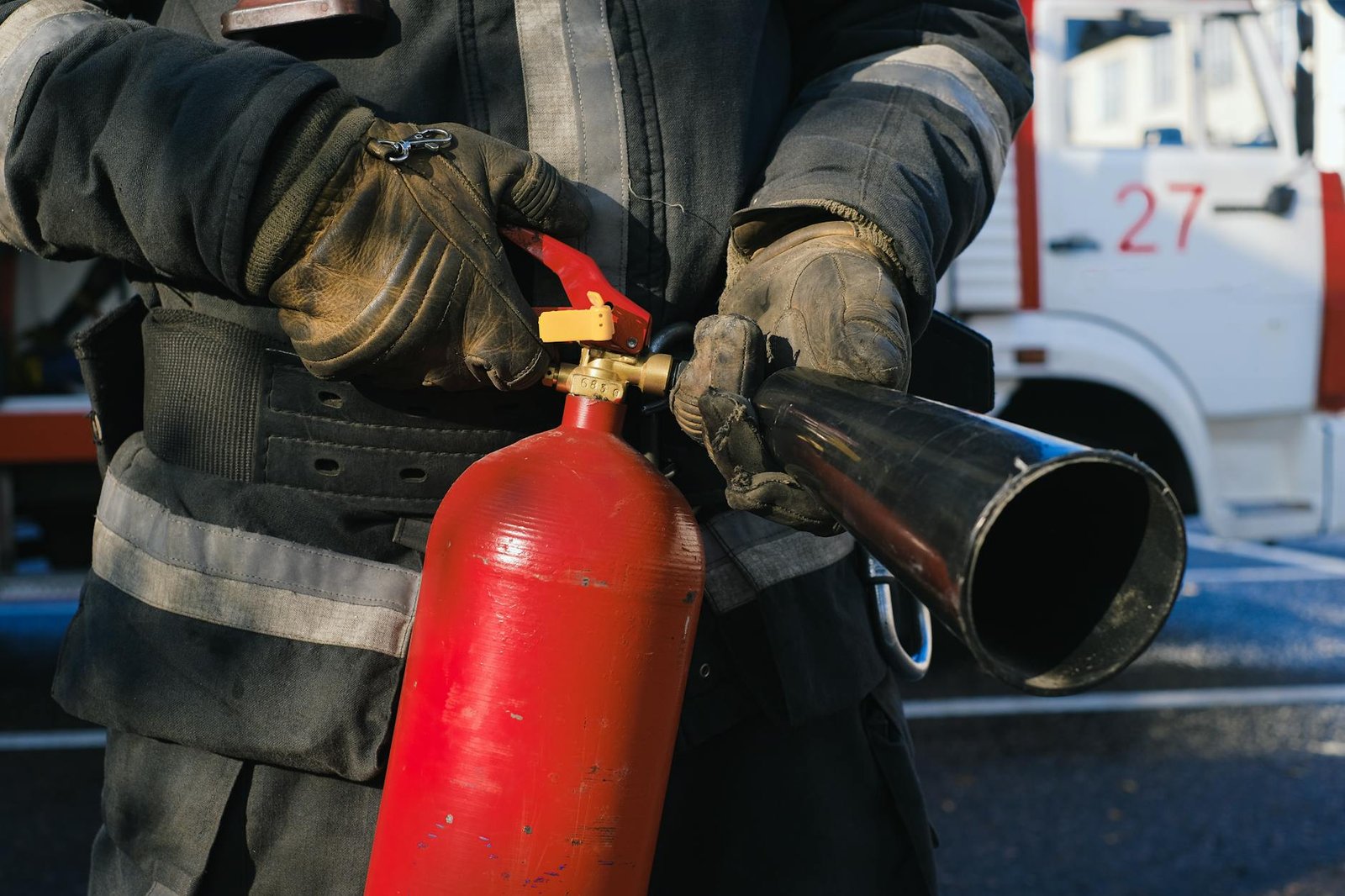
While automated clean agent systems handle deep-seated fires, manual fire extinguishers remain a mandatory requirement in the corridors and peripheral areas of any facility. Whether you are using a CO2 or a specialized clean agent portable extinguisher, facility personnel must be trained in the PASS method:
1. Pull: Pull the pin at the top of the extinguisher. This breaks the tamper seal and allows you to discharge the agent.
2. Aim: Aim the nozzle or hose at the base of the fire. Aiming at the flames is ineffective as it does not target the fuel source.
3. Squeeze: Squeeze the handle slowly and evenly to release the extinguishing agent.
4. Sweep: Sweep the nozzle from side to side at the base of the fire until it appears to be extinguished.
Proper training on the PASS method is a core component of the fire safety audits we conduct at Safex. Even with the most advanced automatic systems, human presence in the initial minutes of an incident can prevent a localized flare-up from becoming a full-scale emergency.
Strategic Selection: Comparing Suppression Technologies
Choosing the right suppression technology requires a thorough risk assessment of the facility. Below is a comparison of common fire suppression methods used in Indian industrial and commercial settings.
| Feature | Water Sprinkler | Clean Agent (Gas) | CO2 System |
| Primary Use | General occupancy | IT/Data/Archives | Unmanned hazards |
| Residue | Leaves water damage | None (Clean) | None |
| Safety | Safe for humans | Safe for humans | Suffocation hazard |
| Cost Range | Low/Moderate | High | Moderate |
For an IT park in Bengaluru or a pharmaceutical laboratory in Hyderabad, the choice is almost always a clean agent system. The cost of a clean agent system, while significant, is a fraction of the cost of a single day of system outage in a data center. Conversely, CO2 systems are excellent for machine rooms or transformer vaults, but they require strict evacuation protocols due to their oxygen-depleting nature.
Compliance, Maintenance, and Liability
The National Building Code (NBC 2016) emphasizes that the installation of fire safety equipment is only half the battle; the other half is rigorous, periodic maintenance. Many facility managers in India make the mistake of installing a system and assuming it will function indefinitely without inspection.
According to IS 2190, which provides the code of practice for the selection, installation, and maintenance of fire extinguishers, regular inspection is mandatory. For clean agent suppression systems, this includes checking cylinder pressure, verifying the integrity of the room’s enclosure (door seals, cable penetrations), and testing the control panel.
Liability in India is becoming increasingly stringent. Under current fire safety laws, if a fire occurs and it is discovered that the suppression system was not maintained according to the manufacturer’s specifications or the relevant IS codes, the facility manager or the building owner can face severe legal consequences, including heavy fines and potential criminal liability. Safex Fire Services works closely with clients to establish a maintenance schedule that ensures compliance with both NBC 2016 and the specific operational requirements of their fire suppression hardware.
Practical Considerations for Indian Climate and Infrastructure
Operating fire safety equipment in India presents unique challenges, such as high humidity, extreme temperatures, and, in some regions, corrosive environments. These factors can degrade the seals and components of fire suppression systems.
For instance, in coastal industrial areas, we often recommend stainless steel cabinets and enhanced corrosion-resistant coatings for cylinders. Furthermore, the power fluctuations common in some industrial zones can lead to faulty alarm signals. It is essential to use high-quality, surge-protected control panels that comply with IS standards. When procuring equipment, always verify the BIS certification. A cheap, non-certified cylinder might cost ₹1,500 less, but it poses a significant risk of failure during a high-stress event. Always opt for equipment that is tested and certified per IS 15683 standards to ensure reliability.
Frequently Asked Questions (FAQ)
Q: What is the primary difference between a clean agent and a CO2 extinguisher?
A: A clean agent is designed to leave no residue and is generally safe for use in occupied spaces. CO2 is an asphyxiant and is dangerous to use in rooms where people are present without proper ventilation and evacuation protocols.
Q: Are clean agent systems expensive to install in India?
A: While the upfront cost is higher than traditional systems—ranging from ₹1,50,000 for small server rooms to several lakhs for larger industrial zones—the cost is justified by the protection of high-value assets and the avoidance of operational downtime.
Q: How often should I perform maintenance on my fire suppression system?
A: According to the guidelines set forth by the National Building Code (NBC 2016) and relevant IS standards, you should conduct a visual inspection monthly and a comprehensive professional maintenance check at least every six months.
Q: What is the PASS method and why is it important?
A: The PASS method (Pull, Aim, Squeeze, Sweep) is the industry-standard technique for using portable fire extinguishers. It ensures that the user targets the base of the fire effectively, maximizing the chance of suppression before the fire spreads.
Q: Does IS 15683 apply to clean agent systems?
A: IS 15683:2018 specifically covers portable fire extinguishers. While clean agents are used within these extinguishers, the suppression systems (the piping and control panels) are typically governed by international standards like NFPA 2001, which are adopted in the NBC 2016 framework.
Q: What are the risks of using outdated fire safety equipment?
A: Using outdated equipment can lead to system failure during an emergency, potential legal liability under Indian fire safety laws, and the invalidation of your commercial fire insurance coverage.
Resources
For further information regarding fire safety standards and regulatory requirements in India, please refer to the following resources:
Conclusion
Fire safety is not a “set it and forget it” aspect of facility management. It is a dynamic process that requires constant vigilance, regular training, and a commitment to using high-quality, certified equipment. Whether you are upgrading a legacy server room or designing a new industrial facility, the integration of clean agent suppression systems is a strategic decision that protects your business from the unpredictable nature of fire.
At Safex Fire Services, we understand the specific nuances of the Indian regulatory environment and the practical challenges faced by facility managers. Since Safex established 1972, we have been dedicated to providing not just equipment, but comprehensive fire safety solutions that ensure peace of mind. By adhering to the standards set by the NBC 2016 and IS 15683, and by training your team in the PASS method, you are taking the necessary steps to safeguard your facility, your employees, and your future.
Fire risk management is an investment in stability. As you review your current fire safety protocols, remember that the most effective suppression system is the one that is properly installed, regularly maintained, and fully understood by those who operate it. We encourage you to audit your current systems, ensure your staff is adequately trained, and consult with professionals to identify any gaps in your current fire safety strategy. Your commitment to safety today is the best defense against the uncertainties of tomorrow.