Fire safety is not merely a regulatory box to tick; it is a fundamental pillar of operational continuity for any business in India. Whether you are managing a high-density IT park in Bengaluru, a sprawling chemical warehouse in Gujarat, or a manufacturing facility in the NCR region, the selection of the correct fire suppression agent is a critical decision that balances human life, asset protection, and legal compliance. At Safex Fire Services, we have been helping organizations navigate the complexities of fire protection since our establishment in 1972.
The modern industrial landscape in India demands more than just basic fire extinguishers. It requires a sophisticated understanding of how specific agents interact with different classes of fire. Choosing the wrong suppression agent can be as damaging as the fire itself, causing collateral harm to sensitive electronics, contaminating food-grade production areas, or failing to suppress high-energy fuel fires. This guide explores the technical landscape of fire suppression, grounded in the National Building Code (NBC 2016) and relevant Indian Standards.
Understanding Fire Suppression Agents and IS Standards
In India, the gold standard for fire safety is the National Building Code (NBC 2016), specifically Part 4, which outlines the requirements for Fire and Life Safety. When we talk about fire suppression “agents,” we are referring to the substance contained within an extinguisher or a fixed fire suppression systems that works to extinguish a fire by interrupting the chemical chain reaction, cooling the fuel, or displacing oxygen.
The primary governing standard for portable fire extinguishers in India is IS 15683. This standard dictates the performance, construction, and testing requirements for portable fire extinguishers. When you procure equipment, you must ensure that the agents used—whether they are ABC powder, carbon dioxide (CO2), or clean agents—are certified to meet these rigorous specifications. Using non-compliant equipment is not only a safety risk but also exposes facility managers to significant legal liability under local fire department norms.
For instance, in a server room environment, the use of dry chemical powder (DCP) is often discouraged because the residue can permanently damage delicate circuitry. Instead, industry professionals opt for clean agents or CO2. Conversely, in open-area logistics hubs, ABC dry chemical powder remains the standard due to its versatility and affordability. Understanding the chemistry of the agent is the first step toward effective fire risk management.
The Role of Clean Agents and Specialized Suppression
As Indian infrastructure evolves, so does the sensitivity of the equipment we house. Clean agents, which are non-conductive and leave no residue, have become the preferred solution for data centers, telecommunication exchanges, and command control rooms. Unlike traditional water or powder-based systems, clean agents—such as HFC-227ea or FK-5-1-12—are designed to extinguish fires without damaging the high-value assets they protect.
From a compliance perspective, the transition to these specialized agents is often driven by the need to meet the stringent uptime requirements of modern businesses. While the initial capital expenditure for a clean agent system is higher—often ranging from ₹50,000 to several lakhs depending on the volume of the protected space—the cost of downtime caused by a fire or an accidental discharge of a messy agent is far greater.
Facility managers must ensure that any fixed or portable system installed follows the guidelines set out in IS 2190. This standard provides the code of practice for the selection, installation, and maintenance of portable fire extinguishers. Regular maintenance, including the hydro-testing of cylinders and the verification of agent weight, is mandatory. Ignoring these maintenance intervals is a common cause of failure during fire safety audits conducted by local municipal corporations.
Operational Proficiency: The PASS Method
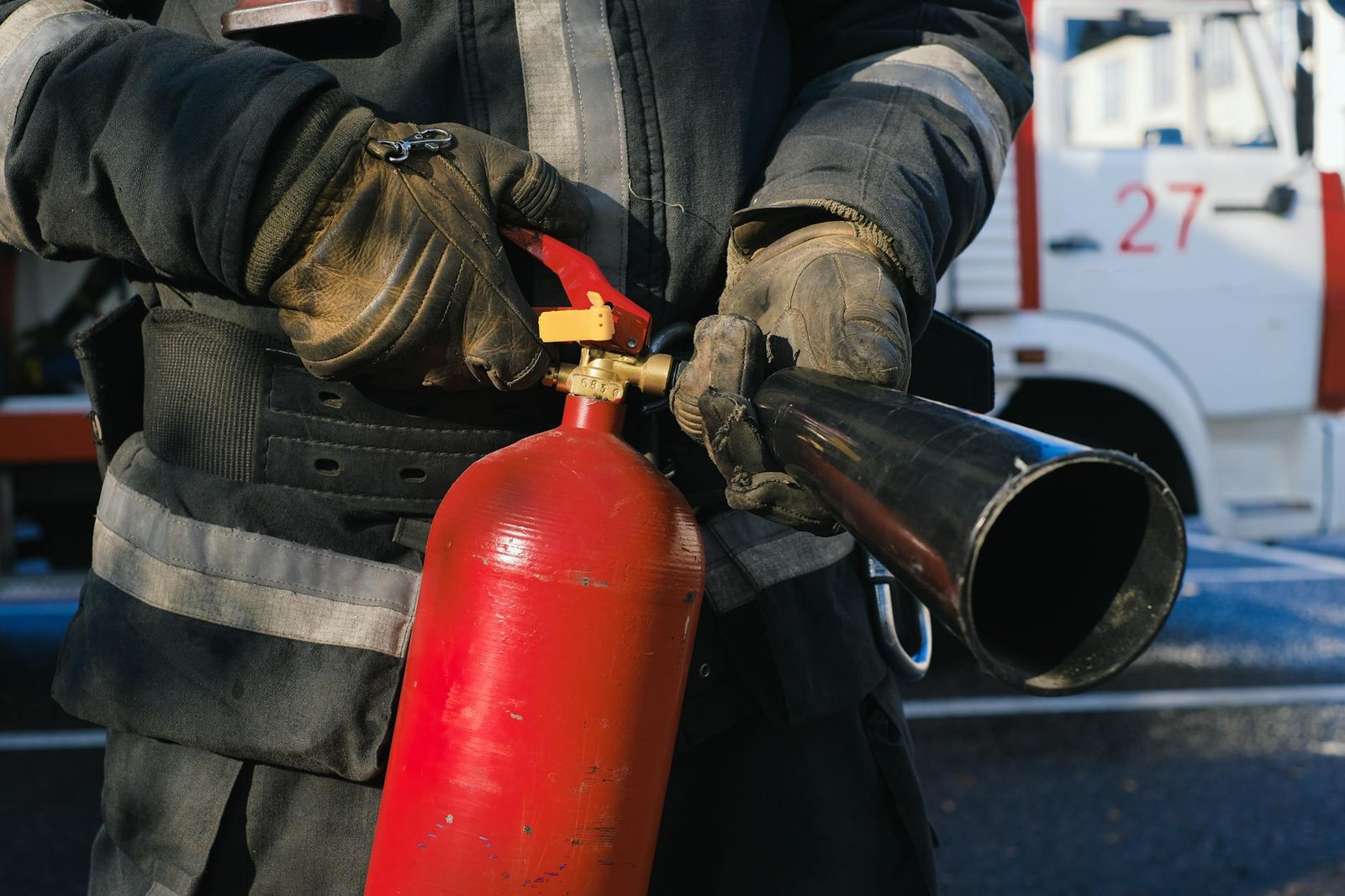
While sophisticated suppression systems are essential, the first line of defense in any Indian workplace remains the portable fire extinguisher. However, equipment is only as effective as the person operating it. At Safex, we emphasize training staff on the PASS method, which is the universally accepted technique for using portable extinguishers:
1. Pull: Pull the pin at the top of the extinguisher. The pin releases a locking mechanism and allows you to discharge the extinguisher.
2. Aim: Aim at the base of the fire, not the flames. If you aim at the flames, the agent will pass right through and fail to extinguish the fuel source.
3. Squeeze: Squeeze the handle slowly and evenly. This releases the pressurized agent from the extinguisher.
4. Sweep: Sweep the nozzle from side to side at the base of the fire until it appears to be out. Watch the area in case it reignites and repeat if necessary.
Training employees on the PASS method should be a quarterly exercise. In a high-pressure situation, muscle memory is the only thing that prevents panic. We have seen countless instances in industrial zones where the presence of an extinguisher, combined with a trained operator, prevented a minor electrical short from becoming a catastrophic factory fire.
Cost Analysis and Investment in Safety
Budgeting for fire safety is often a point of contention for facility managers. It is essential to view this as an insurance policy rather than an overhead cost. In the Indian market, pricing for fire extinguishers varies significantly based on capacity and agent type.
For standard office environments, a 2kg ABC powder extinguisher typically ranges from ₹1,500 to ₹3,000. For industrial applications requiring larger 6kg or 9kg units, prices generally fall between ₹3,000 and ₹6,000. If you are looking at specialized clean agent extinguishers for server rooms, the price point shifts significantly, often starting from ₹5,000 and rising to over ₹15,000 for high-capacity units.
When procuring these items, do not be tempted by uncertified, low-cost alternatives. Cheap extinguishers often fail to maintain pressure or use low-quality agents that clump over time, rendering them useless in an emergency. Always ensure that the products you purchase carry the ISI mark, confirming they meet IS 15683 standards.
Comparison of Common Fire Suppression Media
The following table provides a quick reference for decision-makers when selecting an agent for specific fire risks within their facilities.
| Agent Type | Typical Use Case | Pros | Cons |
| ABC Powder | General Offices, Warehouses | Highly versatile, affordable | Leaves heavy residue, messy |
| CO2 (Carbon Dioxide) | Electrical Panels, IT Rooms | Clean, non-conductive | Risk of cold burns, low reach |
| Clean Agents | Data Centers, Labs | Residue-free, safe for electronics | High initial investment |
| Water (Stored Pressure) | Paper, Wood, Textiles | Eco-friendly, cheap | Dangerous on electrical fires |
Managing Compliance and Liability
In India, the legal framework surrounding fire safety has become increasingly stringent. Under the NBC 2016, building owners and facility managers are held directly responsible for the maintenance and functionality of fire safety systems. Failure to comply can lead to the revocation of “No Objection Certificates” (NOCs), heavy fines, and, in the event of a fire-related casualty, criminal liability for management.
Documentation is the key to compliance. Every extinguisher on your premises should have a maintenance tag, and a register must be kept documenting the dates of inspection, the pressure readings, and the dates of any refilling. If an auditor asks to see the service history of your fire equipment, you should be able to produce it immediately.
Furthermore, the placement of these agents is just as important as the agents themselves. IS 2190 provides specific guidance on the maximum travel distance to an extinguisher. In most commercial settings, this distance should not exceed 15 meters. If your facility has expanded or undergone renovations, it is highly likely that your fire safety plan is no longer compliant with these distance requirements. A professional fire audit is the only way to ensure your facility remains legally and operationally secure.
FAQ: Frequently Asked Questions
Q: How often must fire extinguishers be serviced according to Indian Standards?
A: According to IS 2190, fire extinguishers must be inspected monthly for physical integrity and serviced by a certified professional at least once a year. Some agents or cylinder types may require hydrostatic testing every 3 to 5 years.
Q: Can I use an ABC powder extinguisher on a server rack?
A: While it will technically extinguish the fire, it is highly discouraged. The powder is corrosive and will likely cause permanent damage to sensitive electronic components. For server rooms, CO2 or clean agent extinguishers are the standard.
Q: What is the significance of the ISI mark on fire extinguishers?
A: The ISI mark indicates that the product has been tested and certified against Indian Standards, such as IS 15683. It ensures that the extinguisher will perform as expected under the pressure and environmental conditions common in India.
Q: How do I know which size extinguisher to buy?
A: The size depends on the fire load of your facility and the requirements set by the local fire authority. Generally, for offices, 2kg to 4kg units are sufficient, while manufacturing units may require 9kg units or larger trolley-mounted extinguishers.
Q: Is it mandatory to train employees on the PASS method?
A: While specific training frequency may vary by state, the NBC 2016 and general workplace safety laws require that employees be capable of using emergency equipment. Regular drills are an essential component of meeting these safety mandates.
Q: What is the approximate cost of equipping a small office with basic fire safety?
A: For a standard office space, you should budget approximately ₹10,000 to ₹25,000 for a set of high-quality, ISI-marked extinguishers, including wall-mounting brackets and signage.
Strategic Planning for Future-Proofing
As we look toward the future of fire safety in India, the integration of IoT-enabled fire systems is becoming the next frontier. Smart extinguishers that report their pressure status to a central dashboard in real-time are already being deployed in high-end commercial properties. While these technologies represent an investment, they drastically reduce the margin for human error in maintenance.
At Safex Fire Services, we understand that fire safety is a journey of continuous improvement. Whether you are upgrading your existing systems or designing a new facility, the principles of compliance, quality, and training remain the same. Since Safex established 1972, we have remained committed to providing the Indian market with the expertise and high-quality equipment necessary to protect lives and livelihoods.
Resources
For further information on fire safety standards and regulatory requirements in India, please consult the following official resources:
Conclusion
The selection of fire suppression agents is a technical decision that impacts every aspect of a business’s safety profile. From adhering to the rigorous requirements of IS 15683 to ensuring that your team is well-versed in the PASS method, every detail contributes to a safer environment. The landscape of Indian fire safety is constantly evolving, and keeping pace with the National Building Code (NBC 2016) is not just a regulatory necessity; it is a moral imperative to protect the people and assets within your care.
Since Safex established 1972, we have seen the industry shift from basic fire buckets to advanced clean agent suppression systems. Throughout these decades, our mission has remained the same: to deliver reliable, compliant, and effective fire safety solutions tailored to the unique challenges of the Indian climate and industrial environment. Do not wait for an audit or, worse, an incident to evaluate your fire safety strategy. Proactive management is the only path to true security.