
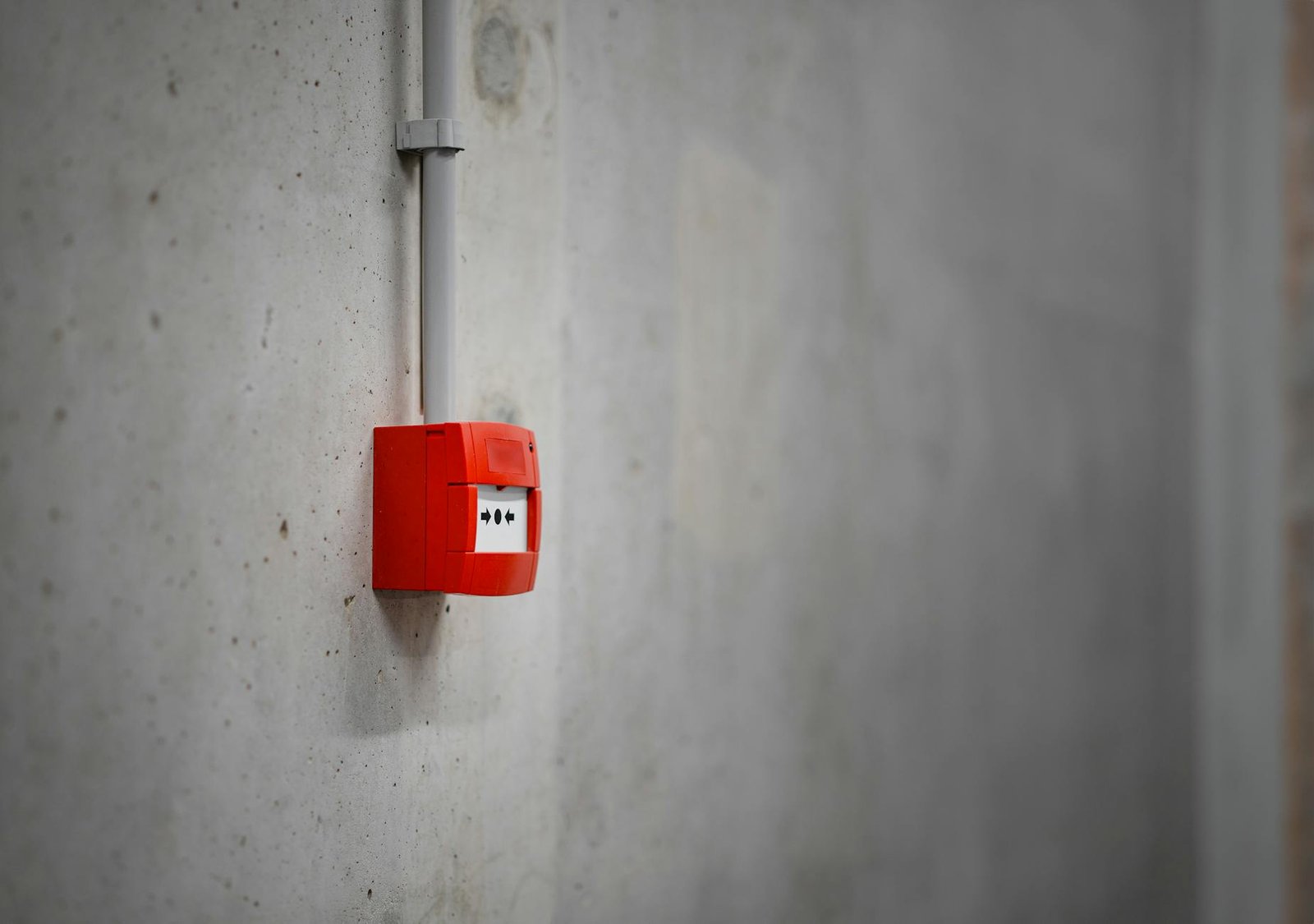
In the rapidly evolving landscape of Indian commercial real estate, the demand for sophisticated fire safety infrastructure has shifted from basic reactive measures to intelligent, proactive systems. For facility managers, architects, and compliance officers, the transition from conventional fire alarm panels to addressable fire alarm systems is no longer a luxury—it is a critical necessity for life safety and asset protection. Since Safex established 1972, we have observed the evolution of fire safety technology in India, moving from simple bell-and-wire setups to the complex, integrated digital ecosystems required by modern high-rises and industrial hubs.
An addressable fire alarm system provides a level of granularity that conventional systems simply cannot match. By assigning a unique digital address to every single device—be it a smoke detector, heat sensor, or manual call point—the control panel can identify the exact location of a fire or a system fault. In a large facility like an IT park in Bengaluru or a textile warehouse in Gujarat, this precision reduces response time from minutes to seconds, allowing security teams to pinpoint the danger and deploy resources effectively before a minor incident escalates into a catastrophic loss.
The Technical Imperative: Why Addressable Systems Outperform Conventional Setups
The fundamental difference between conventional and addressable systems lies in the communication loop. A conventional system operates on zones; when a detector triggers, the control panel tells the operator which general area the fire is in, such as “Third Floor East Wing.” This forces responders to search the entire floor to find the specific room or corridor involved. In contrast, an addressable system identifies the exact device, providing a digital display that reads: “Smoke Detector, Server Room 402, North Corridor.”
From a compliance perspective, the National Building Code (NBC) 2016 Part 4 provides the framework for fire and life safety in India. NBC 2016 emphasizes the need for rapid notification and localized response, particularly in buildings with large floor plates or high occupancy. Addressable systems align perfectly with these requirements. Furthermore, when dealing with maintenance, addressable systems offer “dirty sensor” alerts. Instead of waiting for a false alarm to trigger, the system notifies the facility manager when a detector’s chamber is contaminated with dust—a common issue in Indian industrial environments—ensuring that the system remains at peak operational efficiency throughout its lifecycle.
The integration capability of addressable systems is another major advantage. Modern panels can interface with Building Management Systems (BMS), controlling HVAC shut-off, elevator recall, and access control release automatically. This level of automation is essential for meeting the stringent safety audits conducted by local fire departments and insurance underwriters across India.
Compliance, Standards, and the Regulatory Landscape in India
Adherence to Indian Standards (IS) is the backbone of any legal fire safety strategy. While addressable systems deal with signaling, one must never overlook the primary fire-fighting equipment. According to IS 15683:2018, which governs the performance and construction of portable fire extinguishers, your safety strategy must be holistic. An addressable alarm system tells you where the fire is, but your portable extinguishers are the first line of defense to stop it.
When installing addressable systems, engineers must refer to IS 2189, the Indian Standard for the selection, installation, and maintenance of automatic fire detection and alarm systems. This standard dictates the spacing of detectors, the wiring protocols (typically fire-rated, armored cables), and the redundancy requirements for the control panel. Failure to adhere to these standards can lead to severe legal repercussions, including the revocation of a No Objection Certificate (NOC) from the local fire authority and, in the event of a fire, significant liability for the building owner or facility manager.
Budgeting for these systems requires a clear understanding of the market. While conventional panels might cost between ₹25,000 and ₹50,000 for a small setup, a robust addressable system for a mid-sized commercial building typically ranges from ₹1,50,000 to ₹5,00,000, depending on the complexity of the loop cards and the number of peripheral devices. For high-end industrial facilities requiring multi-panel networking, costs can exceed ₹10,00,000. While the initial investment is higher, the long-term reduction in insurance premiums and the mitigation of business interruption risks provide a significant return on investment.
Operational Protocol: The PASS Method and Immediate Response
While an addressable system provides the intelligence, the speed of human response remains the deciding factor in fire containment. Once the alarm panel alerts your team to the specific location, the personnel on the ground must be trained in the PASS method to handle the initial fire using portable extinguishers, as per IS 15683:2018 guidelines.
The PASS method is a simple acronym that ensures effective extinguisher use:
1. PULL the pin: This unlocks the operating lever and allows you to discharge the extinguisher.
2. AIM low: Point the nozzle or hose at the base of the fire, not the flames. The fuel source is at the bottom.
3. SQUEEZE the lever: This releases the extinguishing agent.
4. SWEEP from side to side: Moving the nozzle back and forth across the base of the fire ensures full coverage until the flames are extinguished.
In an addressable system setup, the control panel should be located in a 24/7 manned security room. When a detector triggers, the operator should immediately verify the location on the digital floor plan, dispatch a floor warden with the correct fire extinguisher (e.g., CO2 for electrical panels, ABC powder for general fires), and initiate the evacuation protocol. Using the wrong type of extinguisher on the wrong fire is a common mistake; therefore, proper labeling and training are as important as the electronic system itself.
Maintenance and System Longevity in Indian Conditions
Indian climate conditions—characterized by high humidity, monsoon moisture, and extreme heat—pose a unique challenge to electronic fire safety systems. Dust accumulation, common in many Indian manufacturing hubs, can lead to nuisance alarms or, worse, detector failure. Addressable systems offer a distinct advantage here: they provide diagnostic feedback.
Regular maintenance, as mandated by IS 2189, should include:
– Quarterly testing of all detectors and manual call points.
– Annual battery backup testing to ensure the system remains operational during power outages.
– Cleaning of sensors to prevent dust-related malfunctions.
– Verification of loop integrity to ensure that a single wire break does not disable the entire system.
Facility managers should budget approximately 5-10% of the system’s capital cost annually for professional maintenance contracts. Cutting corners on maintenance is a primary cause of system failure during actual emergencies. Furthermore, documentation is key. Maintaining a detailed logbook of all tests, false alarms, and repairs is a mandatory requirement for annual fire safety audits in most Indian states. If a fire occurs and your logbook is incomplete, you are effectively open to litigation and insurance claim denial.
Comparison Table: Conventional vs. Addressable Fire Alarm Systems
| Feature | Conventional System | Addressable System |
| Identification | Zone-based (General area) | Device-based (Specific point) |
| Wiring | Radial (Requires more cabling) | Loop (Redundant, less cabling) |
| Maintenance | Manual inspection required | Digital diagnostic alerts |
| Cost Range | ₹25,000 – ₹60,000 | ₹1,50,000 – ₹10,00,000+ |
| Scalability | Limited | High (Networkable) |
Frequently Asked Questions (FAQ)
Q: Why is an addressable system recommended over a conventional one for large buildings?
A: An addressable system provides exact device location, reducing search time for responders. According to NBC 2016, rapid identification is crucial for fire suppression. Conventional systems only identify zones, which is inefficient for large floor plates.
Q: Does the installation of an addressable system exempt me from buying portable fire extinguishers?
A: No. Your alarm system is a detection tool, not a suppression tool. You must still maintain portable fire extinguishers in compliance with IS 15683:2018. The alarm tells you where the fire is; the extinguisher, used via the PASS method, allows you to act.
Q: How much should I expect to pay for a basic addressable setup?
A: A small-scale addressable panel with 20-30 devices typically ranges from ₹1,50,000 to ₹3,00,000. Large industrial setups require custom engineering, often exceeding ₹5,00,000 to ₹10,00,000 based on the complexity of the loop and integration requirements.
Q: What is the PASS method and why is it relevant?
A: PASS stands for Pull, Aim, Squeeze, Sweep. It is the industry-standard technique for using portable fire extinguishers. It is relevant because your staff must be capable of suppressing small, localized fires before they trigger the full-scale building alarm or reach the sprinklers.
Q: How often does IS 2189 require me to maintain my alarm system?
A: IS 2189 dictates a regular maintenance schedule, typically involving quarterly testing of all input/output devices and annual battery and power supply checks. Documentation in a formal logbook is mandatory for legal compliance.
Q: Can Safex help with the transition from conventional to addressable?
A: Yes. Since Safex established 1972, we have assisted thousands of Indian facilities in upgrading their fire safety infrastructure to meet modern NBC 2016 standards. We provide design, installation, and long-term maintenance support.
Resources
For further information on fire safety standards and regulatory requirements, please refer to the following official resources:
– Bureau of Indian Standards (BIS) – Access to IS Codes: https://www.bis.gov.in/
– National Building Code of India – Fire and Life Safety Standards: https://www.bis.gov.in/
Conclusion
The transition to an addressable fire alarm system is a strategic decision that reflects a commitment to the safety of occupants and the protection of business continuity. As we have discussed, the precision, diagnostic capabilities, and integration potential of these systems are essential for modern Indian commercial infrastructure. By aligning your facility with the guidelines set forth in NBC 2016 and ensuring your team is proficient in the PASS method for portable fire extinguisher use, you create a robust, multi-layered fire defense strategy.
Since Safex established 1972, we have remained at the forefront of the Indian fire safety industry. Our experience has shown that technology, when paired with rigorous maintenance and adherence to Indian Standards, is the only way to effectively mitigate the risks of fire in high-density urban environments. Whether you are managing an IT park, a manufacturing plant, or a commercial high-rise, investing in intelligent detection is not merely an expense—it is an investment in the longevity and security of your enterprise.