
Fire safety in India has evolved from a secondary compliance concern to a critical pillar of facility management. Whether you are operating a high-rise IT park in Bengaluru, a chemical warehouse in Gujarat, or a manufacturing plant in Pune, the design and maintenance of your fire fighting system dictate your operational continuity and legal liability. As a facility manager or business owner, understanding the complex regulatory landscape—specifically the National Building Code (NBC) 2016 and various Indian Standards (IS)—is not just good practice; it is a legal requirement.
Safex established 1972, and for over five decades, we have witnessed the transformation of fire safety protocols in India. The shift from rudimentary fire buckets to intelligent, automated fire suppression systemss reflects the growing complexity of our built environment. This guide serves as a technical roadmap for decision-makers tasked with ensuring life safety and asset protection.
The Regulatory Framework: NBC 2016 and IS Standards
In India, the primary document governing fire safety is the National Building Code (NBC) 2016, specifically Part 4, which covers Fire and Life Safety. NBC 2016 provides the blueprint for fire prevention, life safety, and fire protection. It categorizes buildings based on height, occupancy, and fire load, mandating specific firefighting equipment for each category.
Compliance is not voluntary. Failure to adhere to these norms can lead to the cancellation of No Objection Certificates (NOCs) from local fire departments, heavy fines, and, in the event of a tragedy, severe criminal liability for the management. Beyond the NBC, Indian Standards (IS) provide the technical specifications for hardware. For instance, when sourcing portable fire extinguishers, you must ensure compliance with IS 15683:2018. This standard defines the performance, construction, and testing requirements for portable fire extinguishers, ensuring that the device you install will actually function when the pressure is on.
Furthermore, IS 2190 provides the code of practice for the selection, installation, and maintenance of first-aid firefighting equipment. Relying on sub-standard, non-ISI marked equipment is a common pitfall that undermines the entire fire fighting system. A system is only as strong as its weakest component; therefore, sourcing equipment that meets the rigorous testing criteria of the Bureau of Indian Standards (BIS) is non-negotiable for any professional facility management team.
Components of an Effective Fire Fighting System
A robust fire fighting system is a multi-layered defense strategy. It is not merely about having a pump room; it is about the integration of detection, suppression, and containment.
1. Detection and Alarm Systems
Early detection is the most significant factor in reducing damage. Modern smoke detectors, heat sensors, and manual call points must be linked to a centralized Fire Alarm Control Panel (FACP). In large complexes, these systems should be addressable, allowing security personnel to pinpoint the exact location of a fire.
2. Water-Based Suppression (Hydrants and Sprinklers)
Water remains the most effective medium for fighting Class A fires. A typical industrial setup requires an underground fire water tank with a capacity calculated based on the building’s hazard level. The pump room must house a main fire pump, a standby diesel pump, and a jockey pump to maintain system pressure. fire sprinkler systems, if designed per NBC 2016, provide automated suppression, often containing a fire before it spreads to structural elements.
3. Portable Fire Extinguishers
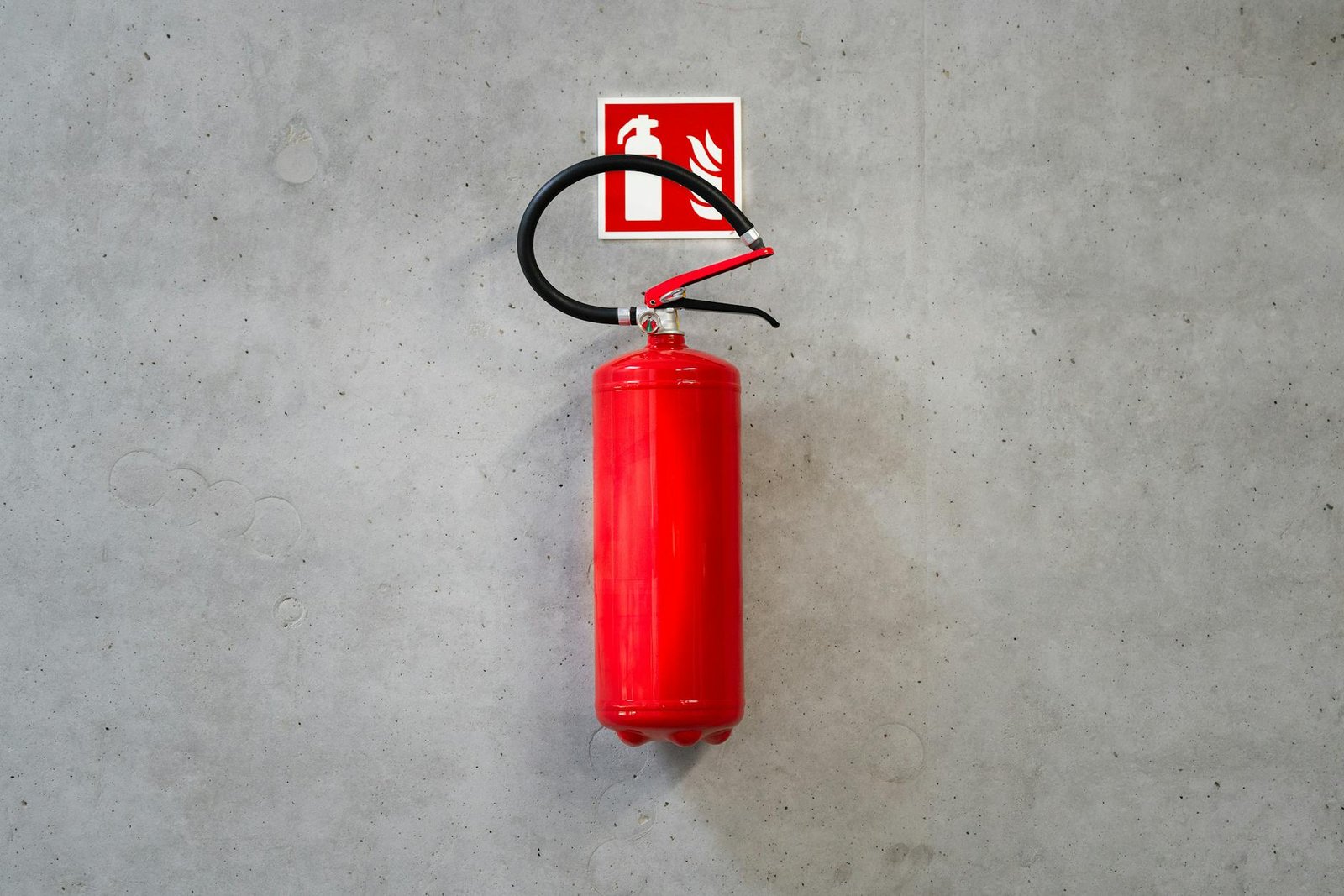
Portable extinguishers are the first line of defense. According to IS 15683, these units must be strategically placed, clearly marked, and inspected monthly. Whether it is a dry chemical powder (DCP) unit for electrical fires or a CO2 extinguisher for sensitive server rooms, the selection must match the fire risk.
When using a portable extinguisher, every staff member should be trained in the PASS method:
Investment Analysis: Cost vs. Risk
Budgeting for fire safety is an investment in business continuity. While costs vary based on brand, capacity, and certification, it is essential to avoid “too-good-to-be-true” pricing, which often indicates counterfeit or non-compliant equipment.
For portable fire extinguishers, a standard 2kg ABC powder extinguisher (ISI marked) typically ranges from ₹1,500 to ₹3,000. For larger 6kg or 9kg units, expect to invest between ₹3,000 and ₹6,000. Industrial-grade trolley-mounted extinguishers (50kg) can cost between ₹15,000 and ₹35,000 depending on the agent and specifications.
For complex systems like automatic sprinkler installations, costs are calculated per square foot. A high-quality installation for a medium-sized warehouse, including piping, heads, and pump sets, can range from ₹5 lakhs to ₹20 lakhs or more, depending on the complexity of the building layout. When evaluating these costs, consider the potential loss of inventory, structural damage, and business interruption, which can easily exceed the cost of the system by a factor of 100.
Maintenance and Compliance: The Lifecycle Approach
Installing a system is only 50% of the job. The remaining 50% is rigorous, periodic maintenance. Many facilities in India fall into the trap of “install and forget.” This is a dangerous oversight. IS 2190 mandates regular inspections. If your hydrant valves are rusted shut or your fire pump batteries are dead, your system is effectively non-existent.
Maintenance cycles should be strictly followed:
In the Indian context, documentation is as important as the physical hardware. You must maintain a logbook for every inspection. If an incident occurs, insurance companies and legal authorities will request these records as proof of due diligence.
Comparison of Fire Suppression Technologies
| Technology | Best Use Case | Primary Mechanism | Maintenance Intensity |
| Water Sprinklers | General Offices/Warehouses | Cooling/Smothering | High (Pipe/Head inspection) |
| DCP Extinguishers | Class A, B, C Fires | Chemical Inhibition | Medium (Pressure check) |
| CO2 Extinguishers | Server/Electrical Rooms | Oxygen Displacement | Medium (Weight check) |
| Clean Agent Systems | Data Centers/Museums | Chemical/Physical | Low (System integrity) |
FAQ: Frequently Asked Questions
Q: What is the most important standard for portable fire extinguishers in India?
A: The most important standard is IS 15683:2018. It specifies the requirements for the construction, performance, and testing of portable fire extinguishers to ensure they operate reliably during an emergency.
Q: How often should we conduct fire drills in an office building?
A: According to NBC 2016, fire drills should be conducted at least twice a year to ensure all occupants are familiar with evacuation routes and the use of basic firefighting equipment.
Q: Is it necessary to replace fire extinguishers if the pressure gauge is in the green zone?
A: Even if the gauge is in the green zone, you must follow the manufacturer’s service life guidelines. IS 2190 mandates regular maintenance, including checking for internal corrosion and hydrostatic testing, which cannot be determined by the gauge alone.
Q: How much should I expect to pay for a standard fire extinguisher for my office?
A: For a reliable, ISI-marked 4kg ABC powder fire extinguisher, you should expect to pay between ₹2,000 and ₹4,000. Prices vary based on the manufacturer and the specific fire rating.
Q: What is the PASS method and why is it important?
A: The PASS method (Pull, Aim, Squeeze, Sweep) is the standard procedure for operating a portable fire extinguisher. It is important because it ensures the extinguishing agent is applied directly to the base of the fire, maximizing efficiency and safety.
Q: How can I ensure my facility is compliant with NBC 2016?
A: Compliance is achieved by conducting a thorough fire safety audit against the requirements of NBC 2016 Part 4. This involves verifying the building’s fire resistance, emergency exits, and the sufficiency of the firefighting system, ideally performed by a qualified fire protection engineer.
Resources
For further information regarding fire safety standards and regulatory compliance in India, please refer to the following official resources:
Conclusion
Fire safety is not a destination but a continuous process of improvement, training, and maintenance. As technology advances, so do the risks associated with modern building materials and complex electrical installations. Whether you are upgrading an existing facility or commissioning a new project, the integration of high-quality equipment and strict adherence to IS standards is the only way to guarantee the safety of your personnel and the longevity of your assets.
Safex established 1972, and our commitment to fire safety remains rooted in the belief that every life and every building deserves the highest level of protection. By prioritizing compliance with NBC 2016, investing in quality hardware like those specified in IS 15683, and fostering a culture of preparedness, you can mitigate the risks that fire poses to your business. Do not wait for a fire audit or an emergency to realize the importance of these systems. Take the proactive step today to audit, maintain, and upgrade your firefighting infrastructure.