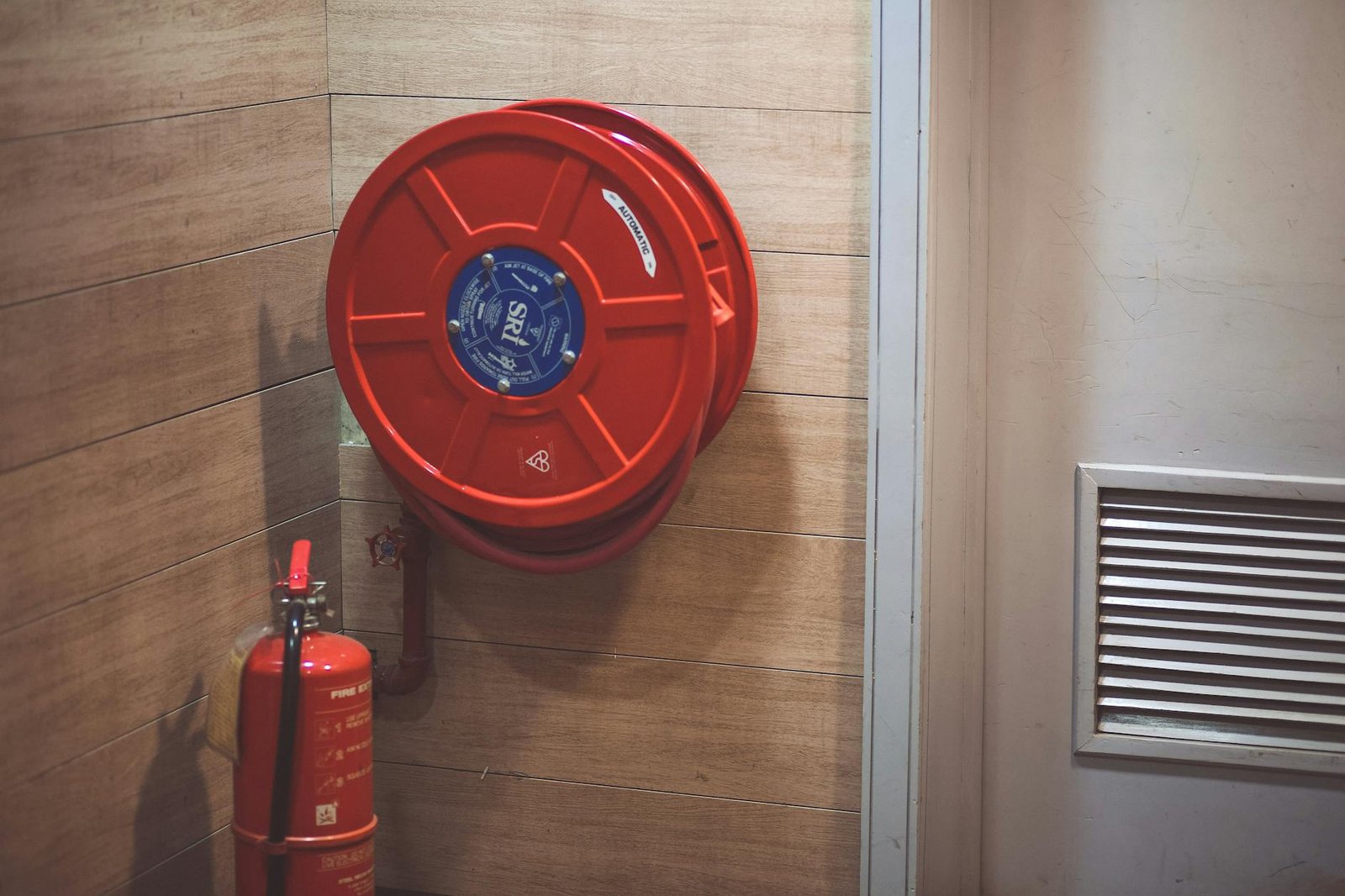
In the complex landscape of fire safety management across India, the humble fire cylinder remains the first and most critical line of defense. Whether you are managing an IT park in Bengaluru, a textile warehouse in Gujarat, or a commercial high-rise in Mumbai, the reliability of your fire suppression equipment is not merely a matter of operational preference—it is a legal mandate. At Safex Fire Services, we have observed that many facility managers view fire extinguishers as “set and forget” items. This dangerous misconception often leads to non-compliance, insurance claim rejections, and, in the worst-case scenario, catastrophic loss of life and property. Safex established 1972, and over these five decades, we have seen the evolution of fire safety regulation from rudimentary guidelines to the rigorous standards we navigate today.
Understanding the nuances of fire cylinders—or portable fire extinguishers—requires a deep dive into the National Building Code (NBC) 2016 and specific Indian Standards. This guide aims to demystify the selection, installation, and maintenance processes required to keep your facility compliant with Indian law and, more importantly, safe for your occupants.
The Regulatory Framework: NBC 2016 and IS Standards
The foundation of fire safety in India is the National Building Code (NBC) 2016, specifically Part 4, which outlines the requirements for Fire and Life Safety. NBC 2016 provides the structural and organizational framework that every facility must adopt. However, when it comes to the technical specifications of the equipment itself, we turn to the Bureau of Indian Standards (BIS).
The most critical standard for portable fire extinguishers is IS 15683:2018. This standard dictates the design, construction, and testing requirements for portable fire extinguishers. Compliance with IS 15683 is not optional; it is the benchmark by which fire inspectors evaluate your preparedness. When you procure a fire cylinder, you must ensure that it carries the ISI mark. Without this certification, the equipment does not meet the legal threshold for fire safety in India, and your facility could be held liable during an audit or after an incident.
Furthermore, IS 2190 serves as the code of practice for the selection, installation, and maintenance of these devices. It covers everything from the maximum travel distance to an extinguisher (which is typically 15 meters for Class A fires) to the frequency of hydrostatic pressure testing. Ignoring these codes creates a liability vacuum. If a fire occurs and your equipment is found to be non-compliant with IS 2190 or IS 15683, the legal ramifications—including potential criminal negligence charges—are significant.
Understanding Fire Classes and Selection Criteria
Not all fires are the same, and consequently, not all fire cylinders are interchangeable. Using the wrong extinguishing agent can exacerbate a fire or pose a risk to the operator. In the Indian industrial context, we categorize fires based on the fuel source:
For a typical office environment, ABC powder-based extinguishers are the industry standard due to their versatility. However, for server rooms in IT parks, we strongly recommend Clean Agent extinguishers (such as HFC-236fa or CO2) to prevent water or powder damage to expensive hardware.
When budgeting for these assets, facility managers should anticipate the following price ranges:
Investing in high-quality, ISI-marked equipment is a cost-effective insurance policy. Skimping on cheap, uncertified cylinders often results in leaking valves, pressure loss, or failure to discharge during an actual emergency, rendering the initial “savings” irrelevant.
The PASS Method: Training Your Team for Success
Procuring the correct cylinder is only half the battle. If your employees or security staff do not know how to operate the equipment under the duress of a fire, the gear is useless. Every facility manager should conduct biannual drills demonstrating the PASS method. PASS is the globally recognized acronym for operating a portable fire extinguisher effectively:
1. Pull: Pull the pin at the top of the extinguisher. This pin releases the locking mechanism and allows you to discharge the extinguisher.
2. Aim: Aim the nozzle or hose at the base of the fire, not the flames themselves. Extinguishing the fuel source is the key to suppressing the fire.
3. Squeeze: Squeeze the handle slowly and evenly. This releases the pressurized agent from the cylinder.
4. Sweep: Sweep the nozzle from side to side at the base of the fire until the fire appears to be out. Watch the area carefully; if the fire re-ignites, repeat the process.
This training should be documented. In many Indian jurisdictions, fire departments require proof of staff training as part of the annual Fire Safety Audit (FSA). Failure to demonstrate that your staff is trained can result in the denial of a No Objection Certificate (NOC) renewal.
Maintenance and Inspections: Beyond the Annual Check
The maintenance of fire cylinders is governed by IS 2190. A common error facility managers make is assuming that a visual check once a year is sufficient. In reality, the maintenance cycle is far more rigorous.
Monthly inspections should be performed by an internal safety officer to ensure:
Annual maintenance, however, must be performed by a certified professional. This includes checking the weight of the agent, inspecting the internal condition of the cylinder, and verifying the discharge valve mechanism. Every five years, the cylinder must undergo a hydrostatic pressure test to ensure the vessel can safely hold its pressurized contents. If a cylinder fails this test, it must be decommissioned immediately. Never attempt to “repair” a damaged cylinder body; if it is compromised, it is a ticking time bomb.
Comparison of Fire Extinguisher Types
| Feature | ABC Powder | Carbon Dioxide (CO2) | Water/Foam |
| Primary Use | General (A, B, C fires) | Electrical & Flammable Liquids | Class A & B Fires |
| Residue | Leaves heavy powder residue | Clean (gas) | Leaves liquid/foam mess |
| Conductivity | Non-conductive | Non-conductive | Conductive (Do not use on electrical) |
| Best Environment | Offices, Warehouses | Server Rooms, Labs | Wood/Paper storage areas |
Strategic Considerations for Facility Managers
When planning your fire safety layout, consider the “travel distance” requirements outlined in the National Building Code. For high-hazard areas, the distance to the nearest extinguisher should not exceed 7.5 meters, while for low-hazard areas, it can extend to 15 meters. However, we advise erring on the side of caution. Placing extinguishers in highly visible, unobstructed locations is vital. Avoid hiding them behind storage boxes or in locked rooms where they cannot be accessed during an emergency.
Furthermore, document management is just as important as the physical equipment. Maintain a “Fire Safety Register” that logs the date of purchase, the last service date, the technician’s name, and the next due date for every single cylinder in your facility. This register will be the first document requested by the Fire Department during an inspection. If you cannot produce a clear history of maintenance, you are inviting penalties and potential closure notices.
FAQ: Common Concerns for Decision-Makers
Q: Is it mandatory for all fire extinguishers in India to have an ISI mark?
A: Yes. Under IS 15683, all portable fire extinguishers used in commercial and industrial premises must comply with BIS standards and carry the ISI certification mark to ensure they meet minimum safety and performance criteria.
Q: How often should I replace the powder in an ABC extinguisher?
A: While the powder itself may last several years, the cylinder must be serviced annually by a professional. The manufacturer’s guidelines and IS 2190 dictate the recharging intervals, which usually occur during the mandatory five-year hydrostatic pressure test.
Q: What is the most common mistake made during a fire emergency?
A: The most common mistake is aiming the extinguisher at the flames rather than the base of the fire. The PASS method emphasizes aiming at the base to starve the fuel source of oxygen.
Q: Can I use a CO2 extinguisher on a paper fire?
A: You can, but it is not recommended. CO2 is designed for electrical and flammable liquid fires. For paper (Class A) fires, water or ABC powder is significantly more effective as it provides a cooling effect that prevents re-ignition.
Q: What is the typical cost for an annual maintenance contract (AMC) for fire equipment?
A: AMC costs vary based on the number of units, but generally, you can expect to pay between ₹200 to ₹500 per unit annually for professional inspection, pressure testing, and certification.
Q: Does the National Building Code (NBC) 2016 require extinguishers in residential apartments?
A: Yes, the NBC 2016 provides guidelines for fire safety in high-rise residential buildings, which includes the mandatory installation of fire extinguishers in common areas, lift lobbies, and near electrical shafts to ensure resident safety.
Conclusion
Fire safety is not a static requirement; it is a continuous process of evaluation, maintenance, and training. As the regulatory environment in India becomes more stringent, the cost of non-compliance—both in financial terms and in the potential for human tragedy—has never been higher. By adhering to the standards set forth in IS 15683 and the NBC 2016, and by ensuring that your team is proficient in the PASS method, you create a robust defense system for your property.
At Safex Fire Services, we understand the complexities of these regulations. Safex established 1972, and since then, we have dedicated ourselves to helping Indian businesses navigate the intricacies of fire protection. Whether you are conducting a site audit or looking to upgrade your fire suppression strategy, professional guidance is your best asset. Never compromise on the quality of your safety equipment, and always ensure your facility is prepared to handle an emergency before it happens.
Resources
For further information on fire safety standards and compliance, please consult the following official resources: