Introduction
In the rapidly evolving landscape of Indian industrial infrastructure, the necessity for robust fire safety systems cannot be overstated. From sprawling textile hubs in Gujarat to high-density IT parks in Bengaluru, the risk of fire-related incidents remains a persistent threat to both human life and operational continuity. Selecting the right fire protection partner is a critical decision for facility managers and compliance officers. While many market players exist, including Ceasefire Industries Pvt Ltd, the core responsibility lies with the facility owner to ensure that every installation adheres strictly to the National Building Code (NBC) and relevant Indian Standards (IS).
At Safex Fire Services, we have been at the forefront of this industry since our inception. Safex established 1972, providing over five decades of expertise in fire protection consultancy, installation, and maintenance. This article serves as a technical guide for decision-makers who are tasked with navigating the complexities of fire safety compliance in India, ensuring that their facilities are not only equipped with the right gear but are also legally protected under the stringent frameworks mandated by local municipal corporations and fire departments.
The Regulatory Framework: NBC 2016 and Indian Standards
The backbone of fire safety in India is the National Building Code (NBC) 2016. Part 4 of this code provides the definitive guidelines for fire and life safety. For any facility manager, understanding NBC 2016 is not optional; it is the prerequisite for obtaining a No Objection Certificate (NOC) from the local fire authority.
The NBC 2016 mandates specific fire load calculations, compartmentation, and the installation of active and passive fire protection systems. When selecting equipment, one must look for adherence to IS specifications. For instance, portable fire extinguishers must comply with IS 15683:2018. This standard dictates the performance, testing, and construction requirements for extinguishers, ensuring they function reliably when the need arises.
Non-compliance with these standards can lead to severe legal repercussions. In India, under the Disaster Management Act and various state-specific fire safety acts, building owners can face heavy penalties, sealing of premises, or criminal liability in the event of a fire-related casualty. Therefore, whether you are evaluating a proprietary system from a brand like Ceasefire or seeking a customized solution from an established service provider, the equipment must be ISI-marked and certified by recognized testing laboratories.
Strategic Selection of Fire Extinguishers and Equipment
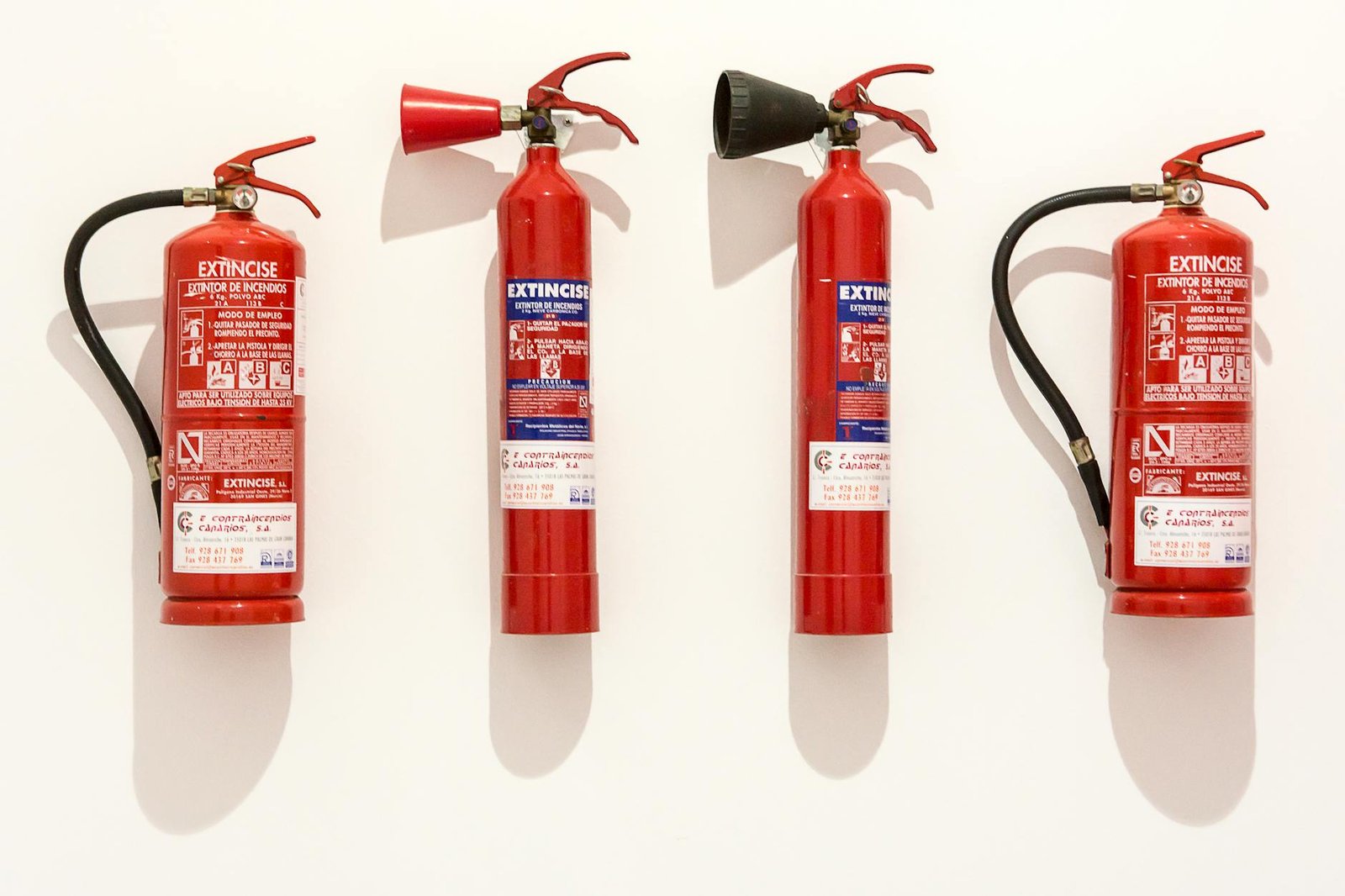
The selection of the right fire extinguisher is governed by IS 2190, which provides the code of practice for the selection, installation, and maintenance of first-aid fire fighting equipment. A common mistake made by facility managers is the “one-size-fits-all” approach.
For office environments containing electrical equipment, CO2 or Clean Agent extinguishers are preferred. In contrast, warehouses dealing with Class A fires (wood, paper, textiles) require stored-pressure water or foam-based extinguishers. The cost factor is also significant for procurement teams. Typically, you can expect to pay between ₹1,500 and ₹3,000 for a standard 2kg to 4kg portable extinguisher. For larger, industrial-grade wheeled units or specialized fire suppression systems, the budget may range from ₹5,000 to ₹15,000 depending on the agent and capacity.
Maintenance is equally critical. IS 2190 mandates regular inspections, hydrostatic pressure testing, and periodic refilling. A fire extinguisher that has lost its pressure or has a compromised discharge nozzle is essentially a liability. Safex Fire Services emphasizes that the procurement cost is only the initial step; the total cost of ownership includes the lifecycle maintenance required to keep the equipment compliant with Indian fire safety audits.
Understanding the PASS Method for Emergency Response
Technology and equipment are only as effective as the people operating them. In a high-stress scenario, panic is the greatest enemy. Training staff to use fire extinguishers effectively is a mandatory component of fire safety drills under NBC 2016. The industry-standard method for operating a portable fire extinguisher is the PASS method:
1. Pull: Pull the pin located at the top of the extinguisher. This breaks the tamper seal and allows you to discharge the agent.
2. Aim: Aim the nozzle or hose at the base of the fire, not the flames themselves. The fire is fueled by the material, and aiming at the flames will only disperse the agent uselessly.
3. Squeeze: Squeeze the handle or lever slowly to release the extinguishing agent.
4. Sweep: Sweep the nozzle from side to side at the base of the fire until it appears to be extinguished. Continue to watch the area, as the fire may reignite.
Facility managers should organize quarterly training sessions where employees practice these steps. It is often recommended to use training-specific (water-filled) extinguishers to allow staff to gain confidence without wasting expensive chemical agents.
Comparison of Fire Suppression Approaches
| Feature | Portable Extinguishers | Automatic fire sprinkler systems | Gas-Based Suppression |
| Primary Use | Initial stage fire | Large scale suppression | Server rooms/Data centers |
| Activation | Manual (PASS method) | Heat-sensitive bulb | Automated detection/manual |
| Compliance | IS 15683 compliant | NBC 2016 Part 4 | IS 15493 / NFPA 2001 |
| Cost Range | ₹1,500 – ₹5,000 | High (Project-based) | High (Volume-based) |
As shown in the table above, the choice between these systems depends on the fire risk profile of the area. While portable extinguishers are essential for every floor, high-value assets like server rooms or archives require gas-based suppression systems that do not leave a residue. Relying solely on manual intervention is a high-risk strategy; therefore, integrating automated systems is essential for modern high-rise or industrial facilities.
The Cost of Compliance vs. The Cost of Failure
For businesses operating in India, fire safety is often viewed as an “overhead” rather than an investment. However, the financial impact of a fire goes far beyond the immediate damage to property. It includes business interruption, loss of client trust, legal fees, and potential insurance claim denials if the fire safety systems were found to be non-compliant with NBC 2016.
Insurance companies are increasingly stringent about fire safety audits. If a facility does not have a valid fire NOC or if the installed equipment does not meet the necessary IS standards, claims are frequently rejected. Investing in high-quality systems, regular audits, and professional maintenance ensures business continuity. We strongly advise facility managers to document every service visit, maintain a register of fire safety equipment, and ensure that all staff members have signed off on their safety training.
FAQ: Common Concerns for Facility Managers
Q: How often should fire extinguishers be serviced according to Indian Standards?
A: According to IS 2190, fire extinguishers should be inspected monthly to ensure they are in their designated place and the pressure gauge is in the green zone. A professional service check and maintenance must be performed at least once every year.
Q: Is it mandatory to use ISI-marked equipment for my office?
A: Yes. Any fire safety equipment installed in a commercial or industrial building must be ISI-marked to comply with the National Building Code (NBC) 2016 and local municipal fire safety requirements.
Q: What is the typical cost range for a standard 6kg ABC Powder extinguisher?
A: You can expect to pay between ₹2,000 and ₹4,000 for a high-quality, ISI-marked 6kg ABC powder fire extinguisher, depending on the brand and specific certification.
Q: What should I do if my building does not have a Fire NOC?
A: You should immediately conduct a fire safety audit with a qualified professional. The audit will identify gaps in your current system relative to NBC 2016, and you must then implement the required upgrades to apply for the NOC.
Q: Does the PASS method work for all types of fires?
A: The PASS method is the correct procedure for using portable fire extinguishers. However, you must ensure you have the correct type of extinguisher (e.g., CO2 for electrical, Foam for oil) before attempting to use it on a specific fire type.
Q: How long does a fire extinguisher typically last?
A: While the body of a fire extinguisher can last for many years if maintained well, the extinguishing agent and the pressure valve must be serviced annually. If the cylinder shows signs of corrosion, it must be replaced as per safety protocols.
Resources
For further reading on fire safety standards and regulatory requirements, please refer to the following official sources:
Conclusion
Fire safety is a continuous process, not a one-time setup. Whether you are managing a small retail shop or a massive manufacturing plant, the principles of fire prevention remain the same: rigorous adherence to NBC 2016, regular maintenance of equipment as per IS 15683, and active training of personnel.
At Safex Fire Services, we understand the nuances of the Indian regulatory environment. Safex established 1972, and our commitment has always been to provide reliable, compliant, and effective fire safety solutions that protect the lives and livelihoods of our clients. By prioritizing quality over the lowest price and ensuring that your facility is audited by experts, you are making the smartest investment for your business’s future. Do not wait for an inspection to realize that your safety systems are inadequate. Reach out to qualified fire safety professionals today to ensure your premises meet the highest standards of safety and compliance.