
In the modern landscape of Indian infrastructure, the fire alarm system is no longer a luxury; it is a critical component of life safety and asset protection. Whether you are managing an IT park in Bengaluru, a manufacturing warehouse in the industrial belts of Gujarat, or a high-rise residential complex in Mumbai, the integrity of your fire detection strategy determines the difference between a minor incident and a catastrophic loss. At Safex Fire Services, we have observed the evolution of fire safety technology since our inception. With Safex established in 1972, we have spent over five decades helping facility managers navigate the complexities of fire safety regulations and technological implementation.
This guide serves as a professional manual for facility managers, architects, and compliance officers who are responsible for ensuring that their premises meet the stringent requirements set forth by Indian authorities.
Understanding the Regulatory Landscape: NBC 2016 and Beyond
The foundation of any fire safety strategy in India is the National Building Code (NBC) 2016. Part 4 of the NBC 2016 provides the definitive framework for “Fire and Life Safety.” For any building owner or facility manager, ignoring the guidelines prescribed in this document is not only a safety risk but a legal liability.
The NBC 2016 mandates specific types of fire alarm systems based on the occupancy type, height of the building, and the nature of the fire load. It emphasizes that fire detection must be integrated with the building’s overall emergency response plan. For instance, in large-scale commercial spaces, the alarm system must trigger automated responses, such as the activation of pressurization fans in stairwells or the release of electromagnetic door locks to ensure safe egress.
When selecting a system, you are not merely buying sensors; you are investing in a compliance ecosystem. Non-compliance can lead to the denial of the No Objection Certificate (NOC) from local fire departments, heavy fines, and, in the event of a fire, potential criminal liability for the building management. Therefore, every installation must adhere to the relevant IS codes, such as IS 2189, which covers the selection, installation, and maintenance of automatic fire detection and alarm systems.
Components of an Effective Fire Alarm System
An industrial or commercial fire alarm system is composed of several critical layers. Understanding these ensures that you can communicate effectively with your installation partners and maintenance teams.
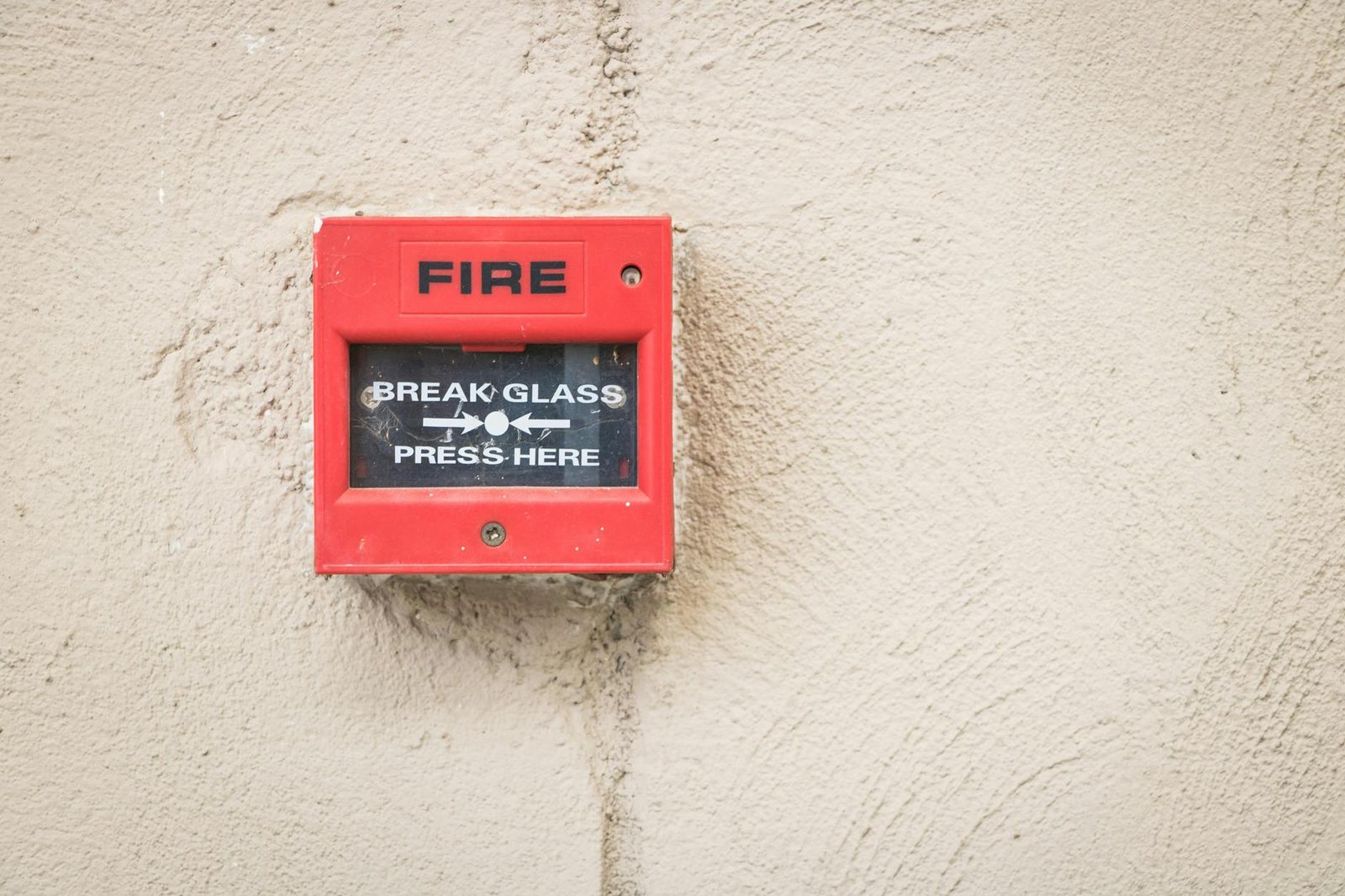
1. Initiating Devices: These include smoke detectors, heat detectors, and manual call points. In high-ceiling warehouses, beam detectors are often preferred over spot smoke detectors because they can cover large areas without the need for high-level maintenance.
2. Notification Appliances: These are the visual and audible alarms. In environments with high ambient noise, such as factories, visual strobe indicators are mandatory to ensure that workers who may be wearing ear protection are alerted to a fire event.
3. Control Panel (FACP): This is the brain of the system. It processes inputs from the detectors and triggers the notification appliances. Modern addressable panels allow facility managers to pinpoint the exact location of a fire, which significantly reduces response time.
4. Integration Modules: These bridge the gap between the alarm system and other building systems, such as HVAC, elevators, and access control.
It is vital to note that while the alarm system detects the fire, it must work in tandem with portable suppression equipment. Under IS 15683 standards, portable fire extinguishers are the first line of defense. When a fire is detected, trained staff should be able to operate an extinguisher using the PASS method: Pull the pin, Aim at the base of the fire, Squeeze the handle, and Sweep from side to side.
Strategic Selection: Addressable vs. Conventional Systems
One of the most common dilemmas for facility managers is choosing between conventional and addressable fire alarm systems.
A conventional system treats a whole zone as a single point. If a detector triggers, the panel tells you which floor or wing the fire is on, but not the specific room. These are generally more affordable, with installation costs typically ranging from ₹50,000 to ₹1,50,000 for smaller office setups. However, for large complexes, the lack of precision can waste valuable seconds.
An addressable system, conversely, assigns a unique identity to every single device. If a detector in the server room triggers, the panel displays “Server Room – Detector 04.” This allows for immediate, surgical response. While the upfront investment is higher, often starting from ₹2,50,000 and scaling upwards depending on the number of nodes, the long-term operational efficiency is superior.
| Feature | Conventional System | Addressable System |
| Precision | Zonal (General area) | Device-specific (Pinpoint) |
| Maintenance | Manual testing required | Self-diagnostic reporting |
| Cost (Capital) | Economical (₹50k – ₹1.5L) | Higher (₹2.5L+) |
| Scalability | Limited | Highly flexible |
Operational Maintenance and the Cost of Neglect
Fire safety equipment is not a “set and forget” investment. IS 2190 provides the code of practice for the maintenance of fire protection systems. A fire alarm system that has not been tested is effectively a non-existent system.
In India, we frequently encounter sites where sensors are covered in dust, or the batteries in the control panel have long expired. This is a violation of safety protocols. Regular audits should include testing the sensitivity of smoke detectors, checking the battery backup duration (which should ideally support the system for at least 24 hours in standby mode and 30 minutes in alarm mode), and ensuring that manual call points are unobstructed.
When budgeting for safety, do not just look at the installation cost. Maintenance contracts typically cost between 5% to 10% of the total system value annually. If you are purchasing portable extinguishers to complement your alarm system, remember that a standard 2kg ABC powder extinguisher for a small office might cost between ₹1,500 and ₹3,000, while larger 6kg-9kg industrial units can range from ₹5,000 to ₹8,000. Investing in high-quality equipment that meets IS 15683 standards ensures that when the alarm sounds, the tools available for initial suppression are reliable and effective.
The Human Element: Training and Emergency Protocols
Technology is only as effective as the people who operate it. A sophisticated fire alarm system is useless if the building occupants do not know how to respond to the siren.
Every facility must conduct periodic mock drills. These drills should test not only the evacuation route but also the response of the fire safety team. Staff should be trained to:
In industrial settings, the safety officer must ensure that the FACP is monitored at all times. If the system is not integrated with an automated monitoring service, there must be a clear protocol for manual verification of the alarm before escalating to the local fire brigade. Mismanaged false alarms can lead to complacency, where staff eventually ignore the sirens. Therefore, ensuring your system is maintained to minimize false triggers is a critical part of your overall safety management strategy.
FAQ: Frequently Asked Questions for Facility Managers
Q: What is the primary difference between IS 15683 and other international standards?
A: IS 15683 is the specific Indian Standard for portable fire extinguishers. It ensures that equipment is manufactured to withstand the unique climatic conditions of India, such as high humidity and temperature fluctuations, which can affect the pressure and chemical stability of extinguishers.
Q: How often should we test our fire alarm system to remain compliant with NBC 2016?
A: NBC 2016 and associated IS codes recommend a weekly test of the system functionality and a comprehensive annual audit by a certified professional. Records of these tests must be maintained for inspection by the local Fire Department.
Q: If my alarm sounds, what is the first thing I should do?
A: First, verify the location on the FACP. If the fire is small, use the nearest extinguisher by following the PASS method (Pull, Aim, Squeeze, Sweep). If the fire is spreading or smoke is thick, initiate the evacuation protocol immediately.
Q: What is the typical price range for an addressable smoke detector?
A: Depending on the brand and sensitivity requirements, a high-quality addressable smoke detector in India typically costs between ₹2,000 and ₹4,500 per unit, excluding installation and cabling.
Q: Can I use a conventional system in a large, multi-story building?
A: While technically possible in some smaller structures, it is highly discouraged for large multi-story buildings. NBC 2016 strongly favors addressable systems for complex structures to ensure rapid identification of the fire source, which is critical for the safety of occupants on upper floors.
Q: Does Safex help with the installation of fire alarm systems?
A: Yes. Since Safex established 1972, we have provided end-to-end fire safety solutions, including risk assessment, system design, supply of equipment compliant with IS standards, and professional installation and maintenance services for various industries across India.
Resources
For further information on fire safety standards and regulatory requirements, please refer to the following official resources:
Conclusion
Fire safety is an ongoing commitment to the protection of life and property. As we have explored, a fire alarm system is a complex integration of technology, compliance, and human behavior. By adhering to the standards set by the NBC 2016 and ensuring that all equipment—from smoke detectors to extinguishers—meets the necessary IS certifications, you create a robust defense against fire hazards.
Remember that the cost of an incident far outweighs the cost of professional installation and regular maintenance. Whether you are upgrading an existing facility or planning a new one, prioritize reliability and regulatory adherence. With Safex established 1972, we understand the nuances of the Indian market better than anyone. Our expertise is at your disposal to ensure that your premises are not just compliant, but truly safe. Do not wait for a fire to realize the importance of a functional alarm system; act today to secure your future.