In the complex landscape of industrial and commercial fire safety, the ABC dry powder fire extinguisher stands as the most versatile and widely deployed first-response tool. As facility managers and safety officers across India navigate the stringent requirements of the National Building Code (NBC) 2016, understanding the technical specifications, maintenance protocols, and application limits of these units is not merely a matter of operational efficiency—it is a critical legal and safety mandate.
Safex established 1972, and since our inception, we have witnessed the evolution of fire safety technology in India. From the early days of rudimentary fire suppression to the sophisticated, code-compliant systems required today, our commitment remains anchored in protecting lives and assets through adherence to rigorous Indian Standards. Whether you are managing a high-rise IT park in Bengaluru, a chemical processing unit in Gujarat, or a retail warehouse in Mumbai, the ABC dry powder extinguisher remains the baseline of your fire protection strategy.
Understanding ABC Dry Powder: Composition and Fire Classifications
The term “ABC” refers to the classification of fires that the extinguishing agent is effective against. In the Indian context, as defined by IS 15683:2018, these extinguishers utilize Monoammonium Phosphate (MAP) based chemical powders. This specialized agent is designed to combat:
The effectiveness of ABC powder lies in its ability to create a barrier between the fuel source and the oxygen supply. When discharged, the powder forms a crust over Class A materials, preventing re-ignition. For Class B and C fires, it chemically interferes with the combustion chain reaction.
For facility managers, it is essential to distinguish between ABC powder and specialized agents. While ABC is versatile, it is not always the optimal choice for sensitive electronic equipment found in server rooms, where clean agents are preferred to prevent residue damage. However, for general-purpose areas, the ABC extinguisher is the gold standard for compliance with NBC 2016 Part 4, which mandates specific fire suppression coverage based on the occupancy type and fire load of the building.
Compliance and Regulatory Framework: IS 15683 and NBC 2016
Compliance in India is governed by a hierarchy of standards. The National Building Code (NBC) 2016 provides the structural and systemic requirements for fire safety, while IS 15683:2018 serves as the technical bible for the manufacturing, performance, and testing of portable fire extinguishers.
When procuring equipment, decision-makers must ensure that every unit bears the ISI mark. This mark is not just a label; it is a guarantee that the extinguisher has undergone rigorous testing for pressure, discharge time, and agent efficacy. Non-ISI marked equipment often fails during critical moments, leading to catastrophic losses and severe legal liabilities for building owners.
Under the guidelines of IS 2190, which covers the selection, installation, and maintenance of portable fire extinguishers, organizations are required to conduct regular inspections. This includes checking the pressure gauge, ensuring the safety pin is intact, and verifying that the discharge nozzle is free of obstructions. Failure to maintain these units according to IS 2190 can result in heavy penalties during fire safety audits conducted by local municipal corporations or the Fire Services Department.
The PASS Method: Essential Training for Workplace Safety
Equipment is only as effective as the person operating it. In an emergency, panic often leads to improper use of fire extinguishers. To ensure your staff is prepared, every employee should be trained on the PASS method. This simple acronym is the industry standard for operating a handheld fire extinguisher:
At Safex, we emphasize that training must be conducted through live demonstrations rather than just theoretical manuals. A fire is a high-stress environment, and muscle memory is the only way to ensure the equipment is deployed correctly before the fire spreads beyond control.
Strategic Procurement: Budgeting and Market Realities in India
For procurement officers, balancing cost with quality is a primary concern. The Indian market offers a wide spectrum of pricing, but it is vital to avoid “cheap” alternatives that lack proper certification.
For standard facility management, here is a realistic breakdown of what you should expect to pay for high-quality, IS 15683-certified ABC dry powder extinguishers:
When budgeting, always include the cost of annual maintenance contracts (AMC). An extinguisher that has lost pressure is useless. Regular refilling and testing are not “optional add-ons”—they are the core of your fire safety insurance.
Comparison of Fire Suppression Approaches
To assist facility managers in choosing the right equipment, the table below compares ABC dry powder with other common suppression methods.
| Feature | ABC Dry Powder | CO2 Extinguisher | Water (Stored Pressure) |
| Primary Fire Class | A, B, C | B, C, Electrical | Class A |
| Residue | High (Powdery) | None | Water Damage |
| Electrical Safety | Safe (Non-conductive) | Excellent | Dangerous |
| Common Application | General Office/Warehouse | Server Rooms/Labs | Paper/Wood Storage |
As shown in the table, while ABC powder is the most versatile, specialized environments like server rooms require CO2 to avoid damaging sensitive hardware. Understanding these distinctions is crucial for designing a comprehensive fire safety plan that adheres to NBC 2016 requirements.
FAQ: Critical Questions for Fire Safety Decision-Makers
Q: How often must an ABC dry powder extinguisher be serviced according to Indian standards?
A: According to IS 2190, extinguishers must be inspected monthly for physical integrity and pressure. A comprehensive maintenance check, including pressure testing and potential refilling, should be performed annually by a certified professional.
Q: Can I use an ABC dry powder extinguisher on an electrical panel?
A: Yes, ABC powder is non-conductive and safe for use on electrical fires (Class C). However, be aware that the powder residue can be corrosive and may cause long-term damage to delicate electronic components.
Q: What is the shelf life of the powder inside the extinguisher?
A: While the canister itself can last for many years if maintained, the chemical powder should be inspected and potentially replaced every 3 to 5 years, or immediately after any discharge, as per manufacturer guidelines and IS 15683 standards.
Q: Why does my extinguisher gauge sometimes show “low pressure”?
A: Low pressure can result from a slow leak, damaged seals, or improper handling. If the needle is not in the green zone, the unit is non-compliant and must be serviced or replaced immediately.
Q: Is the PASS method effective for all types of fires?
A: The PASS method (Pull, Aim, Squeeze, Sweep) is the universal technique for all portable extinguishers. However, the distance from which you operate varies; with powder, you should start at a distance of 2-3 meters and move closer as the fire subsides.
Q: What are the legal consequences of failing a fire safety audit in India?
A: Non-compliance with NBC 2016 can lead to the revocation of your Occupancy Certificate (OC), heavy fines from the local fire department, and, in the event of a fire, criminal liability for the facility manager or building owner.
Practical Implementation: Lessons from the Field
In our decades of experience, we have observed that the most common failure point in fire safety is not the equipment itself, but the lack of accessibility. We frequently encounter warehouses where extinguishers are blocked by inventory, or office buildings where they are hidden behind doors.
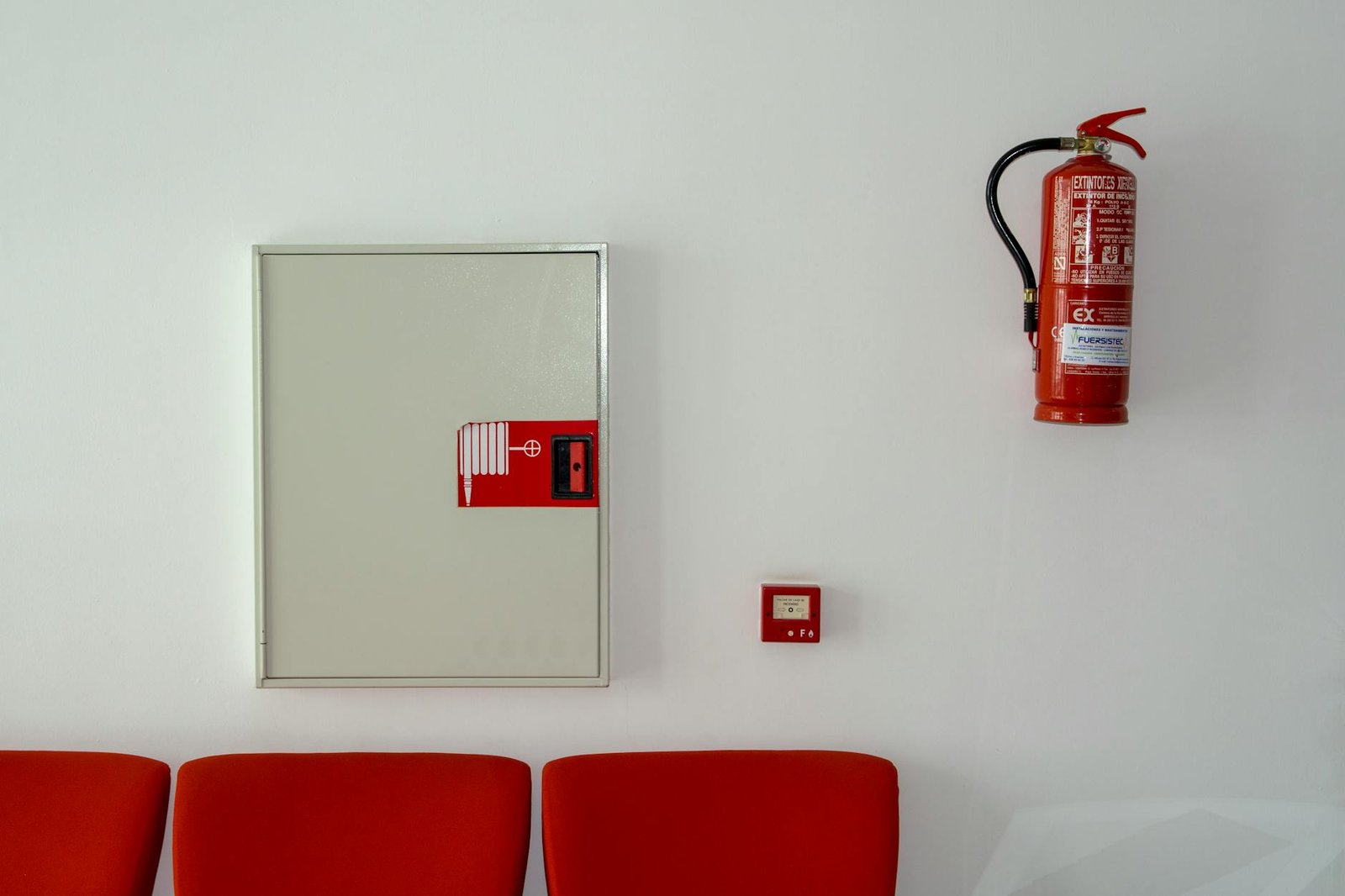
NBC 2016 is very clear: extinguishers must be mounted in conspicuous, easily accessible locations, typically not more than 1.5 meters from the floor. They should be clearly marked with signage that is visible even in low-light conditions. In large industrial setups, such as those found in the industrial belts of Gujarat, we recommend a “buddy system” where one person is responsible for the alarm and evacuation, while another is trained in the immediate deployment of the ABC powder unit.
Furthermore, the environment matters. In dusty or high-vibration manufacturing environments, standard brackets may loosen. Ensuring that your equipment is mounted on vibration-resistant brackets is a small but vital detail that prevents equipment damage and ensures the unit is ready when needed.
The Role of Professional Audits
While internal checks are vital, professional fire safety audits are mandatory for large establishments. A professional auditor will verify:
1. Placement: Are the units located in the high-risk zones identified by the fire load assessment?
2. Capacity: Does the total fire suppression capacity of your facility meet the requirements set out in the NBC 2016?
3. Training: Do your employees show evidence of recent fire drill participation?
4. Documentation: Are the maintenance logs for your extinguishers up to date and signed by a certified technician?
Investing in professional services is not a cost; it is an investment in the continuity of your business. A single fire can shut down operations for months, whereas a robust, compliant safety system ensures that minor incidents remain minor.
Resources for Further Compliance
For those seeking to deepen their understanding of fire safety standards, the following resources provide the technical foundation required for compliance in India:
Note: Always ensure that your safety equipment providers are authorized and that they provide authentic test certificates for all supplied units. Do not compromise on the quality of the extinguishing agent or the pressure-bearing capacity of the cylinders.
Conclusion
Fire safety is an ongoing process of vigilance, maintenance, and education. By adhering to the guidelines set forth in IS 15683 and the NBC 2016, you are not just ticking a box for a compliance audit—you are building a culture of safety that protects your most valuable assets: your people and your infrastructure.
Safex established 1972, and throughout our history, we have remained dedicated to providing the high-quality, reliable fire protection equipment that Indian businesses rely on. From the initial selection of the correct ABC dry powder unit to the long-term maintenance required to keep your facility safe, we understand the nuances of the Indian regulatory environment.
Do not wait for an inspection to identify gaps in your safety strategy. Assess your facility today, ensure your staff is trained in the PASS method, and verify that your equipment meets the rigorous standards mandated by law. In the face of a fire, the difference between a minor incident and a tragedy is often measured in seconds—and the right equipment in the right place is your best defense.