
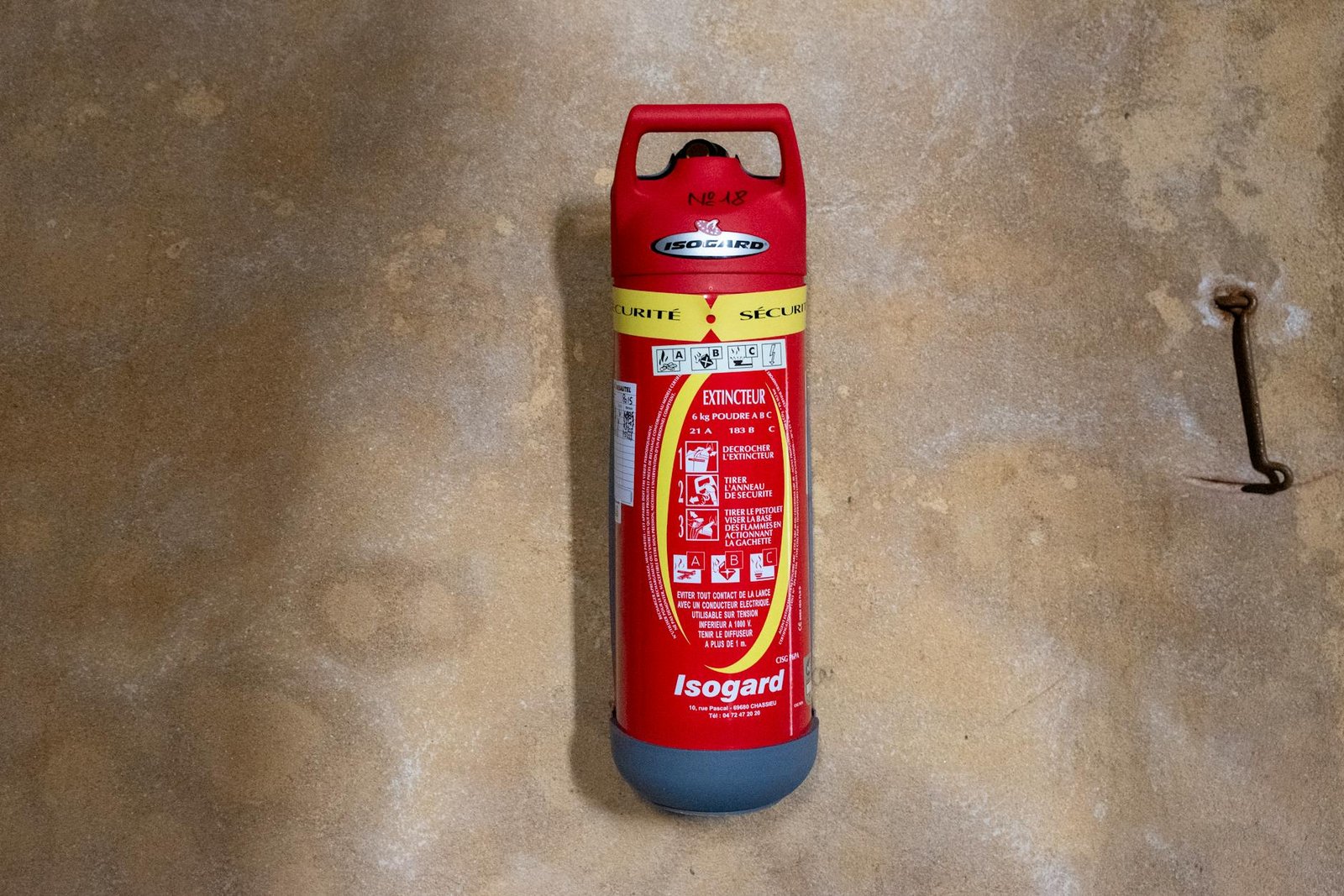
Fire safety is not merely a bureaucratic checkbox for facility managers and business owners in India; it is a fundamental pillar of operational continuity and human life protection. As Safex established 1972, we have witnessed the evolution of fire safety regulations from basic recommendations to the stringent mandates found in the National Building Code (NBC) 2016. Among the various tools available for fire suppression, the 2kg fire extinguisher occupies a unique space. It is the tactical, first-response unit of choice for small offices, server rooms, and residential vehicles.
Understanding why, where, and how to deploy a 2kg extinguisher requires more than just purchasing hardware. It requires an understanding of Indian Standards (IS), specifically IS 15683, which governs the performance and construction of portable fire extinguishers. In this comprehensive guide, we will explore the technical specifications, legal requirements, and practical application of 2kg fire extinguishers within the diverse landscapes of Indian industry—from high-rise IT parks in Bengaluru to textile warehouses in Gujarat.
The Role of 2kg Extinguishers in Modern Fire Safety Strategy
In the context of the NBC 2016 Part 4, fire safety is categorized by risk occupancy. While large-scale fire suppression systems like sprinklers and hydrants are mandatory for industrial complexes, the “first-aid” fire-fighting equipment—the portable extinguisher—is often what prevents a localized electrical short from escalating into a building-wide catastrophe.
The 2kg extinguisher is specifically engineered for mobility and quick deployment. Its size makes it ideal for areas where space is at a premium, such as modular office cubicles, small server racks, or the interior of commercial vehicles. However, do not mistake its compact size for limited utility. When dealing with Class B (flammable liquids) or Class C (electrical) fires, a 2kg CO2 or Dry Chemical Powder (DCP) unit can be the difference between a minor incident and a total loss of assets.
For facility managers, the challenge is not just procurement but placement. IS 2190, the Indian Standard for the selection, installation, and maintenance of first-aid fire-fighting equipment, dictates that travel distance to an extinguisher should not exceed 15 meters. A 2kg unit is often the most cost-effective way to meet these density requirements in high-traffic corridors or small technical rooms, ensuring that every square meter of your facility remains compliant with local fire department audits.
Navigating IS 15683 and Quality Standards
When you purchase fire safety equipment, you are not just buying a cylinder; you are buying a promise of performance under extreme duress. IS 15683:2018 is the benchmark for portable fire extinguishers in India. This standard outlines the specific requirements for body construction, discharge mechanisms, and agent effectiveness.
A 2kg extinguisher that adheres to IS 15683 ensures that the discharge time and throw range are sufficient for an untrained operator to safely combat a nascent fire. In India, the market is flooded with uncertified, cheaper alternatives that often fail during a high-pressure discharge or experience leakage due to poor valve construction. At Safex, we emphasize that compliance with IS 15683 is non-negotiable.
Beyond the standard, maintenance is the Achilles’ heel of fire safety. Many organizations in industrial hubs like Pune or Chennai buy high-quality equipment but fail to implement a quarterly inspection schedule. Under the guidelines of IS 2190, your 2kg units must be inspected for pressure gauge fluctuations, physical corrosion, and seal integrity. Failing to maintain these units can lead to severe liability issues. In the event of a fire, if an extinguisher fails to function because it was not serviced according to the code, the legal repercussions for the facility manager can be significant, including the invalidation of insurance claims and potential criminal negligence charges.
Operational Excellence: The PASS Method
Regardless of the size of the extinguisher—be it a 2kg portable unit or a 50kg trolley-mounted system—the method of operation remains consistent. The PASS method is the industry standard for ensuring that an operator uses the device correctly under the high-stress conditions of an emergency.
1. Pull: Pull the safety pin located at the top of the handle. This releases the locking mechanism and allows you to discharge the agent.
2. Aim: Aim the nozzle or the hose at the base of the fire. Many novices make the mistake of aiming at the flames; this is ineffective. You must target the fuel source to cut off the chemical reaction.
3. Squeeze: Squeeze the handle or lever slowly and evenly to release the pressurized extinguishing agent.
4. Sweep: Sweep the nozzle from side to side at the base of the fire until the flames appear to be extinguished. Watch the area carefully, as fires can reignite if the fuel source remains hot.
For a 2kg unit, the discharge time is typically limited (often 8–12 seconds). This makes the “Sweep” motion critical. You do not have the luxury of time or excess agent. Practice drills, conducted periodically, are essential for office staff or warehouse personnel to build the muscle memory required to use these units effectively.
Cost Considerations and Market Realities in India
Budgeting for fire safety requires balancing regulatory mandates with financial prudence. In the Indian market, the price of a 2kg fire extinguisher varies significantly based on the type of extinguishing agent (CO2 vs. DCP vs. Clean Agent) and the certification quality.
– DCP (Dry Chemical Powder) 2kg Extinguishers: Generally priced between ₹1,500 and ₹2,500. These are versatile and commonly used in general office areas.
– CO2 2kg Extinguishers: Generally priced between ₹2,500 and ₹4,000. These are the gold standard for server rooms and electrical panels as they do not leave a residue.
– Clean Agent/HFC-236fa 2kg Extinguishers: These are premium units, often costing between ₹4,000 and ₹8,000, preferred for high-value data centers where equipment sensitivity is paramount.
When comparing quotes, always ensure that the pricing includes the necessary mounting brackets and, if possible, a service contract for the first year. Avoid the temptation to source the cheapest unbranded units available online. In the fire safety industry, a lower price point often reflects the use of thinner steel for the cylinder or cheaper valve components, which are prone to pressure loss. Always request the manufacturer’s test certificate against IS 15683 before finalizing your procurement.
Comparison Table: Choosing the Right 2kg Extinguisher
| Feature | DCP (ABC Powder) | CO2 Gas | Clean Agent (HFC-236fa) |
| Primary Use | General Office/Warehouse | Server Rooms/Electrical | High-Value Electronics |
| Residue | Leaves heavy powder | None | None |
| Electrical Safety | Conductive/Messy | Non-conductive | Non-conductive |
| Price Range | ₹1,500 – ₹2,500 | ₹2,500 – ₹4,000 | ₹4,000 – ₹8,000 |
Strategic Placement and Compliance Audits
Compliance is not a static state; it is a continuous process. NBC 2016 mandates that fire safety equipment must be placed in conspicuous, easily accessible locations. For a 2kg unit, this usually means mounting the extinguisher on a wall bracket at a height where the handle is not more than 1.5 meters from the floor. This ensures that even in a smoke-filled environment, the unit is accessible to individuals of varying heights.
In large facilities, we recommend a “Fire Safety Map” that clearly marks the location of every 2kg extinguisher. During an audit, inspectors from the fire department will look for two things: accessibility and maintenance records. If your extinguishers are hidden behind stacked boxes or if the pressure gauges are in the red zone, you are in violation of safety codes.
Moreover, consider the environmental impact on the equipment. In coastal regions like Mumbai or Kochi, salt-laden air can accelerate the corrosion of the steel cylinders. In such environments, we recommend choosing extinguishers with epoxy-polyester powder coating for enhanced durability. If your facility is located in a high-temperature zone, such as an industrial shed in Rajasthan, ensure that the extinguishers are not placed in direct, prolonged sunlight, as this can cause the internal pressure to spike beyond safety limits.
Frequently Asked Questions (FAQ)
Q: Is a 2kg fire extinguisher sufficient for a large office floor?
A: A 2kg extinguisher is typically intended for localized, small-scale fire incidents. According to IS 2190, the total capacity required for a floor is calculated based on the fire load and floor area. You should use 2kg units as supplementary “first-aid” protection, but they do not replace the need for larger fire extinguishers or hydrant systems required by the NBC 2016 for your specific occupancy class.
Q: Does the PASS method change for different types of 2kg extinguishers?
A: No, the PASS method (Pull, Aim, Squeeze, Sweep) is universal for all portable extinguishers. Whether you are using a 2kg DCP or a 2kg CO2 unit, the fundamental mechanics of operating the valve and targeting the base of the fire remain the same.
Q: How often should I get my 2kg extinguisher serviced?
A: As per IS 2190, extinguishers should be inspected monthly for pressure and physical integrity. Professional servicing, which includes checking the weight of the agent and hydrostatic testing of the cylinder, should be conducted at least annually.
Q: Why is the price of a 2kg CO2 extinguisher higher than a DCP unit?
A: CO2 extinguishers require thicker, high-pressure steel cylinders to contain the gas safely. Additionally, the valve mechanism for CO2 is more complex compared to the simple discharge valves used in DCP extinguishers, which accounts for the price difference.
Q: Can I use a 2kg extinguisher on a grease fire in a kitchen?
A: You should use a dedicated Wet Chemical extinguisher for kitchen grease fires (Class K). While a DCP unit might suppress a small grease fire, it is not optimized for it and may not prevent the fire from reigniting.
Q: What are the legal consequences of not having verified fire extinguishers?
A: Failure to maintain compliant fire safety equipment can lead to the cancellation of your Fire NOC (No Objection Certificate), hefty fines, closure of operations by local fire authorities, and significant legal liability in the event of an injury or property damage.
Resources
For further technical details and to ensure your facility adheres to the latest Indian fire safety norms, please consult the following official resources:
1. Bureau of Indian Standards – Official Website
2. National Building Code of India – NBC 2016 Overview
Conclusion
The 2kg fire extinguisher is a vital component of any robust fire safety strategy in India. While it is small, its impact on preventing minor incidents from becoming major disasters is immense. By adhering to the standards set by IS 15683 and following the maintenance protocols defined in IS 2190 and the NBC 2016, facility managers can ensure that their premises are not only compliant but truly safe for employees and visitors.
Safex established 1972, and for over five decades, we have remained committed to providing the technical expertise and high-quality equipment necessary to protect Indian businesses. Fire safety is an investment in your company’s future. Ensure that your team is trained in the PASS method, your equipment is serviced by certified professionals, and your facility meets the stringent requirements of modern fire codes. Safety is not a luxury; it is the foundation upon which successful, sustainable businesses are built.