Fire safety is not merely a regulatory checkbox; it is the fundamental pillar of operational continuity for any business in India. Whether you are managing a high-density IT park in Bengaluru, a chemical manufacturing unit in Gujarat, or a commercial warehouse, the selection of appropriate fire suppression equipment is a critical decision. Among the various suppression agents available, the Dry Chemical Powder (DCP) fire extinguisher remains the most versatile and widely deployed tool in the Indian industrial and commercial landscape.
Since Safex established 1972, we have observed the evolution of fire safety mandates in India, moving from rudimentary fire buckets to highly sophisticated, code-compliant fire suppression systems. Understanding the technical nuances of dry powder extinguishers—and how they align with the National Building Code (NBC) 2016 and relevant Indian Standards—is essential for every facility manager and safety officer tasked with protecting human life and capital assets.
The Science of Dry Chemical Powder and Why It Matters
Dry chemical powder extinguishers are uniquely effective because they work on the principle of chemical interruption. Unlike water, which primarily cools a fire, or CO2, which displaces oxygen, dry powder acts as a chemical chain-reaction breaker. When the powder is discharged onto a fire, it creates a cloud that separates the oxygen from the fuel, while simultaneously interfering with the chemical reaction of the fire itself.
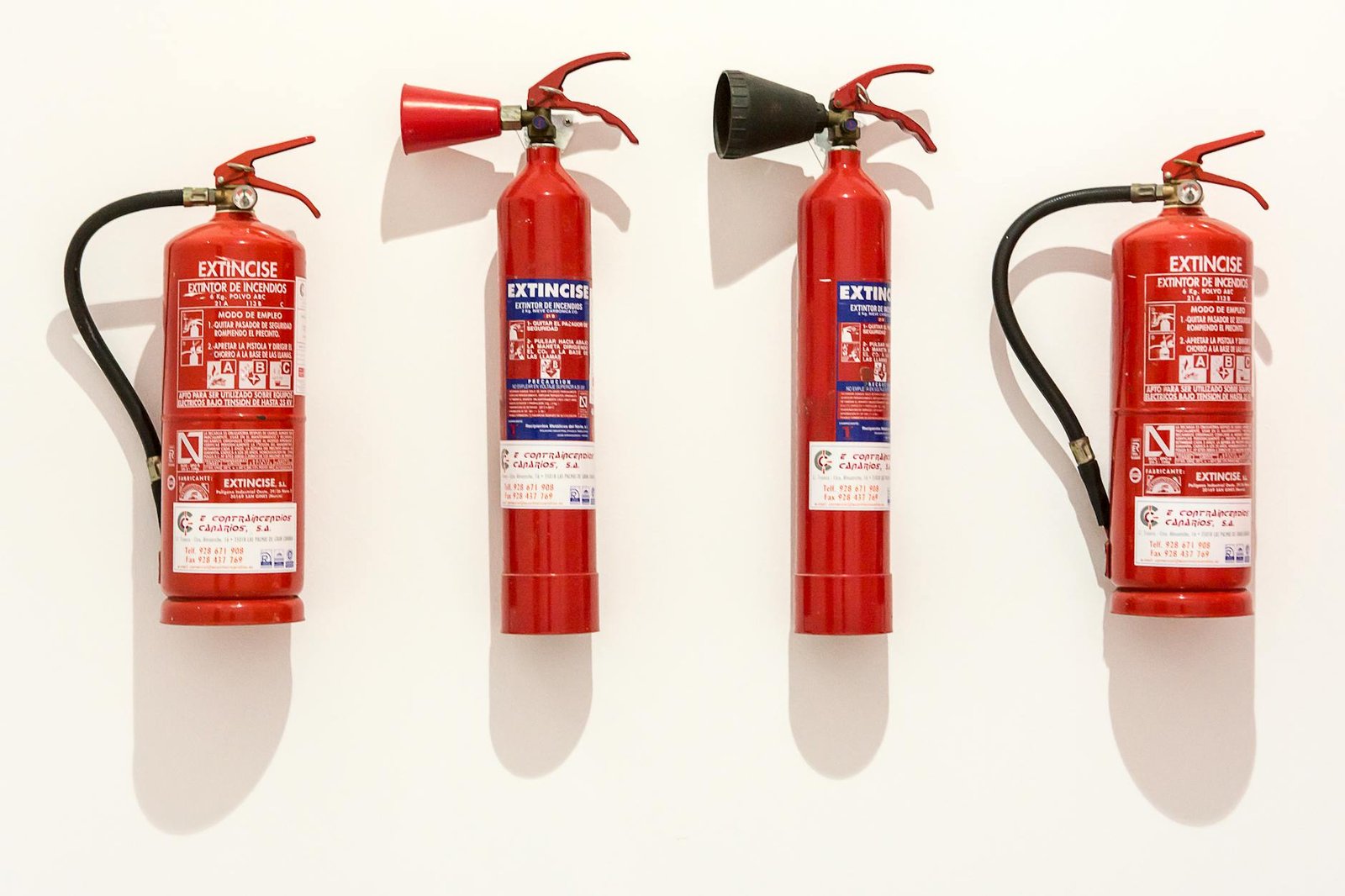
In the Indian context, where diverse fire hazards are common—ranging from electrical fires in data centers to solid combustible fires in paper-heavy offices—the multipurpose ABC fire extinguisher extinguisher is the industry standard. These extinguishers are effective on Class A (solids like wood and paper), Class B (flammable liquids like petrol or solvents), and Class C (energized electrical equipment) fires.
The performance and reliability of these extinguishers are governed by IS 15683:2018. This standard specifies the requirements for the design, construction, and testing of portable fire extinguishers. Choosing a unit that carries the ISI mark is not just about compliance; it is a guarantee that the extinguisher has undergone rigorous pressure testing, drop testing, and discharge testing to perform under the extreme climatic conditions found across India, from the scorching heat of the Thar Desert to the humid coastal regions of Mumbai.
Compliance and Regulatory Framework: NBC 2016 and IS 2190
Navigating the regulatory landscape of fire safety in India requires a deep understanding of the National Building Code (NBC) 2016. Part 4 of the NBC 2016, which focuses on Fire and Life Safety, provides the framework for fire protection systems in buildings. It mandates that every floor of a commercial or industrial building must have a specific number of fire extinguishers based on the floor area and the fire load of the occupancy.
Furthermore, IS 2190 serves as the primary code of practice for the selection, installation, and maintenance of portable fire extinguishers. According to this standard, extinguishers must be inspected monthly and undergo a thorough maintenance check annually. For a facility manager, this means maintaining a detailed logbook. Failure to comply with these standards can lead to severe legal repercussions, including the revocation of a No Objection Certificate (NOC) from the local Fire Department, not to mention the immense liability and human cost associated with fire-related fatalities.
When procuring equipment, ensure that your vendor provides the necessary test certificates. In India, the market is flooded with low-quality, non-ISI marked extinguishers that may fail during a crisis. A professional-grade 2kg DCP extinguisher generally retails in the range of ₹1,500 to ₹3,000, while larger 6kg or 9kg industrial units typically range from ₹3,500 to ₹8,000 depending on the type of powder used (such as MAP 50% or MAP 90%). For heavy-duty industrial applications, specialized trolley-mounted units can range from ₹15,000 to ₹40,000.
Operational Excellence: Mastering the PASS Method
Having the right equipment is only half the battle; the ability of your staff to use it effectively is the other. In a high-stress emergency, instinct often fails, and panic sets in. This is why regular mock drills are non-negotiable. Every employee should be trained in the PASS method, which is the globally accepted standard for operating fire extinguishers:
1. Pull: Pull the pin at the top of the extinguisher. The pin releases a locking mechanism and will allow you to discharge the extinguisher.
2. Aim: Aim at the base of the fire, not the flames. This is a common mistake; spraying the flames does not extinguish the source of the fire.
3. Squeeze: Squeeze the handle slowly. This will release the extinguishing agent in the extinguisher. If the handle is released, the discharge will stop.
4. Sweep: Sweep from side to side until the fire appears to be out. Watch the area you have extinguished, and if the fire breaks out again, repeat the process.
Practical training sessions should be conducted at least twice a year. In an industrial environment, such as a manufacturing plant in Pune or an automotive hub in Chennai, we recommend that at least 30% of the workforce be trained in the basic operation of fire extinguishers. This creates a “first responder” culture that can contain a fire before the fire brigade arrives, potentially saving millions in damages.
Maintenance and Lifecycle Management of DCP Extinguishers
A common misconception is that fire extinguishers are “fit and forget” devices. In reality, a dry powder extinguisher requires consistent care to remain functional. Over time, the powder inside the cylinder can settle or compact due to vibrations, especially in industrial settings or vehicles. If the powder is compacted, it will not discharge properly when the handle is squeezed.
Per IS 2190, the maintenance schedule includes:
For facility managers, keeping an updated asset register is vital. Mark every extinguisher with a unique ID and record the date of its last service. If you notice an extinguisher showing signs of rust or physical damage, it must be decommissioned immediately and replaced. Investing in quality equipment is a long-term cost-saving measure, as cheaper, non-compliant units often require more frequent servicing and replacement due to poor build quality.
Strategic Comparison of Fire Suppression Options
Selecting the right extinguisher requires balancing the fire hazard type with the environment. The table below compares the most common fire safety options available to Indian businesses.
| Feature | Dry Powder (DCP) | CO2 Extinguisher | Water (Stored Pressure) |
| Primary Use | Class A, B, and C fires | Class B and Electrical | Class A (Solids) only |
| Conductive | No (Non-conductive) | No (Non-conductive) | Yes (Highly dangerous) |
| Residue | Leaves heavy dust | No residue | Leaves water damage |
| Cost Range | ₹1,500 – ₹8,000 | ₹2,500 – ₹10,000 | ₹2,000 – ₹5,000 |
Note: Prices are estimates based on standard Indian industrial procurement rates for ISI-certified hardware.
Frequently Asked Questions
Q: What is the primary difference between an ABC powder extinguisher and a BC powder extinguisher?
A: An ABC powder extinguisher contains Mono-Ammonium Phosphate, which is effective on Class A (solid combustibles), Class B (liquids), and Class C (electrical) fires. A BC powder extinguisher is typically made of Sodium Bicarbonate, which is only effective on Class B and C fires. For most offices and general facilities, ABC is the recommended standard.
Q: How often should I replace the powder in my fire extinguishers?
A: According to IS 2190, you should undergo annual maintenance. While the powder itself does not technically “expire,” it can lose its flowability over time. Most manufacturers recommend a complete recharge every 3 to 5 years, depending on the environmental conditions and the results of the annual inspection.
Q: Can I use a dry powder extinguisher on a server room fire?
A: While DCP is technically effective on electrical fires, it is not recommended for server rooms or sensitive electronic equipment. The fine powder can cause irreversible damage to delicate circuitry and cooling systems. For server rooms, CO2 or clean-agent gas extinguishers are the preferred choice.
Q: What is the significance of the “ISI mark” on my extinguisher?
A: The ISI mark issued by the Bureau of Indian Standards (BIS) indicates that the product complies with IS 15683:2018. It ensures the product has been tested for safety, durability, and effectiveness under Indian conditions. Purchasing non-ISI marked equipment is a violation of fire safety norms and poses a massive risk to life and property.
Q: Is the PASS method suitable for all types of fires?
A: The PASS method (Pull, Aim, Squeeze, Sweep) is the universal technique for portable fire extinguishers. However, it should only be used on small, incipient-stage fires. If a fire has grown beyond the size of a trash can, or if there is excessive smoke, do not attempt to fight it—evacuate immediately and contact the fire brigade.
Q: How do I determine the number of extinguishers needed for my facility?
A: The quantity is determined by the “Fire Load” and the floor area. NBC 2016 provides guidelines based on the hazard classification of your building (e.g., Light, Ordinary, or High Hazard). A professional audit by a certified fire safety consultant is the most reliable way to ensure you meet the specific requirements of your local fire authority.
Resources for Fire Safety Professionals
To further your understanding of fire safety compliance and best practices in India, we recommend consulting the following authoritative resources:
Conclusion: The Safex Commitment
Fire safety is a continuous process of vigilance, compliance, and preparedness. As a facility manager or business owner, you are the final line of defense against potential catastrophe. By adhering to the standards set out in the NBC 2016 and ensuring your premises are equipped with IS 15683-compliant dry powder extinguishers, you are making a commitment to the safety of your employees and the longevity of your business operations.
Since Safex established 1972, we have dedicated ourselves to raising the bar for fire protection in India. We understand that fire safety is not about selling products; it is about providing the peace of mind that comes with knowing your facility is protected by the highest quality equipment and the most reliable technical expertise. Whether you are conducting a routine audit or upgrading your fire suppression infrastructure, remember that in the realm of fire safety, there is no substitute for quality and compliance. Choose wisely, train your teams, and maintain your equipment with the seriousness that such a vital responsibility demands.