In the complex landscape of industrial and commercial fire safety, the ABC fire extinguisher stands as the most versatile and essential tool for risk mitigation. Whether you are managing a high-rise IT park in Bengaluru, a chemical warehouse in Gujarat, or a manufacturing unit in the industrial belts of Maharashtra, the ability to contain a fire in its incipient stage is the difference between a minor incident and a catastrophic loss of life and property. At Safex Fire Services, we have been at the forefront of fire protection since our inception in 1972, witnessing firsthand the evolution of safety standards and the critical importance of selecting the right equipment for the Indian environment.
When discussing fire safety, one cannot overlook the regulatory framework that governs our industry. The National Building Code (NBC) 2016 serves as the primary reference point for building design and fire safety measures in India. Within this framework, the selection and installation of portable fire extinguishers are governed by strict adherence to Indian Standards (IS), most notably IS 15683, which dictates the performance and construction requirements for portable fire extinguishers.
Understanding the Versatility of ABC Dry Powder Extinguishers
The “ABC” designation refers to the classification of fires the extinguisher is designed to combat. In the Indian context, where mixed-use buildings and complex industrial operations are common, the ABC extinguisher is the gold standard for multi-purpose protection.
– Class A: Fires involving solid combustible materials such as wood, paper, cloth, and rubber.
– Class B: Fires involving flammable liquids like petrol, diesel, paints, and solvents.
– Class C: Fires involving flammable gases such as LPG, methane, and butane.
The Mono Ammonium Phosphate (MAP) powder used in these units works by creating a chemical barrier that interrupts the combustion chain reaction. Unlike water fire extinguishers, which can be dangerous when used on electrical fires or liquid spills, the ABC powder is non-conductive, making it safe for use on energized electrical equipment.
For facility managers, the primary challenge is not just procurement but compliance. Under IS 2190, which provides the code of practice for the selection, installation, and maintenance of portable fire extinguishers, every commercial premise must have a calculated distribution of these units. Failure to adhere to these standards can lead to severe legal liabilities, including the revocation of a No Objection Certificate (NOC) from the local Fire Department and potential criminal liability in the event of a fire-related fatality.
Compliance and Standards: The Role of IS 15683 and NBC 2016
Compliance is not merely a bureaucratic checkbox; it is a critical safety mandate. The NBC 2016 Part 4 emphasizes the necessity of having “first-aid” fire fighting equipment readily available. This is where the technical specifications of IS 15683 become paramount. This standard outlines the requirements for the construction, testing, and performance of portable fire extinguishers, ensuring that when an emergency strikes, the equipment does not fail.
When purchasing extinguishers, decision-makers must ensure the product bears the ISI mark. This certification indicates that the product has undergone rigorous testing for pressure, discharge characteristics, and structural integrity. In the Indian market, you will find a range of price points. For a standard 2kg ABC extinguisher, you might expect to pay between ₹1,500 and ₹3,000, while larger industrial-grade 5kg to 10kg units typically range from ₹5,000 to ₹15,000, depending on the brand, valve quality, and cylinder thickness.
Investing in cheaper, non-ISI marked equipment is a false economy. Low-quality extinguishers often suffer from valve leakage, pressure gauge failure, or poor powder quality, which cakes over time and renders the device useless during a fire. We strongly advocate for procurement based on quality and certification rather than the lowest bid.
The PASS Method: Practical Firefighting for Employees
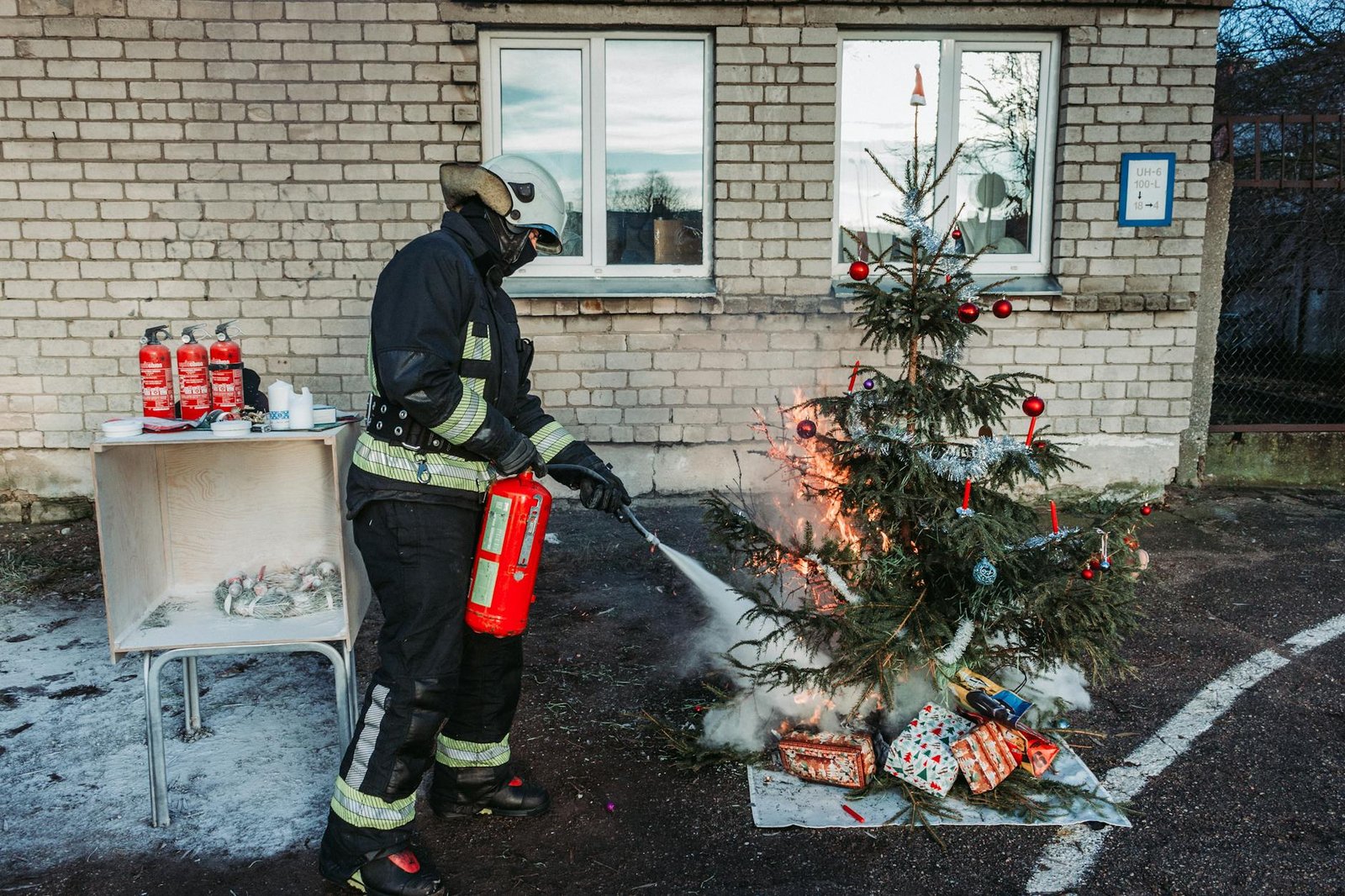
Having the right equipment is only half the battle; the other half is training. We frequently encounter workplaces where extinguishers are present but staff members remain paralyzed by indecision during a fire. It is essential to conduct regular drills using the PASS method, which is the industry-standard technique for operating a portable fire extinguisher:
1. Pull the pin: This unlocks the operating lever and allows you to discharge the extinguisher.
2. Aim low: Point the nozzle or hose at the base of the fire, not the flames. The goal is to smother the fuel source.
3. Squeeze the lever: This releases the extinguishing agent.
4. Sweep from side to side: Moving the nozzle back and forth across the base of the fire ensures complete coverage and prevents the fire from reigniting.
In a high-pressure environment, human instinct is often to aim at the top of the flames. Training employees to aim at the base is vital for fire suppression. Furthermore, facility managers should ensure that extinguishers are mounted at visible, accessible heights—typically between 1 to 1.5 meters from the floor—and are never obstructed by inventory or furniture.
Maintenance and Lifecycle Management
The maintenance of fire safety equipment is governed by IS 2190. An ABC extinguisher is a pressurized vessel, and it requires periodic inspection to ensure it remains operational. This includes monthly visual inspections for pressure gauge readings (ensuring the needle is in the green zone), checking for physical damage, and ensuring the safety seal is intact.
Annual maintenance is a statutory requirement. During this process, the powder should be inspected for caking, the cylinder should be checked for corrosion, and the discharge mechanism should be tested. In dusty or high-humidity environments, such as those found in coastal industrial zones in Gujarat or humid parts of Bengaluru, the interval for maintenance may need to be shortened to ensure the powder remains free-flowing.
Liability issues arise when maintenance logs are not kept up to date. If a fire occurs and the fire safety audit shows that the extinguishers were past their inspection due date, the insurance claim can be denied, and the facility management firm can be held liable for negligence. Maintaining a rigorous, documented audit trail is an essential part of professional facility management.
Comparison Table: Fire Extinguisher Selection
| Feature | ABC Dry Powder | CO2 Extinguisher | Water Mist/Stored Pressure |
| Primary Use | Class A, B, C Fires | Class B (Electrical) | Class A Only |
| Conductivity | Non-conductive | Non-conductive | Conductive (Dangerous) |
| Residue | Leaves powder residue | No residue | No residue |
| Price Range | ₹1,500 – ₹15,000 | ₹3,000 – ₹20,000 | ₹2,500 – ₹12,000 |
Note: Prices are estimates based on standard Indian market rates for ISI-marked equipment.
Critical Considerations for Indian Facility Managers
1. Strategic Placement: According to NBC 2016, travel distance to the nearest fire extinguisher should not exceed 15 meters in high-hazard areas. Ensure that your floor plans account for these distances.
2. Environment Sensitivity: In IT parks or server rooms, while ABC powder is effective, it leaves a significant residue that can damage sensitive electronics. In such cases, consider CO2 or clean-agent extinguishers for high-value equipment, while keeping ABC units in corridors and common areas.
3. Training Consistency: High employee turnover in urban centers like Bengaluru means that fire safety training cannot be a one-time event. It must be integrated into the onboarding process for all new hires.
4. Regulatory Documentation: Keep a dedicated fire safety register. Record every inspection, recharge, and hydro-test date. This documentation is your best defense during a fire safety audit or legal inquiry.
5. Vendor Reliability: Partner with established service providers who understand the nuances of IS 15683 and can provide genuine, certified equipment. Avoid grey-market suppliers who offer “refurbished” or uncertified units.
FAQ: Frequently Asked Questions
Q: What is the primary difference between an ABC extinguisher and a BC extinguisher?
A: An ABC extinguisher uses Mono Ammonium Phosphate, which is effective against Class A (solids), Class B (liquids), and Class C (gases). A BC extinguisher is typically a sodium bicarbonate-based powder that is only effective against liquids and gases. Using a BC extinguisher on a Class A fire (like paper or wood) is often ineffective and can lead to immediate reignition.
Q: How often must an ABC fire extinguisher be serviced?
A: According to IS 2190, extinguishers must undergo a visual inspection every month and a comprehensive annual maintenance check. Hydrostatic testing of the cylinder is required every 5 years for most portable extinguishers to ensure the vessel can still safely hold its rated pressure.
Q: Can I use an ABC extinguisher on a server room fire?
A: While an ABC extinguisher will put out the fire, the fine powder residue can be extremely damaging to sensitive electronic components and circuit boards. For server rooms, CO2 or clean-agent extinguishers are preferred because they do not leave a residue that causes short-circuiting or corrosion.
Q: What does it mean if my extinguisher gauge is in the red zone?
A: If the pressure gauge needle is in the red zone, the extinguisher is either over-pressurized or under-pressurized. In either case, it is considered non-functional. You must contact a certified service provider immediately to have it recharged or repaired.
Q: Is the PASS method effective for all types of fires?
A: The PASS method is the standard for portable extinguishers. However, it is intended for incipient-stage fires. If the fire has spread beyond the immediate area, is emitting thick toxic smoke, or is blocking your only exit, do not attempt to fight it. Evacuate immediately and contact the fire department.
Q: What are the legal penalties for not having compliant fire extinguishers in an office in India?
A: Non-compliance with the NBC 2016 and local fire safety bylaws can result in the imposition of heavy fines, the sealing of the premises by the fire department, and in the event of a fire, criminal charges against the building owner or facility manager for negligence.
Resources
For further reading on national fire safety standards and technical specifications, we recommend the following official resources:
– Bureau of Indian Standards (BIS) – Official website for accessing IS codes: https://www.bis.gov.in
– National Building Code of India 2016 – Published by the Bureau of Indian Standards: https://www.bis.gov.in
Conclusion
Fire safety is a continuous process of vigilance, compliance, and preparedness. As we have seen, the ABC fire extinguisher is a vital component of any safety strategy, but its effectiveness relies entirely on correct selection, proper placement, and the trained hands of the people using it. By adhering to the standards set forth in IS 15683 and the guidelines provided by the NBC 2016, facility managers can significantly reduce the risk of fire-related disasters.
At Safex Fire Services, we understand that fire safety is not just about meeting a regulatory requirement—it is about protecting the lives and assets that define your business. Having been established in 1972, we have built our reputation on providing expert guidance and reliable, high-quality fire safety solutions to the Indian market. We encourage all stakeholders to move beyond basic compliance and embrace a culture of safety that prioritizes regular training and proactive maintenance. When it comes to fire, the best defense is always a well-prepared team equipped with the right tools.