Fire safety is not merely a regulatory checkbox; it is the fundamental pillar of business continuity and life safety in the Indian industrial and commercial landscape. Whether you are managing a high-rise IT park in Bengaluru, a sprawling chemical warehouse in Gujarat, or a manufacturing plant in Pune, the efficacy of your fire response depends entirely on the quality and accessibility of your equipment. At Safex, we have observed that most fire-related losses occur not due to the absence of systems, but due to the presence of substandard or poorly maintained equipment. Since our inception as Safex established 1972, we have remained committed to bridging the gap between theoretical compliance and practical, life-saving readiness.
This guide provides a definitive list of essential fire safety equipment required for modern Indian facilities, strictly adhering to the National Building Code (NBC 2016) and relevant Indian Standards (IS).
The Foundation of Fire Response: Portable Extinguishers and IS 15683
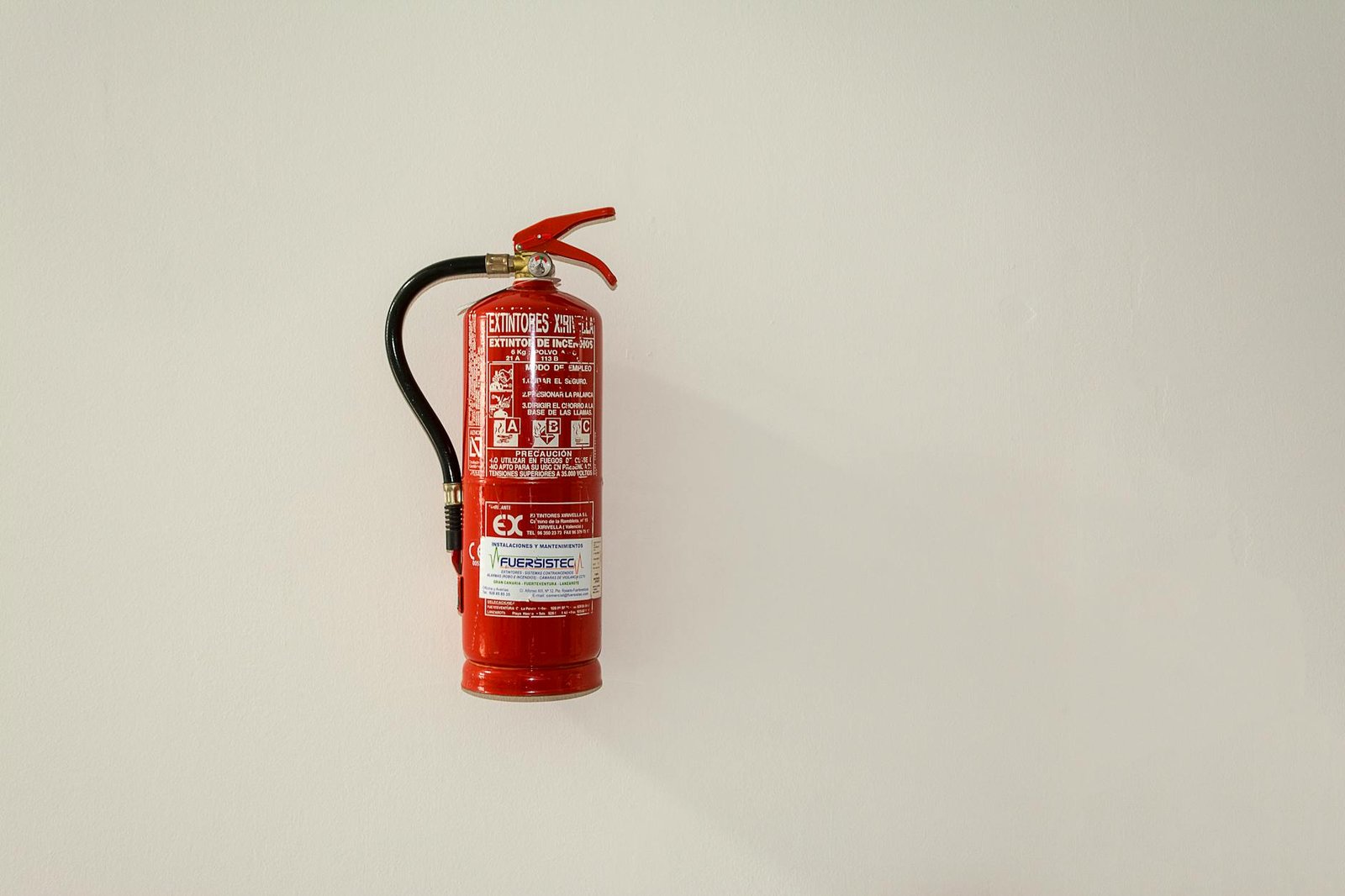
The first line of defense in any fire incident is the portable fire extinguisher. According to IS 15683:2018, which governs the performance and construction of portable fire extinguishers, every unit must be clearly labeled, color-coded, and maintained to ensure it functions when needed most. In the Indian market, facility managers often make the mistake of prioritizing cost over certification. A standard 2kg ABC powder extinguisher might be available for ₹1,500, but a high-quality, ISI-marked unit meeting IS 15683 specifications usually ranges from ₹2,000 to ₹3,500. For larger industrial applications, 6kg or 9kg units are standard, with prices ranging from ₹3,500 to ₹6,000 depending on the extinguishing agent and valve quality.
When utilizing these devices, training is as crucial as the equipment itself. All staff members should be proficient in the PASS method:
Compliance with IS 2190 is also mandatory for the selection and installation of these units. Regular inspection, at least once a month, is required to check for pressure gauge readings and physical damage to hoses or seals.
Firefighting Suits and Personal Protective Equipment (PPE)
A fireman’s equipment list is incomplete without specialized Personal Protective Equipment (PPE). In industrial environments, the fire-fighting team—or the designated fire marshal—must be equipped with structural fire-fighting suits. These suits are designed to protect against extreme heat, steam, and mechanical hazards. Unlike standard workwear, these garments must be compliant with international standards often adopted by the Bureau of Indian Standards.
A complete kit includes a fire-retardant helmet with a face shield, Nomex-based or equivalent flame-resistant trousers and jackets, specialized fire-resistant gloves, and safety boots with anti-slip and puncture-resistant soles. For facility managers, investing in high-quality gear is a liability mitigation strategy. A professional-grade fire-fighting suit set can cost anywhere from ₹15,000 to ₹40,000. While this may seem like a significant capital expenditure, the cost of a workplace injury or fatality due to inadequate protection is immeasurable, both in terms of human life and legal repercussions under Indian labor and safety laws.
Specialized Fire Suppression and Detection Systems
Beyond manual intervention, modern facilities must integrate active fire suppression systemss as dictated by the National Building Code (NBC) 2016. Part 4 of the NBC 2016 provides exhaustive guidelines on fire and life safety, emphasizing that automatic systems like sprinklers, smoke detectors, and fire hydrant systems are non-negotiable for high-hazard occupancies.
In a typical Indian facility, the fire hydrant system is the backbone of fire suppression. This includes a network of fire pumps (main, standby, and jockey pumps), underground or overhead water storage tanks, and hose reels. The cost of installing a robust hydrant system can range from ₹5 lakhs to over ₹50 lakhs depending on the square footage and hazard classification of the building. Furthermore, the installation of automatic smoke detectors and heat sensors is essential for early warning. These systems must be linked to a central fire alarm panel, which acts as the “brain” of the fire safety ecosystem. Failure to maintain these systems not only invites heavy penalties from local fire departments but also invalidates fire insurance policies.
The Role of Maintenance and Documentation in Indian Compliance
One of the most overlooked aspects of fire safety is documentation. Under IS 2190, every facility must maintain a comprehensive logbook documenting the inspection, maintenance, and testing of all fire safety equipment. In India, local municipal authorities and fire departments perform surprise inspections. If a facility cannot produce a valid service record for its fire extinguishers or a recent pressure test certificate for its hydrant system, the owners face severe legal consequences, including the sealing of premises or heavy fines.
Facility managers should adopt a rigorous preventive maintenance schedule. This includes quarterly checks of fire pumps, biannual inspection of fire extinguishers, and annual fire audits conducted by certified professionals. Safex has consistently advocated for a “maintenance-first” culture. Investing in a service contract with a certified provider ensures that equipment is not just present, but operational. Remember, a fire extinguisher that is past its expiry date or a hydrant valve that is rusted shut is effectively useless in an emergency.
Comparison of Fire Safety Equipment Approaches
| Equipment Category | Purpose | Typical Cost Range (INR) |
| Portable Extinguishers | First-response, small fires | ₹1,500 – ₹6,000 |
| Fire Hydrant Systems | Large-scale fire suppression | ₹5,00,000 – ₹50,00,000+ |
| PPE (Suits/Helmets/Gloves) | Operator protection | ₹15,000 – ₹45,000 |
| Fire Alarm/Detection | Early warning/Alerting | ₹50,000 – ₹5,00,000 |
This table provides a high-level overview of the financial commitments required to maintain a compliant facility. Prices are indicative and fluctuate based on brand, material quality, and specific site requirements.
FAQ: Frequently Asked Questions on Fire Safety
Q: What is the most important standard for fire extinguishers in India?
A: IS 15683 is the primary Indian Standard that specifies the requirements for portable fire extinguishers. Always ensure your equipment bears the ISI mark to guarantee compliance with these safety standards.
Q: How often should we conduct fire drills in an office building?
A: According to the NBC 2016 guidelines, fire drills should be conducted at least twice a year to ensure that all occupants are familiar with evacuation routes and the location of fire-fighting equipment.
Q: What is the PASS method?
A: The PASS method is a mnemonic for operating a fire extinguisher: Pull the pin, Aim at the base of the fire, Squeeze the handle, and Sweep from side to side.
Q: Are there specific penalties for not having fire safety equipment?
A: Yes. Under various state fire safety acts in India, failure to maintain adequate fire safety equipment can lead to the revocation of the Occupancy Certificate (OC), heavy financial penalties, and criminal liability in the event of a fire-related death.
Q: How much should a company budget for basic fire safety compliance?
A: For a medium-sized office, you should budget at least ₹50,000 to ₹2,00,000 for initial setup and annual maintenance, though this varies greatly depending on the building’s fire hazard classification.
Q: Can we perform our own fire equipment maintenance?
A: While daily visual inspections (checking pressure gauges and seals) can be done by facility staff, major maintenance, pressure testing, and refilling must be performed by certified, licensed professionals to remain compliant with IS 2190.
Resources
For further information on fire safety standards and compliance, please refer to the following official resources:
Conclusion
Fire safety is a dynamic process that requires constant vigilance, regular training, and the use of high-quality, certified equipment. As a facility manager or business owner, your responsibility extends beyond the initial installation of fire-fighting systems. It encompasses the ongoing maintenance, the training of your personnel, and the strict adherence to the standards set by the NBC 2016 and the Bureau of Indian Standards.
Safex has been at the forefront of the Indian fire safety industry since our establishment in 1972. Our decades of experience have shown us that the most successful fire safety programs are those that treat safety as an investment rather than a cost. By ensuring that your facility is equipped with IS-marked extinguishers, compliant hydrant systems, and properly trained staff, you are not just fulfilling a regulatory requirement—you are protecting the lives of your employees and the future of your organization. Always prioritize quality over short-term savings when it comes to fire protection; in the critical moments of a fire emergency, only the best equipment will suffice.