Fire safety in the Indian industrial and commercial landscape is not merely a matter of operational best practice; it is a legal mandate governed by stringent codes. For facility managers, safety officers, and building architects, understanding the role of ABC powder—the most versatile fire suppression agent available—is critical. At Safex Fire Services, we have been at the forefront of fire protection engineering since our establishment in 1972, witnessing the evolution of safety protocols from basic manual firefighting to sophisticated, code-compliant integrated systems.
The ABC powder extinguisher is the workhorse of fire safety. It is designed to tackle Class A (solid combustibles), Class B (flammable liquids), and Class C (flammable gases) fires. Given the diverse nature of fire risks in modern Indian infrastructure—ranging from high-density warehouses in the industrial belts of Gujarat to the complex electrical server rooms of IT parks in Bengaluru—selecting the right equipment is a high-stakes decision. This guide explores the technical specifications, regulatory requirements under the National Building Code (NBC) 2016, and the practical application of ABC powder extinguishers to ensure your facility remains compliant and secure.
Understanding ABC Powder and Its Fire Suppression Mechanism
ABC powder, technically known as Monoammonium Phosphate (MAP) based dry chemical powder, is a multipurpose extinguishing agent. Unlike water or foam, which are limited in their application, ABC powder chemically interferes with the combustion process. When discharged, it creates a cloud of fine powder that blankets the fuel source, interrupting the chemical chain reaction. Furthermore, it melts at high temperatures to form a sticky, molten barrier that prevents the re-ignition of smoldering embers, particularly in Class A fires involving wood, paper, or textiles.
In the Indian context, the quality of this powder is strictly regulated. The Indian Standard IS 15683:2018 provides the specification for portable fire extinguishers, detailing the pressure requirements, cylinder construction, and the chemical composition of the extinguishing agent. Using non-certified or low-quality powder can lead to caking inside the cylinder, rendering the extinguisher useless in a critical emergency. Facility managers must ensure that all procurement is backed by BIS certification, as local authorities are increasingly stringent during fire safety audits.
The versatility of ABC powder makes it the primary choice for multi-risk environments. For instance, in a typical office setting where you have electrical cables (Class C), paper files (Class A), and perhaps a pantry with flammable liquids (Class B), a single ABC extinguisher provides comprehensive coverage. However, it is essential to note that while effective, the residue left by ABC powder can be corrosive to delicate electronic equipment. In sensitive server rooms, it is often recommended to pair ABC units with CO2 extinguishers to minimize collateral damage.
Compliance and Regulatory Framework: NBC 2016 and IS Standards
Fire safety in India is anchored by the NBC 2016, specifically Part 4, which outlines the requirements for fire and life safety in buildings. The code mandates that the selection of fire extinguishers must be based on the fire hazard of the occupancy. For most commercial and industrial buildings, the presence of portable extinguishers is non-negotiable.
According to IS 2190, which serves as the code of practice for the selection, installation, and maintenance of portable fire extinguishers, the distribution of these units must be planned so that the maximum travel distance to an extinguisher does not exceed 15 to 20 meters, depending on the hazard classification. Failure to comply with these spacing requirements or the installation of uncertified equipment can lead to the rejection of your Fire No Objection Certificate (NOC) and may result in heavy penalties or liability in the event of a fire-related casualty.
When auditing your facility, consider the following:
1. Accessibility: Are extinguishers placed in conspicuous locations, free from obstruction?
2. Maintenance: Is there a documented record of quarterly inspections and annual hydrostatic testing?
3. Training: Are staff members trained in the PASS method?
The cost of non-compliance far outweighs the investment in quality equipment. A standard 2kg ABC powder extinguisher typically ranges from ₹1,500 to ₹3,000, while a larger 6kg to 9kg industrial-grade unit can cost between ₹5,000 and ₹15,000. These costs are negligible compared to the potential loss of life, property damage, and legal repercussions following an uncontrolled fire.
Practical Application: The PASS Method
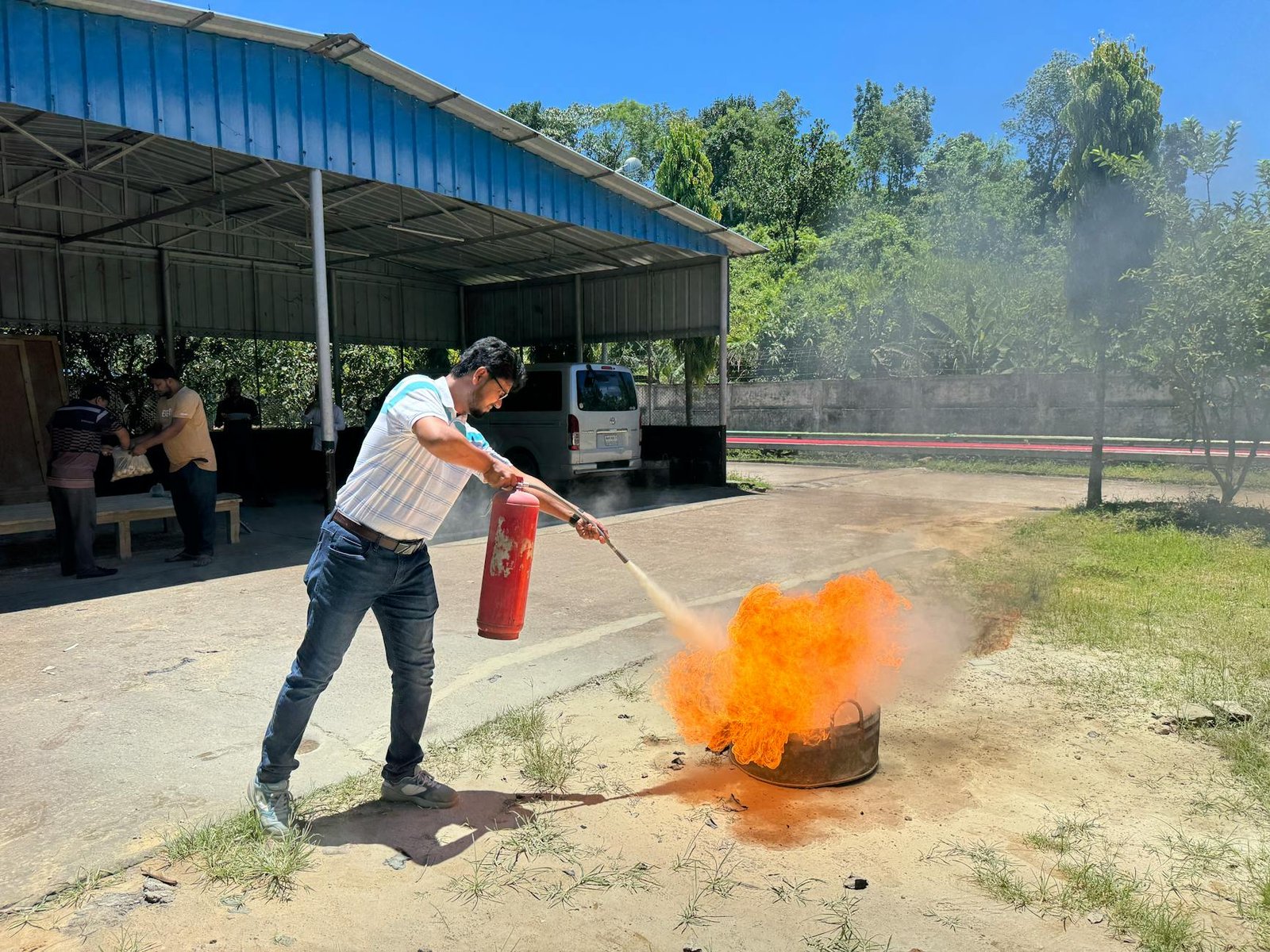
Possessing the right fire extinguisher is only half the battle; knowing how to use it is the other. In the heat of an emergency, panic often leads to incorrect handling. We emphasize the PASS method, which is the industry-standard technique for operating portable fire extinguishers:
It is vital to perform this technique from a safe distance—typically 6 to 8 feet away—and move closer only as the fire begins to die down. If the fire is too large or the smoke is too dense, do not attempt to fight it. Evacuate immediately and activate the fire alarm system.
Strategic Comparison of Fire Extinguishing Agents
When deciding on a fire protection strategy, it is useful to compare ABC powder against other common agents to understand their specific utility.
| Feature | ABC Powder | CO2 (Carbon Dioxide) | Water (Stored Pressure) |
| Primary Use | Class A, B, C Fires | Class B, Electrical Fires | Class A Fires Only |
| Residue | High (Corrosive) | None (Clean Agent) | Low (Water Damage) |
| Conductivity | Non-Conductive | Non-Conductive | Highly Conductive |
| Best For | General Purpose/Industrial | Server Rooms/Labs | Wood/Paper Storage |
As shown in the table, ABC powder offers the broadest range of protection, making it the most cost-effective solution for general facility management. However, for specialized environments like server rooms where electronic integrity is paramount, CO2 is preferred despite its lack of cooling capacity for Class A materials.
Maintenance and Longevity: Protecting Your Investment
An ABC powder extinguisher is a pressurized vessel. Over time, the pressure can drop, or the powder can settle and cake at the bottom of the cylinder. According to IS 15683 and IS 2190, these units require regular maintenance. A visual inspection should be conducted monthly to ensure the pressure gauge is in the “green” zone, the safety pin is intact, and there are no signs of corrosion on the cylinder body.
Annual maintenance involves a more rigorous check. This includes discharging the unit (if it has reached its service life), inspecting the internal condition, checking the internal lining, and refilling the unit with fresh, high-quality powder. In high-humidity environments, such as coastal areas in India, the frequency of these inspections should be increased to prevent external corrosion.
We often see facility managers ignore the expiration dates on their extinguishers. A fire extinguisher is not a “fit and forget” item. If a unit is over 5 to 10 years old, it may require a hydraulic pressure test to ensure the cylinder can still safely hold its working pressure. Investing in a professional maintenance contract ensures that your equipment is always ready for service and that you remain in full compliance with local fire department requirements.
Frequently Asked Questions (FAQ)
Q: What is the shelf life of an ABC powder extinguisher?
A: While the cylinder itself can last for many years, the powder and the pressurized propellant require regular servicing. In accordance with IS 15683 and IS 2190, extinguishers should be inspected annually. If the pressure gauge shows a loss of pressure, it must be serviced immediately.
Q: Can I use an ABC powder extinguisher on an electrical fire?
A: Yes, ABC powder is non-conductive, making it safe to use on electrical fires (Class C). However, be aware that the powder is corrosive and can damage sensitive electronic components after the fire is out.
Q: What is the typical cost for a high-quality ABC powder extinguisher in India?
A: For a 2kg portable unit, you can expect to pay between ₹1,500 and ₹3,000. Larger, industrial-grade 6kg to 9kg units typically cost between ₹5,000 and ₹15,000 depending on the brand and specifications.
Q: How often should I train my staff on the PASS method?
A: We recommend conducting fire safety drills and training sessions at least twice a year. High-turnover environments should conduct training more frequently to ensure all personnel are familiar with the PASS method (Pull, Aim, Squeeze, Sweep).
Q: Does the NBC 2016 mandate the use of ABC powder?
A: The NBC 2016 mandates that the correct type of extinguisher be provided based on the hazard. Because ABC powder is multipurpose, it is the most common recommendation for meeting these code requirements across various occupancy types.
Q: What should I do if the pressure gauge on my extinguisher is in the red zone?
A: If the gauge is in the red zone, the extinguisher is either under-pressurized or over-pressurized. It is unsafe and ineffective. You must contact a certified fire safety provider immediately to have it recharged or replaced.
Resources
For further information regarding fire safety standards and compliance in India, please refer to the following official resources:
Conclusion
Fire safety is an ongoing commitment, not a one-time purchase. As we have seen, the selection of the correct ABC powder extinguisher, combined with strict adherence to IS 15683 and NBC 2016 guidelines, forms the backbone of a robust fire protection strategy. Whether you are managing a small office or a sprawling industrial complex, the reliability of your fire equipment is the first line of defense against disaster.
At Safex Fire Services, we have been dedicated to this mission since our establishment in 1972. We understand the nuances of the Indian regulatory environment and the practical challenges faced by facility managers daily. By prioritizing quality, regular maintenance, and comprehensive staff training, you ensure that your facility is not just compliant on paper, but prepared in reality. Do not leave your safety to chance—invest in certified equipment and professional expertise to safeguard your assets and, most importantly, the lives of those within your building.