Fire safety in industrial and commercial environments has evolved significantly over the last few decades. As facility managers and business owners navigate the increasingly stringent requirements of the National Building Code (NBC 2016), the demand for automated, localized fire suppression systemss has reached an all-time high. Among the most effective solutions for high-risk, unmanned areas is the modular fire extinguisher. Since Safex established 1972, we have observed that the most devastating fires often begin in server rooms, electrical panels, or storage areas where human presence is minimal. Modular extinguishers provide an essential layer of “always-on” protection that manual units cannot replicate.
Understanding Modular Fire Extinguishers: Technology and Application
A modular fire extinguisher, often referred to as an automatic fire extinguisher, is a self-contained unit designed to detect and suppress fires without human intervention. Unlike traditional portable extinguishers that require a person to physically operate them, modular units are ceiling-mounted or wall-mounted above the hazard zone. These units are typically equipped with a heat-sensitive glass bulb—similar to those found in automatic fire sprinkler systems—that bursts when the ambient temperature reaches a predetermined threshold, usually 68°C.
In the Indian context, where climate conditions vary drastically from the humid coastal areas of Mumbai to the dry heat of Rajasthan, the reliability of these units is paramount. When the bulb bursts, the extinguishing agent—be it ABC powder, clean agent, or CO2—is discharged under high pressure, flooding the immediate area and suppressing the fire in its incipient stage. This rapid response is critical for preventing the spread of fire to adjacent equipment or structural elements, which is a core focus of the NBC 2016 Part 4 guidelines regarding fire and life safety.
For facility managers in large-scale operations like warehouses in Gujarat or IT parks in Bengaluru, modular units are not merely an optional upgrade; they are a strategic necessity. By installing these units inside electrical control panels, server racks, or chemical storage lockers, companies can contain a fire before it triggers the building’s main fire alarm system, thereby minimizing downtime and asset loss.
Compliance and Standards: Why IS 15683 and NBC 2016 Matter
In India, fire safety is not just a best practice; it is a legal requirement governed by strict adherence to Indian Standards (IS). While IS 15683:2018 is the primary standard governing the performance and construction of portable fire extinguishers, the principles of reliability, pressure testing, and chemical efficacy are equally applicable to modular units. When selecting modular extinguishers, it is imperative to ensure that the manufacturing process aligns with the rigorous testing protocols outlined in these standards.
The National Building Code (NBC 2016) emphasizes the importance of “Active Fire Suppression Systems” in high-risk zones. Modular units serve as an excellent supplementary measure to traditional hydrant and sprinkler systems. While a sprinkler system is designed for broad, building-wide coverage, modular units provide targeted, high-intensity suppression for specific equipment.
Non-compliance with these safety standards can lead to severe legal and financial repercussions. Under the Fire Prevention and Life Safety Acts of various Indian states, building owners are held liable for negligence if fire safety equipment is found to be substandard or improperly maintained. Furthermore, insurance companies in India are increasingly scrutinizing fire safety audits. If a facility experiences a fire and the investigation reveals that high-risk areas were not protected by adequate suppression systems, claim settlements may be significantly reduced or outright rejected.
The PASS Method and Manual Interface
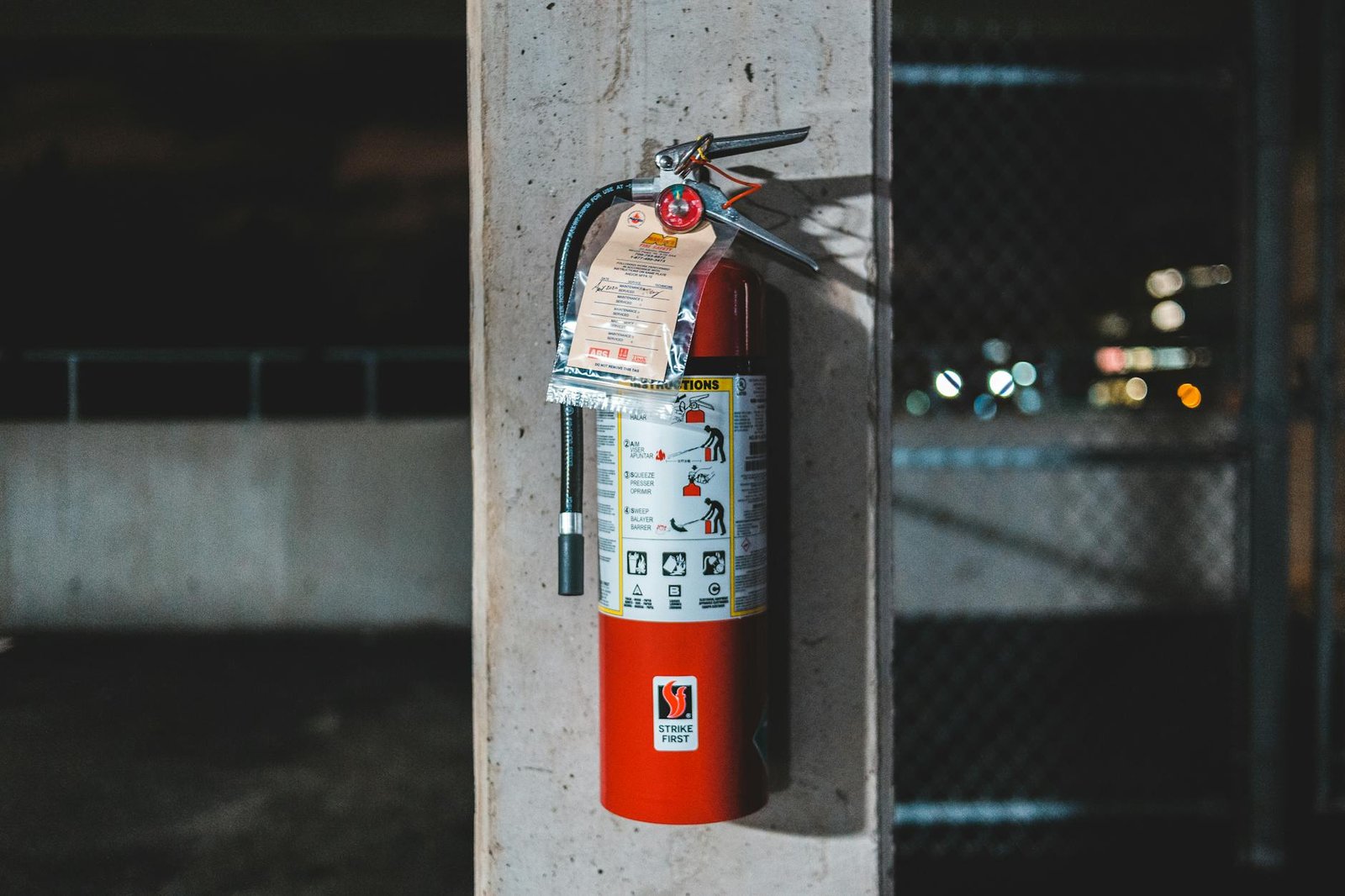
While modular extinguishers are automatic, facility staff must still be trained to handle emergencies. In scenarios where a fire is detected before the modular unit triggers, or if the fire continues to smolder after the initial discharge, manual intervention becomes necessary. For all manual fire extinguishers, the industry-standard PASS method must be taught to all staff:
1. Pull: Pull the pin at the top of the extinguisher. This breaks the tamper seal and allows you to discharge the unit.
2. Aim: Aim at the base of the fire, not the flames. The goal is to starve the fuel source of oxygen.
3. Squeeze: Squeeze the handle slowly and evenly. This releases the extinguishing agent.
4. Sweep: Sweep the nozzle from side to side at the base of the fire until it appears to be extinguished.
Modular units provide the first line of defense, but the PASS method is the essential secondary skill that ensures total fire control. A facility manager who integrates both automated modular protection for high-risk zones and accessible portable units for general areas creates a robust, multi-layered fire defense strategy.
Cost Analysis and Investment Considerations
Budgeting for fire safety is a common concern for facility managers. Modular fire extinguishers represent a high-value investment because they prevent catastrophic damage to expensive infrastructure. In the Indian market, the pricing for these units is determined by the capacity (in kg), the type of extinguishing agent, and the certification level.
As a general guideline for procurement, you can expect the following price ranges:
It is important to remember that the cost of a single modular unit is negligible compared to the replacement value of a server rack, an industrial switchboard, or the cost of building repairs after a fire. When calculating the Return on Investment (ROI), consider the cost of business interruption and insurance premiums. Investing in high-quality, IS-certified equipment is the most effective way to safeguard your facility’s operational continuity.
Comparison of Fire Suppression Solutions
To help decision-makers choose the right equipment, the following table compares different suppression technologies commonly found in Indian facilities.
| Feature | Modular Extinguisher | Portable Extinguisher | Automatic Sprinkler System |
| Operation | Automatic (Heat/Bulb) | Manual (Human) | Automatic (Heat/Glass Bulb) |
| Primary Use | High-risk/Enclosed zones | General purpose/Small fires | Building-wide protection |
| Installation | Ceiling/Wall (Targeted) | Wall-mounted (Accessible) | Ceiling (Grid-wide) |
| Typical Cost | ₹2,500 – ₹15,000 | ₹1,500 – ₹5,000 | Variable (Project-based) |
As shown in the table, the modular extinguisher occupies a unique space in the fire safety ecosystem. It is more targeted than a sprinkler system and more proactive than a manual extinguisher.
FAQ: Frequently Asked Questions for Facility Managers
Q: Are modular fire extinguishers compliant with Indian fire safety audits?
A: Yes, provided they are installed according to the specifications in IS 2190 and maintained regularly. Fire inspectors look for evidence of pressure testing and clear, unobstructed placement.
Q: How often should modular extinguishers be serviced?
A: According to IS 2190 standards, all fire suppression equipment should be inspected at least once every six months. For modular units, the glass bulb and pressure gauge must be checked for integrity during every service cycle.
Q: Can I install a modular unit in a dusty environment like a flour mill or cement factory?
A: Yes, but you must select a unit with an appropriate IP rating and ensure the nozzle is protected from dust accumulation, which could potentially block the discharge.
Q: What is the most effective extinguishing agent for electrical panels?
A: For electrical panels, Clean Agent (like HFC-236fa or similar) is preferred because it is non-conductive, leaves no residue, and does not damage sensitive electronic components, unlike ABC dry powder which can be corrosive.
Q: What is the average lifespan of a modular fire extinguisher?
A: The pressure vessel itself can last for many years if maintained correctly, but the extinguishing agent and the thermal bulb should be replaced or recertified every 5 to 10 years, depending on the manufacturer’s guidelines and the environmental conditions of the site.
Q: How do I know if a modular unit is the right size for my server room?
A: The size is determined by the cubic volume of the enclosure. Consult with a fire safety engineer to calculate the “volume-to-extinguishing-agent” ratio required to ensure the concentration is sufficient to suppress a fire within that specific space.
Conclusion
Fire safety is an ongoing commitment to the protection of assets, data, and, most importantly, human lives. As we have discussed, modular fire extinguishers offer an essential, automated defense mechanism for the high-risk environments that define modern Indian industry. By adhering to the standards set forth by the National Building Code (NBC 2016) and ensuring your equipment is sourced from reputable providers, you can significantly reduce the risk of fire-related disasters.
Since Safex established 1972, we have remained dedicated to providing the Indian market with high-quality, reliable fire suppression solutions. Whether you are managing a high-tech IT facility or a traditional manufacturing plant, the integration of automated modular systems is a prudent step toward comprehensive fire safety. Always remember that the most effective fire is the one that is stopped before it starts. Proper installation, regular maintenance, and staff training remain the three pillars of a successful safety strategy.
Resources
For further information regarding fire safety standards and installation protocols in India, please refer to the following official resources: