Fire safety is not merely a regulatory checkbox; it is the fundamental pillar of business continuity and life safety in an increasingly dense urban landscape. In India, where the rapid expansion of IT parks, high-rise residential complexes, and sprawling industrial warehouses in regions like Gujarat and Maharashtra has outpaced traditional fire prevention strategies, compliance with national standards is more critical than ever. Since Safex established 1972, we have observed the evolution of fire safety requirements from basic bucket-and-sand protocols to sophisticated, integrated fire suppression systemss. This guide aims to provide facility managers, architects, and business owners with an authoritative overview of essential fire safety equipment, regulatory compliance, and practical maintenance strategies.
Understanding the Regulatory Landscape: NBC 2016 and IS Standards
The foundation of any fire safety strategy in India is the National Building Code (NBC) 2016. Part 4 of the NBC 2016, titled “Fire and Life Safety,” provides the comprehensive framework for building design, construction, and the installation of fire protection systems. For any facility manager, ignoring the mandates set forth in the NBC 2016 is a direct path to legal liability and, more importantly, catastrophic operational risk.
Beyond the broad strokes of the NBC, specific Indian Standards (IS) govern the quality and performance of individual pieces of equipment. For instance, IS 15683:2018 is the governing standard for portable fire extinguishers. When you procure equipment, you are not just buying a metal cylinder; you are investing in a certified life-saving tool that must meet strict discharge time, throw length, and fire rating requirements. Furthermore, IS 2190 serves as the code of practice for the selection, installation, and maintenance of these portable extinguishers.
In the Indian context, the primary challenge is often the lack of periodic maintenance. A fire extinguisher that has lost its pressure or a hose reel that is obstructed by inventory is as useless as having no equipment at all. Compliance requires regular audits, hydrostatic testing, and ensuring that all staff are trained in the use of this equipment. Failure to maintain these systems can lead to hefty fines, the revocation of No Objection Certificates (NOC) from local fire departments, and, in the event of a tragedy, severe criminal negligence charges against facility management.
Portable Fire Extinguishers: Selection and Operational Mastery
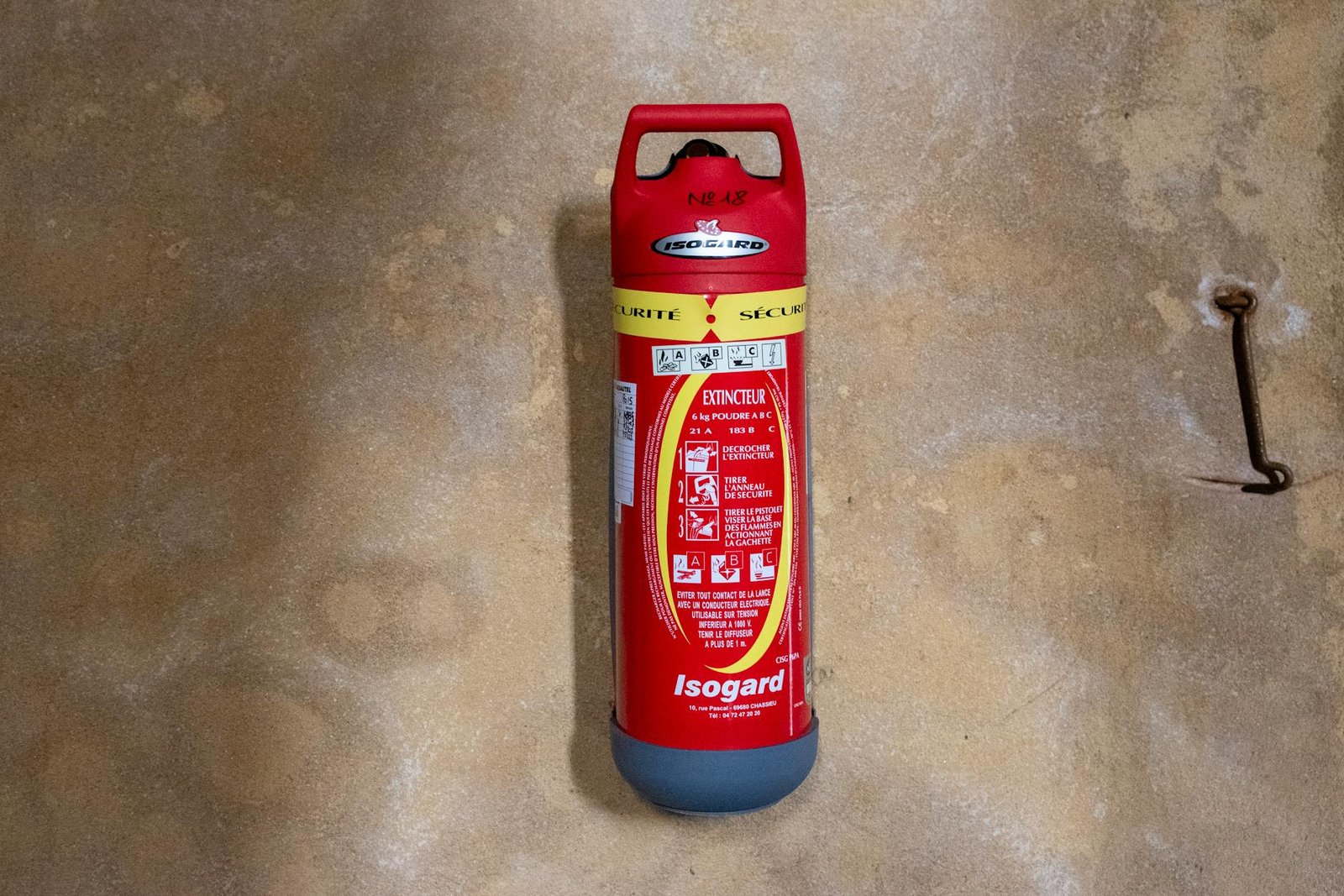
Portable fire extinguishers are the first line of defense. According to IS 15683, extinguishers must be selected based on the classification of the fire risk—Class A (solids), Class B (flammable liquids), Class C (gases), and Class D (metals/electrical). For a standard office environment, an ABC-powder type or a clean agent extinguisher is typically recommended.
When it comes to pricing, facility managers should be wary of extremely cheap, non-ISI marked equipment. Quality, compliant extinguishers generally fall into the following price brackets:
– Small 2kg portable extinguishers: ₹1,500 – ₹3,000.
– Standard 6kg industrial extinguishers: ₹3,500 – ₹6,000.
– Large 9kg wheeled industrial units: ₹8,000 – ₹15,000.
Investment in high-quality equipment is a prerequisite, but operational knowledge is equally vital. Every employee, from the security guard to the CEO, should be familiar with the PASS method for operating a portable extinguisher:
1. Pull the pin: This unlocks the operating lever and allows you to discharge the extinguisher.
2. Aim low: Point the extinguisher nozzle or hose at the base of the fire, not the flames.
3. Squeeze the lever: This releases the extinguishing agent.
4. Sweep from side to side: Move the nozzle back and forth at the base of the fire until it appears to be extinguished.
If the fire does not respond after the initial discharge or if the smoke becomes too dense, immediate evacuation must take priority over manual suppression.
Fixed Firefighting Installations: Sprinklers, Hydrants, and Alarms
While portable extinguishers handle incipient fires, fixed installations are designed to manage or suppress large-scale emergencies. In large warehouses or high-rise office buildings, the installation of a wet-pipe fire sprinkler system is often mandatory under NBC 2016 guidelines. These systems are designed to activate automatically when the heat-sensitive glass bulb in a sprinkler head shatters, providing localized cooling and suppression.
Hydrant systems, on the other hand, provide the high-volume water supply necessary for fire brigades to tackle major structural fires. A typical hydrant system consists of a fire pump set (main, standby, and jockey pumps), a dedicated fire water tank, and a network of pipes leading to external yard hydrants and internal landing valves. The maintenance of these pumps is a critical operational task. We often see facilities where the jockey pump fails to maintain pressure due to minor leaks in the piping, leading to the main pump cycling unnecessarily, which drastically reduces the lifespan of the equipment.
Fire detection and alarm systems are the final piece of the triad. Modern addressable systems allow security personnel to pinpoint the exact location of a smoke detector trigger, saving precious minutes in an emergency. In industrial settings, integrating these alarms with building management systems (BMS) ensures that air conditioning shuts down to prevent smoke circulation, and access control systems automatically unlock doors for safe egress.
Strategic Maintenance and Facility Audits
The life cycle of fire safety equipment is finite. Corrosion, pressure loss, and mechanical fatigue are inevitable in India’s diverse climate, ranging from the humid coastal regions of Mumbai to the dry, hot summers of Delhi. IS 2190 mandates a clear schedule for the inspection and maintenance of portable fire extinguishers.
A professional audit should involve:
– Verification of pressure gauges: Ensuring the needle is in the green zone.
– Visual inspection of the cylinder: Checking for signs of rust or physical damage.
– Weight check: Comparing the current weight to the manufacturer’s specification to ensure no leakage of the extinguishing agent.
– Operational check: Testing the discharge valve and ensuring the hose is not cracked or blocked.
For fixed systems, the maintenance is more intensive. Fire pumps should be test-run weekly. Sprinkler heads should be inspected annually for paint, dust, or debris accumulation, which can prevent them from triggering in a fire. Furthermore, fire suppression gas systems (such as clean agent fire extinguisher or CO2) used in server rooms require specialized testing to ensure the integrity of the room’s seal, as a gas-based system will fail to suppress a fire if the agent leaks out of the room.
Facility managers should maintain a “Fire Safety Register” on-site. This document serves as the primary evidence for insurance companies and fire safety inspectors. It should contain records of all equipment purchases, dates of last servicing, inspection logs, and training certificates for the fire-fighting team.
Comparison of Fire Suppression Technologies
Understanding the nuances between different suppression media is crucial for protecting specific assets. Not every fire should be fought with water.
| Equipment Type | Best Used For | Limitations |
| Water-based Sprinklers | General Class A fires (paper, wood) | Not suitable for electrical or oil fires |
| ABC fire extinguisher | Multi-purpose, electrical, oil | Leaves a messy residue, can damage electronics |
| Clean Agent (e.g., FM-200) | Server rooms, data centers | Requires a sealed room for effectiveness |
| CO2 Extinguishers | Electrical fires, delicate equipment | High risk of frostbite; displaces oxygen |
This table highlights the necessity of a tailored approach. A server room equipped only with water sprinklers could suffer as much damage from the water as it would from the fire itself. Conversely, using a CO2 extinguisher in a large, open warehouse would be ineffective due to the rapid dissipation of the gas.
FAQ: Frequently Asked Questions for Decision-Makers
Q: How often must fire extinguishers be serviced according to IS standards?
A: According to IS 2190, portable fire extinguishers must be inspected monthly for general condition and pressure. A comprehensive maintenance service, including hydrostatic testing and refilling where necessary, should be performed at least once a year by a certified professional.
Q: What is the difference between an ABC powder extinguisher and a CO2 extinguisher?
A: ABC powder is a multi-purpose agent suitable for wood, paper, and electrical fires. CO2 is a clean agent specifically designed for electrical fires because it leaves no residue, making it the preferred choice for sensitive electronic equipment like computers and laboratory instruments.
Q: Is it mandatory to have fire signage in my facility?
A: Yes. Under the National Building Code 2016, clear, illuminated, and photoluminescent fire exit signs and equipment location signs are mandatory. They must be placed at heights and intervals that ensure visibility even in smoke-filled conditions.
Q: How do I know if my fire extinguishers are compliant with Indian standards?
A: Look for the ISI mark (the BIS certification) on the extinguisher cylinder. If the extinguisher lacks the ISI mark or the IS 15683 certification, it may not meet the safety requirements mandated by Indian fire authorities and could be rejected during a safety inspection.
Q: What should I do if a fire breaks out and I am not trained?
A: If you are not trained, your primary goal is to alert others and evacuate immediately. Trigger the nearest fire alarm call point. Do not attempt to fight a fire that is already spreading or producing thick, black smoke.
Q: Can I perform my own maintenance on fire extinguishers to save costs?
A: No. Fire extinguisher maintenance involves pressurized vessels and chemical agents. Improper handling can cause the cylinder to burst or the valve to malfunction. Always contract a certified fire safety service provider to ensure compliance and safety.
Resources
For further information on fire safety standards and regulatory guidelines, please consult the following official resources:
Conclusion
Fire safety is a continuous process of vigilance, investment, and adherence to established protocols. From the initial risk assessment to the installation of high-grade equipment and the rigorous maintenance of fixed systems, every step is designed to protect lives and assets. As we have seen, the requirements set by the NBC 2016 and the technical specifications of IS 15683 are not just suggestions; they are the benchmarks for professional facility management in India.
Whether you are managing a high-rise in an urban center or a manufacturing unit in an industrial zone, the stakes remain the same. Since Safex established 1972, our commitment has been to provide the expertise and the equipment necessary to navigate these complex safety requirements. By prioritizing quality equipment, regular training, and strict adherence to maintenance schedules, you ensure that your facility remains a safe and productive environment for everyone. Remember, in the face of a fire, preparation is the only variable you can control. Do not wait for an inspection to identify gaps in your safety infrastructure; take the proactive step of auditing your equipment and training your team today.