Introduction
In the complex landscape of industrial fire safety, the distinction between fire classes is not merely a technicality—it is a matter of life, death, and legal liability. Facility managers, safety officers, and architects working across India’s industrial hubs, from the chemical processing plants of Gujarat to the high-tech manufacturing units in Bengaluru, often focus heavily on Class A and B fires. However, a significant gap exists in the understanding and implementation of protocols for Class D fires. These fires, involving combustible metals, represent some of the most dangerous and volatile scenarios a facility can face.
Safex Fire Services, established in 1972, has spent over five decades witnessing the evolution of Indian fire safety regulations. We have seen how the shift toward more sophisticated manufacturing processes has necessitated a higher standard of protection. Compliance with the National Building Code (NBC 2016) is no longer a suggestion; it is a fundamental requirement for operational continuity. This guide serves to demystify Class D fire suppression, ensuring your facility remains compliant with IS standards and fully prepared for high-risk metal fire scenarios.
Understanding Class D Fires: The Hidden Industrial Threat
Class D fires involve combustible metals such as magnesium, titanium, zirconium, sodium, lithium, and potassium. In an industrial context, these fires are particularly hazardous because they burn at extremely high temperatures and are often reactive to traditional extinguishing agents. If a facility manager attempts to use a standard water-based or foam extinguisher on a magnesium fire, the result is often an explosive reaction that intensifies the blaze and risks the lives of the responders.
According to IS 2190, which provides the code of practice for the selection, installation, and maintenance of first-aid fire extinguishing equipment, the selection of the correct agent for the specific risk is paramount. Class D fires are not common in offices or residential complexes, but they are a daily reality in metal fabrication, aerospace manufacturing, and chemical research laboratories.
The danger of Class D fires lies in their chemical behavior. When these metals are in a finely divided form—such as shavings, dust, or swarf—they are highly ignitable. Once ignited, they can break down water into hydrogen and oxygen, leading to rapid combustion. Understanding that these fires require specialized dry powder agents (typically sodium chloride-based or copper-based) is the first step toward building a robust fire safety strategy. Failure to provide appropriate Class D protection is a significant oversight that can lead to severe penalties under municipal fire safety audits and a total loss of assets during an incident.
Compliance and Standards: The Role of IS 15683 and NBC 2016
Compliance in India is governed by a rigorous framework of standards. The National Building Code (NBC 2016) Part 4, which covers Fire and Life Safety, mandates that every facility must be equipped with the appropriate fire-fighting infrastructure based on the nature of the fire hazard. While IS 15683:2018 sets the benchmark for the construction, performance, and testing of portable fire extinguishers, it is important to note that Class D extinguishers are highly specialized products that must adhere to specific performance criteria.
When conducting a fire risk assessment, facility managers must map out the areas where combustible metals are present. It is insufficient to simply place a generic fire extinguisher in these zones. IS 15683 provides the foundational requirements for portable extinguishers, but for Class D, the focus shifts to the extinguishing media. The media must be capable of forming a crust over the burning metal to exclude oxygen and conduct heat away from the fire.
For businesses in India, the cost of non-compliance is steep. Beyond the obvious risk of property destruction, insurance providers often scrutinize whether the installed equipment matches the hazard class. If a facility is found to have inadequate protection for their specific metal-working operations, insurance claims can be denied, and local fire authorities may issue stop-work orders. Investing in certified Class D equipment is a strategic business decision that protects your capital investment and ensures compliance with the evolving requirements of the Fire Services Act in various Indian states.
The Operational Reality: PASS Method and Tactical Application
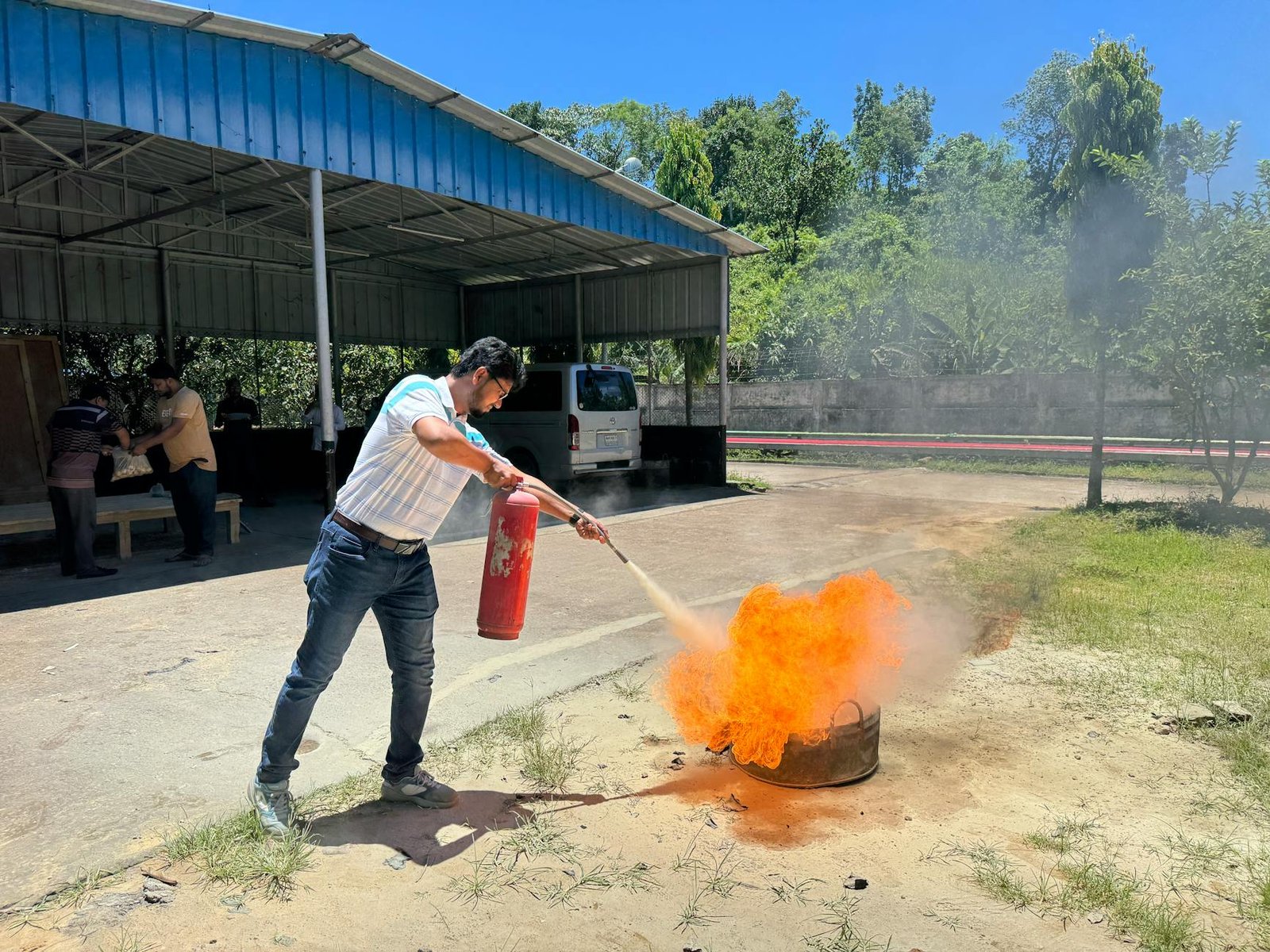
Even with the best equipment in place, the effectiveness of fire suppression depends entirely on the human element. The PASS method is the industry standard for operating portable fire extinguishers. While the specific media for Class D fires (dry powder) requires a different application technique than standard extinguishers—specifically, the need to avoid dispersing the burning metal—the fundamental PASS steps remain the primary training protocol:
1. Pull: Pull the pin at the top of the extinguisher. This breaks the tamper seal and allows you to discharge the agent.
2. Aim: Aim at the base of the fire. For Class D fires, this is critical. Do not aim at the flames; aim at the burning metal surface to begin forming the smothering crust.
3. Squeeze: Squeeze the handle slowly and evenly to release the extinguishing agent.
4. Sweep: Sweep from side to side. When dealing with metal fires, you must be careful not to create a dust cloud that could spread the fire. The goal is to gently apply the powder to cover the metal completely.
Unlike Class A or B extinguishers, Class D extinguishers are often applied using a low-velocity applicator or a scoop to prevent the scattering of burning metal particles. Training your staff to recognize the difference between a standard fire and a metal fire is essential. A worker who is trained to use a water extinguisher on a paper fire must also be trained to identify the specific risks of the metal-working shop floor, where a different set of tools and a different mindset are required.
Financial Planning for Fire Safety
Budgeting for fire safety is often perceived as a sunk cost, but it should be viewed as a risk mitigation investment. In the Indian market, the pricing for specialized fire equipment varies significantly based on capacity and the type of extinguishing agent.
For standard portable extinguishers, you might expect to pay in the range of ₹2,000–₹5,000 for a typical 2kg–4kg unit. However, Class D extinguishers, due to their specialized extinguishing media and robust construction, often command a premium. You should budget approximately ₹5,000–₹15,000 depending on the size and the specific metal-fire-suppressing agent required.
Facility managers should also account for the maintenance costs associated with these units. IS 2190 mandates regular inspections and periodic pressure testing. Neglecting these maintenance cycles is a common cause of equipment failure during emergencies. When calculating your annual budget, ensure that you include:
– Initial capital expenditure for procurement.
– Annual maintenance contracts (AMC) with certified service providers.
– Staff training programs on specialized hazard suppression.
– Periodic fire safety audits by certified professionals.
By viewing these costs as a percentage of the total project value or operational turnover, managers can justify the expenditure as a necessary cost of doing business in a high-compliance environment.
Comparison Table: Fire Extinguisher Classes and Applications
| Fire Class | Typical Fuel Source | Suitable Extinguishing Agent | Application Method |
| Class A | Wood, Paper, Cloth | Water / ABC Powder | Direct at base of fire |
| Class B | Flammable Liquids | Foam / CO2 / Powder | Sweep across surface |
| Class C | Electrical Equipment | CO2 / Clean Agent | Aim at source of spark |
| Class D | Combustible Metals | Specialized Dry Powder | Smother/Cover base |
Note: The table above highlights the critical need for specialized agents for Class D fires, which differ significantly from the agents used for Classes A, B, and C.
FAQ: Critical Questions for Facility Managers
Q: Can I use an ABC powder extinguisher on a magnesium fire?
A: No. Using a standard ABC powder extinguisher on a Class D fire can cause a violent reaction. The chemicals in ABC powder may react with the burning metal, potentially worsening the fire or causing an explosion. Always use an approved Class D specific agent.
Q: How often should Class D fire extinguishers be inspected?
A: According to IS 2190, all portable fire extinguishers must be inspected monthly for physical condition and pressure, and undergo a full maintenance check annually by a qualified professional.
Q: Is the PASS method different for Class D extinguishers?
A: The steps (Pull, Aim, Squeeze, Sweep) are the same, but the application technique is different. You must apply the agent gently to avoid scattering the metal, which could spread the fire.
Q: What is the typical cost for a high-quality Class D unit in India?
A: Industrial-grade Class D extinguishers generally range from ₹5,000 to ₹15,000, depending on the volume and the specific type of extinguishing media used, such as copper or sodium chloride-based powders.
Q: Does NBC 2016 mandate specific extinguishers for metal workshops?
A: Yes. NBC 2016 requires that the type of fire protection provided must be appropriate for the specific hazard present. If your facility processes combustible metals, you are required to have Class D suppression equipment on-site.
Q: Why is IS 15683 important for my procurement process?
A: IS 15683 provides the technical specifications that ensure an extinguisher will perform as expected during an emergency. Purchasing equipment that complies with IS standards is your primary defense against product failure and liability issues.
Resources
As a professional in the fire safety sector, staying informed through verified sources is essential. We recommend the following resources for further reading:
Conclusion
Fire safety is an ongoing commitment to the protection of people, property, and operational continuity. As the industrial landscape in India continues to expand and diversify, the risks associated with specialized manufacturing processes, such as those involving combustible metals, require a more nuanced approach to fire suppression.
Safex Fire Services, established in 1972, has remained at the forefront of this sector by emphasizing the importance of standard-compliant equipment and expert-led safety protocols. Whether you are managing an IT park in Bengaluru or a heavy manufacturing unit in an industrial corridor, the principles of fire safety remain universal: identify the risk, select the correct equipment, ensure regular maintenance, and train your personnel. By adhering to IS 15683, following the guidelines set forth in the NBC 2016, and maintaining a culture of safety, you can effectively mitigate the risks posed by Class D fires and ensure that your facility is prepared for any eventuality. Remember that in the world of fire safety, the most expensive fire is the one you are not prepared for. Invest in quality, stay updated with local standards, and prioritize the safety of your team above all else.