
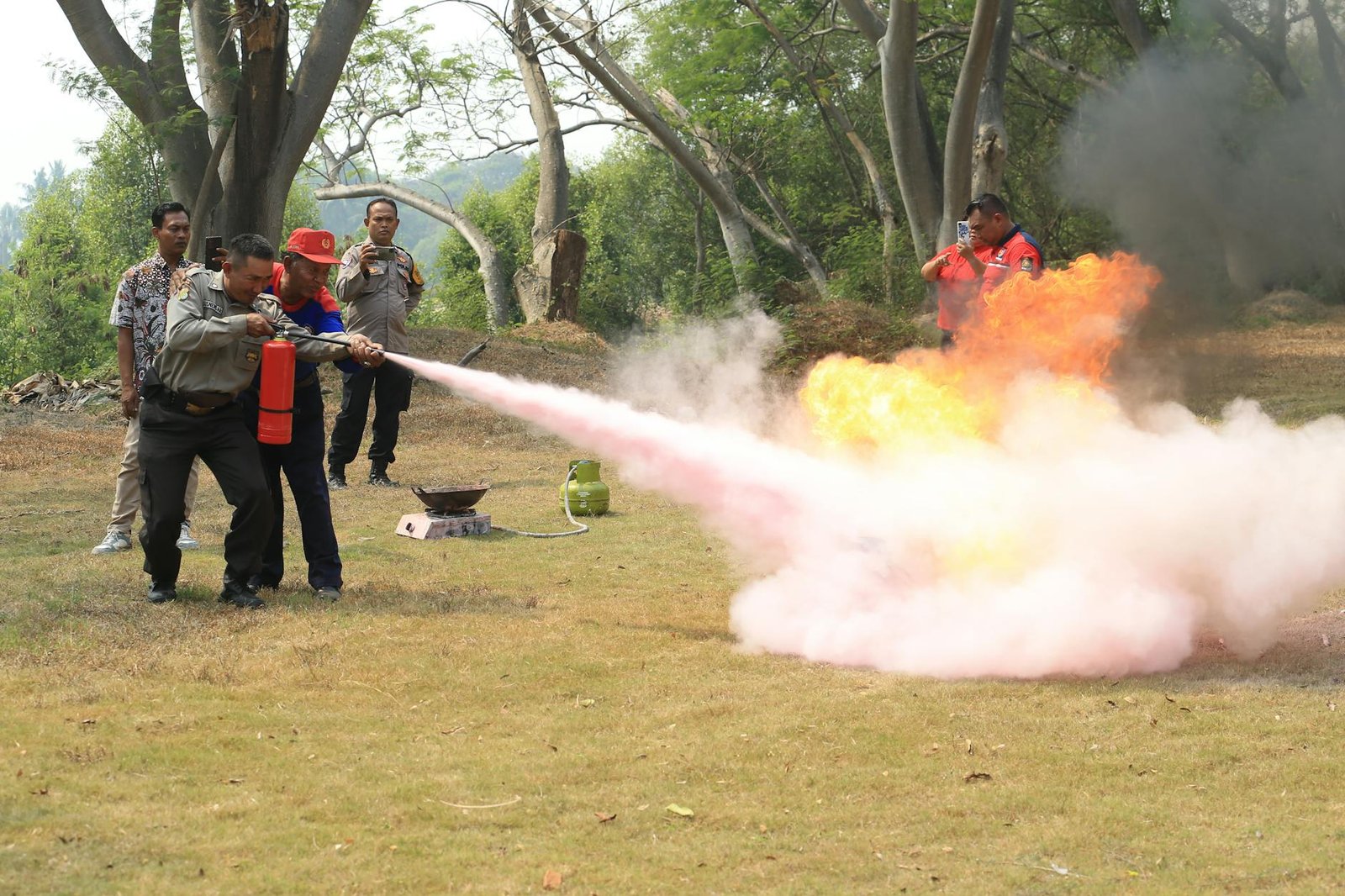
Fire safety is not merely a regulatory requirement in the Indian industrial and commercial landscape; it is a fundamental pillar of operational continuity. For facility managers, safety officers, and architects, navigating the complexities of fire suppression requires a deep understanding of fire classifications. Among these, Class B fires—which involve flammable liquids such as petrol, diesel, kerosene, paints, and solvents—pose some of the most significant risks in manufacturing plants, warehouses, and logistics hubs.
At Safex Fire Services, we have been protecting Indian infrastructure since our inception in 1972. Over the past five decades, we have observed how rapid industrialization in hubs like Gujarat, Maharashtra, and the IT corridors of Bengaluru has shifted the focus from basic compliance to high-performance fire protection. Understanding the correct deployment of Class B fire extinguishers is essential for preventing catastrophic losses. This guide outlines the technical, legal, and practical aspects of managing Class B fire risks in accordance with Indian Standards and the National Building Code (NBC) of India.
The Science of Class B Fires and Suppression Mechanics
Class B fires are defined by the involvement of flammable or combustible liquids. Unlike Class A fires (ordinary combustibles like wood or paper), Class B fires are characterized by their ability to spread rapidly across surfaces and their potential to reignite if the fuel source is not completely isolated. In an Indian industrial context, this includes storage areas for lubricants, fuel-operated machinery, and chemical processing units.
To effectively suppress a Class B fire, one must break the fire tetrahedron by removing oxygen or inhibiting the chemical chain reaction. Water is strictly prohibited for Class B fires, as it can cause the burning liquid to splash and spread the flames, leading to an uncontrollable escalation. Instead, specialized agents are required. The most effective agents for Class B fires are Carbon Dioxide (CO2) and Dry Chemical Powder (DCP). CO2 works by displacing oxygen, while DCP acts by chemically interrupting the combustion process.
According to IS 15683:2018, which provides the specifications for portable fire extinguishers, selecting the correct agent is a matter of both safety and statutory compliance. A facility manager must conduct a thorough risk assessment to ensure that the chosen extinguisher is rated for the specific type of flammable liquid present. For instance, in a server room where electrical equipment exists alongside flammable materials, CO2 is preferred to avoid residue damage, whereas in a bulk oil storage area, high-capacity DCP units are often more effective for their cooling and smothering properties.
Regulatory Compliance: NBC 2016 and IS Standards
The National Building Code (NBC) 2016 serves as the primary reference document for fire and life safety in India. Part 4 of the NBC 2016 explicitly dictates the requirements for fire detection and fire suppression systems in various occupancy types. Failure to adhere to these standards does not only invite heavy penalties from local fire departments but also invalidates fire insurance policies, leaving facility owners financially vulnerable in the event of a disaster.
Compliance begins with the selection of equipment that adheres to IS 15683. This standard ensures that the extinguisher has been manufactured, tested, and certified for reliability. An extinguisher that does not bear the ISI mark may fail during the critical moments of an emergency, leading to legal liability. Furthermore, IS 2190 provides the code of practice for the selection, installation, and maintenance of portable fire extinguishers. It specifies the maximum travel distance to an extinguisher—typically 15 meters for high-hazard areas—and the mandatory periodic inspection cycles.
For facility managers in India, maintaining a compliance register is non-negotiable. This includes documented evidence of quarterly inspections, hydrostatic pressure testing for cylinders, and annual recharge schedules. In the eyes of the law, an unmaintained extinguisher is equivalent to having no extinguisher at all. When auditing a facility, authorities look for the presence of the ISI certification, valid service tags, and proper wall-mounting heights, which are vital for ensuring that the equipment is accessible during a panic situation.
The PASS Method: Practical Emergency Response
Even the most advanced fire suppression equipment is useless if the personnel on-site are untrained. At Safex, we emphasize that human intervention is the first line of defense before the fire brigade arrives. Every employee, from the security guard to the floor supervisor, must be trained in the PASS method to operate a Class B fire extinguisher effectively:
1. Pull: Pull the safety pin located at the top of the extinguisher. This breaks the tamper seal and allows the handle to be squeezed.
2. Aim: Point the nozzle or hose at the base of the fire. Aiming at the flames themselves is a common mistake; the extinguishing agent must target the fuel source to be effective.
3. Squeeze: Squeeze the handle firmly to release the extinguishing agent. Maintain a steady pressure to ensure a consistent flow.
4. Sweep: Use a side-to-side sweeping motion across the base of the fire until the flames appear to be extinguished. Continue to monitor the area for reignition.
Training sessions should be conducted at least twice a year. In high-risk environments, such as chemical processing units or automotive assembly lines, these drills should be scenario-based. For example, simulating a spill-fire incident helps employees understand the importance of approaching the fire from an upwind direction to avoid smoke inhalation and heat exposure.
Investment in Safety: Pricing and Procurement
When procuring fire safety equipment, cost should be viewed through the lens of long-term risk mitigation rather than initial capital expenditure. In the Indian market, the price of Class B fire extinguishers varies based on capacity, extinguishing agent, and brand reliability.
For a standard 2kg CO2 extinguisher, prices generally range from ₹2,000 to ₹5,000. Larger industrial-grade 6kg or 9kg DCP extinguishers, which are essential for warehouse environments, typically fall in the range of ₹2,500 to ₹7,000. For specialized heavy-duty trolley-mounted units (50kg or 75kg), the investment can range from ₹15,000 to ₹45,000 depending on the specifications.
It is crucial to avoid “budget” solutions that lack ISI certification. In the fire safety industry, a lower price point often signals the use of inferior-grade steel, inadequate valve seals, or low-quality propellant gases. When purchasing, always request the manufacturer’s test certificates and ensure the equipment is sourced from authorized distributors. Investing in high-quality equipment reduces the frequency of maintenance issues and ensures that the extinguisher will function exactly as intended when the need arises.
Comparison Table: Choosing the Right Extinguisher for Class B Risks
The following table summarizes the common types of extinguishers used for Class B fires, highlighting their strengths and application scenarios within an industrial setting.
| Extinguisher Type | Best For | Pros | Cons |
| CO2 (Carbon Dioxide) | Electrical fires & Flammable liquids | No residue, safe for electronics | Short discharge range, risk of frostbite |
| DCP (Dry Chemical Powder) | Fuel spills, oil, grease | Fast knockdown, wide coverage | Leaves significant residue, corrosive |
| AFFF Foam | Petrol, diesel, chemical tanks | Creates a vapor seal, prevents reignition | Not suitable for energized electrical fires |
Frequently Asked Questions (FAQ)
Q: What is the primary standard for fire extinguishers in India?
A: The primary standard is IS 15683, which outlines the specifications for portable fire extinguishers. Any equipment used for compliance must adhere to these guidelines to meet the requirements set by the National Building Code (NBC) 2016.
Q: Can I use a water fire extinguisher on a petrol fire?
A: Absolutely not. Water is denser than petrol and will cause the burning liquid to float and spread, significantly increasing the size of the fire. Always use CO2, DCP, or Foam for Class B fires.
Q: How often should I inspect my fire extinguishers?
A: According to IS 2190, extinguishers should be inspected visually every month and undergo a thorough maintenance check by a certified professional annually.
Q: What is the cost difference between DCP and CO2 extinguishers?
A: Generally, a 2kg CO2 extinguisher costs between ₹2,000 and ₹5,000, while a 6kg DCP extinguisher is priced between ₹2,500 and ₹7,000. The cost varies based on brand, cylinder material, and pressure ratings.
Q: How do I perform the PASS method during a fire?
A: The PASS method stands for Pull the pin, Aim at the base of the fire, Squeeze the handle, and Sweep from side to side. It is the industry-standard technique for using portable extinguishers safely and effectively.
Q: Is it mandatory to have fire extinguishers in small offices?
A: Yes. Under the NBC 2016 and local municipal fire safety bylaws, every commercial space, regardless of size, must have appropriate fire suppression equipment. Failure to do so can result in legal action and the denial of insurance claims.
Resources
For further guidance on fire safety regulations, please refer to the following official resources:
Conclusion
Fire safety is an ongoing commitment to the protection of human life and corporate assets. As we have explored, the effective management of Class B fire risks involves a combination of high-quality, ISI-certified equipment, adherence to the National Building Code 2016, and consistent employee training through the PASS method. Whether you are managing a small retail outlet or a large-scale industrial facility, the cost of a fire incident far outweighs the investment in robust safety systems.
Safex Fire Services, established in 1972, remains dedicated to providing the expertise and equipment necessary to keep Indian businesses safe. By prioritizing compliance with IS 15683 and maintaining a proactive approach to hazard identification, facility managers can ensure that their premises are protected against the unpredictable nature of fire. Safety is not a one-time project; it is a culture of vigilance that must be reinforced daily to ensure the longevity and success of your operations.