Fire safety is not merely a regulatory checkbox for facility managers and architects in India; it is a critical component of operational continuity and human life protection. As urbanization accelerates, the complexity of our built environment—ranging from high-rise IT parks in Bengaluru to sprawling manufacturing units in Gujarat—demands a sophisticated approach to fire suppression. Since Safex established 1972, we have observed a consistent shift from basic compliance to a proactive, performance-based fire safety culture. Understanding the nuances of fire extinguisher types, their specific applications under the National Building Code (NBC 2016), and the rigorous standards set by the Bureau of Indian Standards (BIS) is the first step toward mitigating catastrophic risk.
Understanding Fire Classes and Selection Criteria Under IS Standards
In India, the selection of fire extinguishers is governed by IS 2190, which provides the code of practice for the selection, installation, and maintenance of first-aid fire extinguishing equipment. Before selecting an extinguisher, one must understand the classification of fire as defined in Indian Standards.
Class A fires involve ordinary combustibles like wood, paper, and cloth. Class B fires involve flammable liquids such as petrol, diesel, and oils. Class C fires involve flammable gases, while Class D fires are specific to combustible metals. Finally, Class F (or K) fires involve cooking oils and fats, which are particularly prevalent in commercial kitchen environments.
When choosing equipment, facility managers must prioritize units compliant with IS 15683:2018. This standard dictates the performance, construction, and testing requirements for portable fire extinguishers. Using non-ISI marked equipment is not only a violation of safety protocols but also a massive liability in the event of an audit or, worse, an actual fire incident. Compliance with NBC 2016 Part 4 is mandatory for high-rise buildings, assembly halls, and educational institutions. Non-compliance can result in the denial of Fire NOC (No Objection Certificate) and, in severe cases, legal penalties under the Indian Penal Code if negligence is proven.
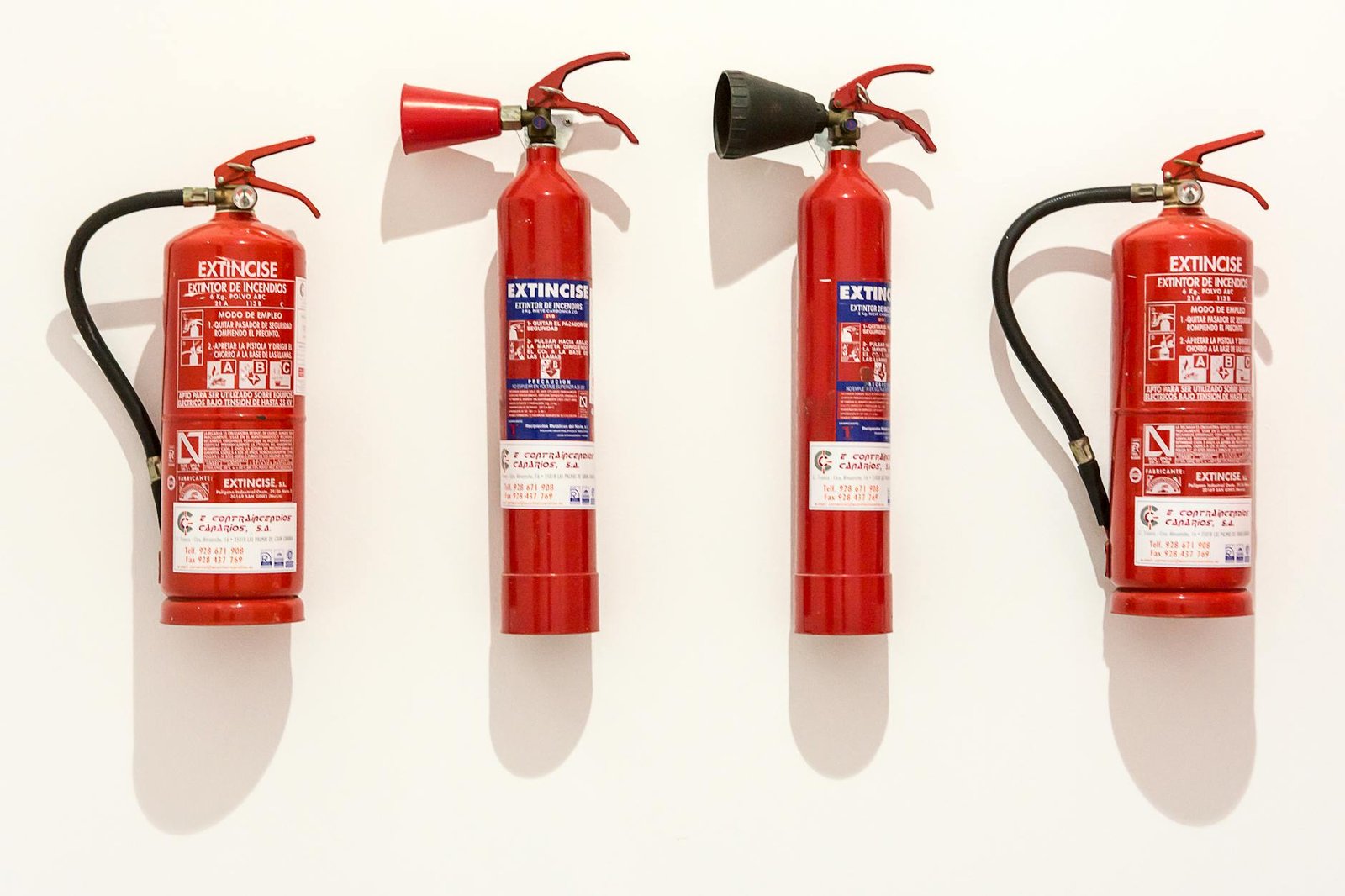
For a typical office setup, a mix of stored-pressure water-type extinguishers (for Class A) and CO2 extinguishers (for Class B and electrical fires) is standard. In industrial settings, the risk profile changes, requiring specialized ABC powder extinguishers or foam-based solutions. The cost of failing to implement the correct type is far higher than the investment in quality equipment. Generally, a high-quality 2kg portable extinguisher costs between ₹1,500 and ₹3,000, while industrial-grade 9kg units or specialized trolley-mounted extinguishers can range from ₹5,000 to ₹15,000 depending on the extinguishing agent and pressure rating.
The Operational Protocol: Mastering the PASS Method
Owning the right equipment is insufficient if the occupants of a building lack the training to use it effectively. At Safex, we emphasize that in the first three minutes of a fire, a properly used extinguisher is more effective than a fire department arriving ten minutes later. To ensure staff readiness, every employee should be trained on the PASS method.
The PASS method is a mnemonic that simplifies the operation of portable extinguishers:
1. Pull: Pull the pin located at the top of the extinguisher. This pin keeps the handle from being accidentally pressed and breaks the tamper seal.
2. Aim: Aim the nozzle or hose at the base of the fire, not the flames. Extinguishing the flames themselves is ineffective because the fuel source remains burning beneath.
3. Squeeze: Squeeze the handle slowly and evenly. This releases the extinguishing agent from the cylinder.
4. Sweep: Sweep the nozzle from side to side at the base of the fire until the flames appear to be extinguished. Continue to watch the area for re-ignition.
This protocol must be taught in conjunction with regular mock drills. According to NBC 2016, fire safety training should be conducted at least twice a year for all building occupants. In facilities with high-risk zones, such as server rooms or chemical storage areas, training should be more frequent. The psychological aspect of fire fighting is equally important; panic often leads to the misuse of equipment. A well-placed extinguisher that is easy to access, mounted at the correct height as per IS 15683, and clearly marked with signage significantly reduces the time taken to react to an emergency.
Strategic Installation and Maintenance of Fire Safety Equipment
The installation of fire extinguishers is not a random placement exercise. IS 2190 provides clear guidelines on the spacing and travel distance for extinguishers. For instance, in light hazard occupancies like offices, the travel distance to an extinguisher should not exceed 27 meters. In high-hazard industrial units, this distance is significantly reduced to ensure rapid response.
Maintenance is the most overlooked aspect of fire safety in India. Many facility managers purchase equipment and then leave it for years without inspection. This is a critical error. Under IS 15683 and IS 2190, extinguishers must undergo periodic checks. This includes verifying the pressure gauge is in the green zone, ensuring the nozzle is free of obstructions, and checking the weight of the cylinder to detect any loss of agent.
For a facility in a city like Bengaluru or Mumbai, environmental factors such as humidity and dust can corrode extinguisher bodies or clog mechanisms. Annual maintenance contracts (AMCs) with certified service providers are essential. During these inspections, hydro-testing of cylinders is conducted to ensure the integrity of the vessel under pressure. Ignoring these maintenance schedules is a direct path to equipment failure during a crisis. If an extinguisher fails to discharge because the powder has caked or the seal has corroded due to lack of care, the owner becomes legally liable for the resulting damage. Always maintain a logbook of these inspections; it is the first document an inspector will request during a fire safety audit.
Comparing Fire Extinguisher Types for Indian Industrial and Commercial Use
Selecting the right extinguisher requires a clear understanding of the fire load. The following table provides a breakdown of common types, their applications, and their suitability for different environments.
| Extinguisher Type | Best For Class | Key Characteristics | Typical Price Range (INR) |
| Water (Stored Pressure) | Class A | Excellent for wood, paper, textiles | ₹2,000 – ₹4,500 |
| ABC fire extinguisher | A, B, C | Versatile, effective on electrical fires | ₹1,500 – ₹5,000 |
| Carbon Dioxide (CO2) | Class B, Electrical | Leaves no residue, safe for electronics | ₹2,500 – ₹7,000 |
| Foam (AFFF) | Class A, B | Smothers flammable liquids effectively | ₹2,200 – ₹6,000 |
Note: Price ranges are estimates based on market rates for ISI-marked equipment. Prices vary based on capacity (kg/liters) and brand specifications.
When analyzing these options, consider the ‘cleanliness’ of the agent. In a server room or a high-tech facility, using a dry powder extinguisher can cause more damage to sensitive hardware than the fire itself. In such environments, CO2 or clean-agent extinguishers are the industry standard. Conversely, in a warehouse storing textiles, a water-based or foam extinguisher is often more cost-effective and efficient at preventing deep-seated fires from reigniting.
FAQ: Essential Queries for Fire Safety Decision-Makers
Q: What is the primary difference between IS 15683 and other international standards?
A: IS 15683 is specifically tailored to the Indian climate, humidity levels, and common construction materials. It mandates rigorous testing under Indian conditions to ensure that equipment remains functional despite the high heat and dust levels often found in Indian industrial environments.
Q: How often should I perform a professional maintenance check on my extinguishers?
A: Per IS 2190, you must conduct a visual inspection monthly and a professional maintenance check at least once a year. If the pressure gauge drops below the operating range or if the seal is broken, immediate servicing is required.
Q: Can I use a water extinguisher on an electrical fire?
A: Absolutely not. Water is a conductor of electricity and using it on a live electrical fire poses a severe risk of electrocution to the user. Always use CO2 or ABC powder for electrical fires.
Q: What is the PASS method and why is it mandatory for my staff?
A: The PASS method (Pull, Aim, Squeeze, Sweep) is the standard operating procedure for extinguishers. It is mandatory because, during a fire, the stress response often causes individuals to forget the correct sequence of operation. Muscle memory gained through training is the only safeguard against panic.
Q: Are there specific height requirements for mounting fire extinguishers?
A: Yes. According to IS 2190, for extinguishers weighing less than 13kg, the carrying handle should be no more than 1.5 meters from the floor. For heavier units, the handle should be no more than 1 meter from the floor to ensure ease of access.
Q: What are the financial risks of not complying with NBC 2016?
A: Non-compliance can lead to the cancellation of your Fire NOC, which effectively invalidates your building’s insurance policy. Furthermore, in the event of a fire, the absence of compliant equipment can lead to criminal charges of negligence against building owners and facility managers.
Resources
For further information on fire safety compliance and equipment standards in India, you may refer to the following resources:
– Bureau of Indian Standards (BIS) – Official website for IS code standards: https://www.bis.gov.in
– National Building Code of India – Fire and Life Safety guidelines: https://www.bis.gov.in
Conclusion
Fire safety is an ongoing responsibility that requires vigilance, investment, and a deep understanding of the risks inherent in your specific environment. From selecting the correct IS 15683-compliant extinguisher to ensuring that every staff member can execute the PASS method under pressure, your proactive measures define your building’s safety profile. Since Safex established 1972, we have remained committed to providing the expertise and equipment necessary to protect Indian businesses from the devastating impact of fire. Do not wait for an audit to realize your gaps; invest in quality, maintain your equipment, and prioritize training today. The cost of a fire extinguisher is a small price to pay for the safety of your assets and, more importantly, the lives of those within your facility. Ensure that your fire safety strategy is not just a document on a shelf, but a living, breathing part of your operational excellence.