Fire safety in India is an evolving landscape. As facility managers, architects, and safety officers navigate the complexities of modern building designs—from high-density IT parks in Bengaluru to sprawling warehouses in Gujarat—the selection of suppression technology has become a critical strategic decision. Among the various technologies available, water mist fire extinguishers have emerged as a sophisticated, environmentally friendly, and highly effective solution.
Safex established 1972, and throughout our five decades of operation, we have witnessed the shift from traditional chemical-based suppression to advanced, clean-agent, and water-mist technologies. Understanding why and where to deploy these units is essential for maintaining compliance with the National Building Code (NBC) and ensuring the safety of your personnel and assets.
The Science of Water Mist Technology and Compliance
Water mist fire extinguishers function differently from traditional fire extinguishers. While a standard water extinguisher uses a solid stream of water to cool a fire, a water mist unit utilizes a specialized nozzle to create a fine mist consisting of microscopic water droplets. This technology is highly efficient for several reasons. First, the surface area of the water is significantly increased, allowing for rapid evaporation and heat absorption. Second, the mist displaces oxygen in the immediate vicinity of the fire, effectively smothering it.
From a compliance perspective, the selection and installation of any portable fire extinguisher must adhere to IS 2190, which provides the code of practice for the selection, installation, and maintenance of portable fire extinguishers. Furthermore, the design and performance characteristics of these units must align with IS 15683, the Indian Standard for portable fire extinguishers.
In the Indian context, where water damage to sensitive electronic equipment or archival documents can be as costly as the fire itself, water mist technology offers a distinct advantage. Because the droplets are so fine, they cause minimal collateral damage compared to a high-pressure water jet. For facilities managers overseeing data centers or historical archives, this makes water mist an ideal primary suppression tool.
Integrating Water Mist Systems within NBC 2016 Guidelines
The National Building Code of India (NBC 2016) Part 4 serves as the bedrock for fire and life safety in Indian buildings. It emphasizes the necessity of having the “right tool for the right hazard.” While NBC 2016 mandates specific fire-fighting installations based on the occupancy classification and height of the building, it also encourages the adoption of technologies that minimize environmental impact and maximize suppression efficiency.
When planning your fire safety layout, consider the fire load of your facility. For instance, in an office environment with significant electrical equipment, the risk of Class C (electrical) fires is high. Water mist extinguishers are often rated for Class A and sometimes Class C fires, provided they are deionized or engineered to be non-conductive. It is vital to consult with a certified fire safety expert to ensure that the units you install are tested and certified for the specific hazard types present in your facility.
Failure to follow these guidelines can lead to severe consequences. Beyond the immediate risk of loss of life and property, non-compliance can lead to the revocation of a building’s No Objection Certificate (NOC) from the local fire department, leading to operational shutdowns and legal liability. In many Indian states, facility managers are held personally responsible for maintaining fire safety systems as per the local fire acts.
The PASS Method: Essential Training for Your Team
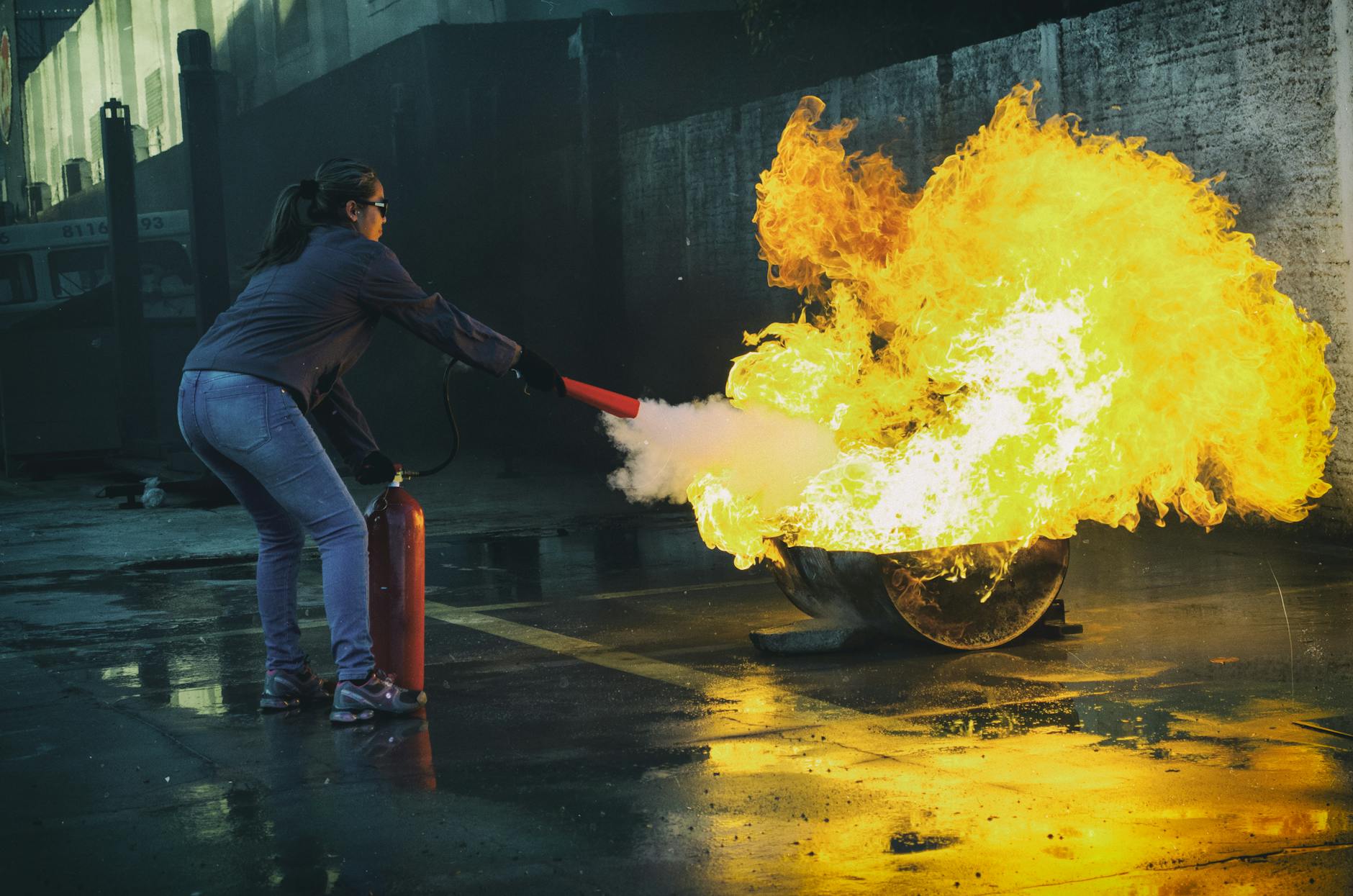
Owning the best equipment is only half the battle. Your staff must be proficient in using it. If a fire occurs, panic is the greatest enemy. We always teach the PASS method, a universal standard for operating portable fire extinguishers:
1. Pull: Pull the pin at the top of the extinguisher. This breaks the tamper seal and allows you to discharge the extinguisher.
2. Aim: Aim the nozzle or hose at the base of the fire. Do not aim at the flames themselves; you need to hit the fuel source.
3. Squeeze: Squeeze the handle to release the extinguishing agent.
4. Sweep: Sweep from side to side at the base of the fire until the fire appears to be out. Watch the area, and if the fire reignites, repeat the process.
For water mist extinguishers, the sweep should be controlled and steady. Because these units use a fine mist, they are highly effective when applied correctly to the base of the flame. Training your employees on this method is a requirement for meeting safety audit standards in most industrial and commercial complexes across India.
Investment and Maintenance: Cost Considerations
When budgeting for fire safety, it is important to distinguish between initial purchase costs and long-term maintenance. In the Indian market, water mist extinguishers are considered premium equipment compared to standard dry chemical powder (DCP) units.
– Small/Portable Units (Standard 6L – 9L): You can expect to pay between ₹5,000 and ₹12,000 for high-quality, ISI-marked water mist extinguishers.
– Industrial/Wheeled Units: For larger facilities requiring higher capacity, costs can range from ₹15,000 to ₹35,000 depending on the volume and specialized nozzle configurations.
While the initial investment is higher than a ₹2,000 – ₹5,000 DCP extinguisher, the long-term value is clear. Water mist units are often non-toxic, leave zero residue, and are environmentally friendly, which eliminates the need for expensive post-fire cleanup associated with chemical powders. Maintenance should be carried out annually by certified professionals in accordance with IS 15683 and IS 2190. Always ensure that your service provider is authorized and uses genuine spare parts, as using non-standard components can render the equipment useless in an emergency.
Comparative Overview: Fire Extinguisher Technologies
The following table compares water mist technology with other common fire suppression methods used in Indian facilities to help you make an informed procurement decision.
| Feature | Water Mist | Dry Chemical Powder (DCP) | CO2 Extinguisher |
| Primary Use | Class A (and some C) | Class A, B, C | Class B, C |
| Residue | None | High (powder mess) | None |
| Conductivity | Low (if deionized) | Non-conductive | Non-conductive |
| Environmental Impact | Neutral | High (cleanup required) | Low |
| Approx. Price (INR) | ₹5,000 – ₹12,000 | ₹1,500 – ₹5,000 | ₹2,500 – ₹7,000 |
Frequently Asked Questions (FAQ)
Q: Are water mist extinguishers safe for use on electrical fires?
A: Many modern water mist extinguishers are engineered to be used on electrical fires (Class C). However, you must verify that the specific unit is tested and marked for electrical safety as per IS 15683. Always check the label before use.
Q: How often should I have my water mist extinguishers serviced?
A: As per IS 2190, all portable fire extinguishers must undergo a periodic inspection and maintenance routine. For most commercial facilities, this is an annual requirement. However, if a unit is used or appears damaged, it must be inspected immediately.
Q: Does the NBC 2016 mandate the use of water mist technology?
A: The NBC 2016 provides guidelines for fire suppression but does not mandate a specific brand or technology type. It mandates performance standards. Water mist is an excellent choice for meeting these performance standards, particularly in sensitive environments.
Q: How do I perform the PASS method during an actual emergency?
A: The PASS method (Pull, Aim, Squeeze, Sweep) is a standard procedure. If you are not trained, do not attempt to fight a fire that is already spreading rapidly. Your first priority is to trigger the fire alarm and evacuate the building.
Q: What is the price range for a standard 9-liter water mist extinguisher in India?
A: In India, a high-quality, certified 9-liter water mist extinguisher typically ranges from ₹7,000 to ₹12,000, depending on the manufacturer, build quality, and certification level.
Q: Can water mist extinguishers be refilled after use?
A: Yes, they are designed to be rechargeable. However, this must be done by a certified service provider who can ensure the pressure levels and the chemical purity of the water are restored to original manufacturer specifications.
Resources for Further Learning
For facility managers and safety officers seeking to deepen their understanding of fire safety compliance in India, the following resources are recommended:
Conclusion
Fire safety is not merely a box to be checked for regulatory compliance; it is a fundamental pillar of operational continuity and human safety. The transition toward advanced suppression technologies like water mist reflects a broader commitment to excellence in facility management. By understanding the specifications required by IS 15683 and the strategic framework provided by NBC 2016, you can ensure that your facility is protected by the most effective tools available.
Safex established 1972, and our legacy is built on providing reliable, compliant, and cutting-edge fire safety solutions to the Indian market. We understand that every building is unique, and every safety plan requires a tailored approach. Whether you are upgrading an existing facility or designing a new one, the integration of high-quality water mist technology is a prudent investment in the longevity and safety of your operations. For further guidance on selecting the right equipment for your specific hazard profile, our team remains committed to assisting you with expert technical support and industry-leading standards.