In the complex landscape of industrial and commercial fire safety in India, clarity is not just a preference; it is a legal requirement. When a fire breaks out, human reaction time is measured in seconds. In such high-pressure environments, the ability to instantly distinguish the correct fire extinguisher based on its colour coding can mean the difference between a minor incident and a catastrophic loss of life and property. At Safex, which has been an industry leader since we were established in 1972, we have observed that improper selection of fire equipment remains one of the leading causes of failed fire suppression during emergencies.
This guide is designed to navigate the intricacies of fire extinguisher colour coding as per Indian Standards, ensuring that facility managers, architects, and safety officers are equipped with the technical knowledge required to maintain compliance with the National Building Code (NBC) 2016.
The Evolution of Fire Extinguisher Identification in India
Historically, fire extinguishers were identified by their entire body colour. However, global safety trends and Indian Standards have shifted towards a more nuanced approach. According to IS 15683:2018, which governs the performance and construction of portable fire extinguishers, the emphasis is placed on the label and the colour band rather than the entire cylinder body. This shift prevents confusion in multi-hazard environments, such as large-scale warehouses in Gujarat or high-rise IT parks in Bengaluru, where different classes of fire coexist.
The National Building Code (NBC) 2016, Part 4, mandates that fire suppression systemss be installed based on the fire load and the nature of the occupancy. For a facility manager, understanding the colour coding is the first step toward adhering to IS 2190—the code of practice for the selection, installation, and maintenance of portable fire extinguishers. If your facility is not colour-coded according to these standards, you are not only risking your insurance coverage but are also vulnerable to significant legal and financial liabilities under local fire department regulations.
Deciphering the Colour Codes: What Every Safety Officer Must Know
In India, we primarily follow a system where the extinguisher type is identified by a specific colour label or a band on the cylinder. This system allows personnel to identify the extinguishing agent without reading the fine print during an emergency.
1. Water (Red Label): These are intended for Class A fires (solid combustibles like wood, paper, and textiles). In an office environment, these are standard.
2. Foam (Cream/Buff Label): Primarily used for Class A and Class B fires (flammable liquids like petrol, diesel, or paints). These are essential in parking basements and generator rooms.
3. Dry Chemical Powder (Blue Label): The most versatile, used for Class A, B, and C fires (gaseous fires). These are the “workhorses” of the industry.
4. Carbon Dioxide (Black Label): Specifically used for electrical fires (Class E/Electrically energized equipment). Because CO2 is a clean agent that leaves no residue, it is the preferred choice for server rooms and data centers.
For a facility manager, purchasing the right unit is a matter of both safety and budget. A standard 2kg ABC fire extinguisher extinguisher typically costs between ₹1,500 and ₹3,000, while a larger 6kg industrial unit may range from ₹5,000 to ₹15,000 depending on the brand and certification level. Always ensure that the equipment you procure bears the ISI mark, confirming compliance with IS 15683.
The Critical Importance of Maintenance and Compliance
Buying an extinguisher with the correct colour label is only half the battle. IS 2190 mandates rigorous inspection schedules. A fire extinguisher is a pressurized vessel; if the pressure gauge is faulty or the powder has settled, the unit will fail when you need it most.
We often see facility managers in industrial zones neglect the hydrostatic pressure testing intervals. NBC 2016 is very clear: fire safety equipment must be maintained in a state of constant readiness. Failure to maintain these units results in heavy penalties during fire audits. In many Indian states, non-compliance can lead to the sealing of premises or the revocation of the “No Objection Certificate” (NOC) from the Fire Department.
When conducting your monthly walkthrough, ensure that the colour labels are not faded. If an extinguisher has been exposed to direct sunlight or harsh chemical fumes in an industrial plant, the label may become illegible. If the colour band is unidentifiable, the unit must be re-labeled or replaced immediately. Remember, the colour is your primary visual cue in a smoke-filled, high-stress situation.
Emergency Response: The PASS Method
Regardless of the colour or the agent inside the cylinder, the method of operation remains consistent for almost all portable extinguishers. Every member of your staff, from the security guard to the CEO, should be trained in the PASS method.
Always keep a safe distance from the fire. If the fire is larger than a wastepaper basket, evacuate the area and activate the building’s alarm system. Your safety is the priority; the extinguisher is only for incipient-stage fires.
Comparison of Fire Extinguisher Types
The following table provides a breakdown of common extinguishers found in Indian commercial and industrial spaces.
| Extinguisher Type | Colour Code | Primary Use | Typical Price Range (INR) |
| Water (Stored Pressure) | Red | Class A (Solid) | ₹2,000 – ₹4,500 |
| Foam (AFFF) | Cream | Class A & B (Liquids) | ₹3,000 – ₹6,000 |
| ABC Dry Powder | Blue | Class A, B, C (Multi) | ₹1,500 – ₹5,000 |
| Carbon Dioxide | Black | Class E (Electrical) | ₹4,000 – ₹12,000 |
Note: Prices are indicative and fluctuate based on capacity, brand, and ISI certification requirements.
Strategic Placement and Regulatory Requirements
The placement of these units is governed by the risk profile of the area. For instance, in a server room, placing a water fire extinguisher is a recipe for disaster. The high voltage equipment requires a CO2 extinguisher (black label). Conversely, a warehouse storing paper or cardboard should prioritize water or ABC powder extinguishers.
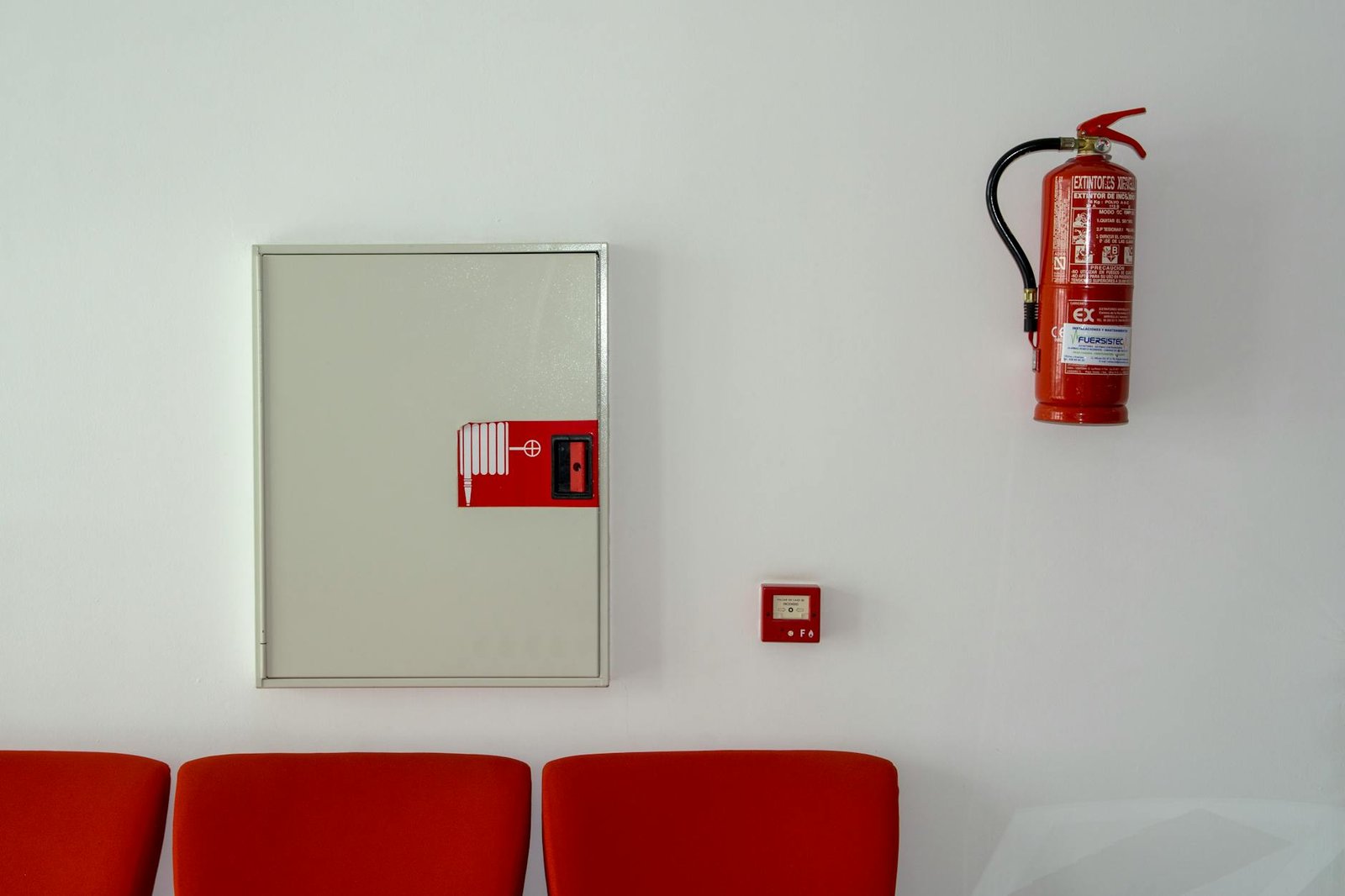
According to NBC 2016, fire extinguishers must be mounted at a height where the handle is no more than 1.5 meters from the floor for smaller units, and lower for heavier ones. They must be clearly visible and accessible. We have seen too many instances where extinguishers are hidden behind stacks of inventory, rendering them useless during an emergency. In a country like India, where humidity and dust levels can be high, protective covers or cabinets are recommended to ensure that the equipment remains clean and the instruction labels stay readable.
Furthermore, consider the “travel distance.” NBC guidelines suggest that the distance to reach an extinguisher should not exceed 15-20 meters in low-hazard areas, while high-hazard zones may require much closer placement. Every fire safety plan should be documented, and all staff should undergo biannual mock drills to ensure they are familiar with the location and operation of these units.
FAQ: Frequently Asked Questions
Q: Why is it important to use ISI-marked extinguishers?
A: ISI certification (IS 15683) ensures that the extinguisher has undergone rigorous testing for pressure, leakage, and extinguishing performance. Using non-ISI equipment in India can lead to legal liability and failure to pass mandatory fire safety audits.
Q: How often should I replace the powder in my ABC extinguisher?
A: While the cylinder itself can last for many years, the contents should be checked during the annual maintenance contract (AMC) service. Typically, dry powder is checked for caking and moisture content every year to ensure it remains free-flowing.
Q: Can I use a CO2 extinguisher on a paper fire?
A: While CO2 can extinguish a small paper fire, it is not recommended as the primary choice because it does not have a cooling effect. Once the CO2 dissipates, the paper may re-ignite. Water or ABC powder is superior for Class A fires.
Q: What is the significance of the PASS method?
A: The PASS method (Pull, Aim, Squeeze, Sweep) is the universal technique for operating portable fire extinguishers. It simplifies the process into four actionable steps, reducing panic and increasing the efficiency of fire suppression.
Q: Are there penalties for not having proper fire safety equipment?
A: Yes. Under the National Building Code and local municipal fire safety acts, failure to maintain adequate fire suppression systems can result in heavy fines, the sealing of business premises, and criminal liability in the event of a fire-related injury or death.
Q: How does the price of a fire extinguisher impact its quality?
A: Prices typically range from ₹1,500 to ₹15,000 depending on the type and size. Extremely cheap, non-ISI marked extinguishers often use inferior valves and low-grade extinguishing agents that may fail under pressure. Always prioritize quality over initial cost to ensure reliability.
Resources
For further guidance on fire safety regulations and best practices, please consult the following official resources:
Conclusion
Fire safety is a continuous process of vigilance, maintenance, and education. By understanding the colour coding of fire extinguishers, adhering to the standards set out in IS 15683 and the NBC 2016, and ensuring your staff is trained in the PASS method, you create a robust safety net for your facility. At Safex, we have been dedicated to these principles since Safex established 1972. Our mission has always been to provide the tools and expertise necessary to protect Indian businesses from the devastating impact of fire. Remember, safety is not an expense; it is an investment in the longevity of your operations and the protection of your most valuable asset—your people. Ensure your facility is compliant today, because when a fire starts, there is no time to learn the rules; you must already know them.