Understanding Fire Extinguisher Colours and Classification: A Guide for Indian Facility Managers
In the complex landscape of industrial and commercial fire safety, the colour-coding of fire extinguishers is not merely an aesthetic choice; it is a critical visual language designed for split-second decision-making. When a fire breaks out in a busy IT park in Bengaluru or a high-density warehouse in Gujarat, facility managers and staff do not have the luxury of time to read technical labels. They must identify the correct suppression agent immediately.
Safex established 1972, and over these five decades, we have observed that improper selection of fire extinguishers remains a leading cause of failed fire suppression in Indian facilities. Understanding what these colours signify is the first step toward achieving compliance with the National Building Code (NBC 2016) and ensuring the safety of your assets and personnel.
The Evolution of Standards: IS 15683 and Colour Coding in India
In India, the manufacturing and performance criteria for portable fire extinguishers are governed by the Bureau of Indian Standards (BIS). Specifically, IS 15683:2018 serves as the primary benchmark for portable fire extinguishers. This standard outlines the requirements for construction, performance, and testing, ensuring that every unit deployed in an Indian facility meets rigorous safety thresholds.
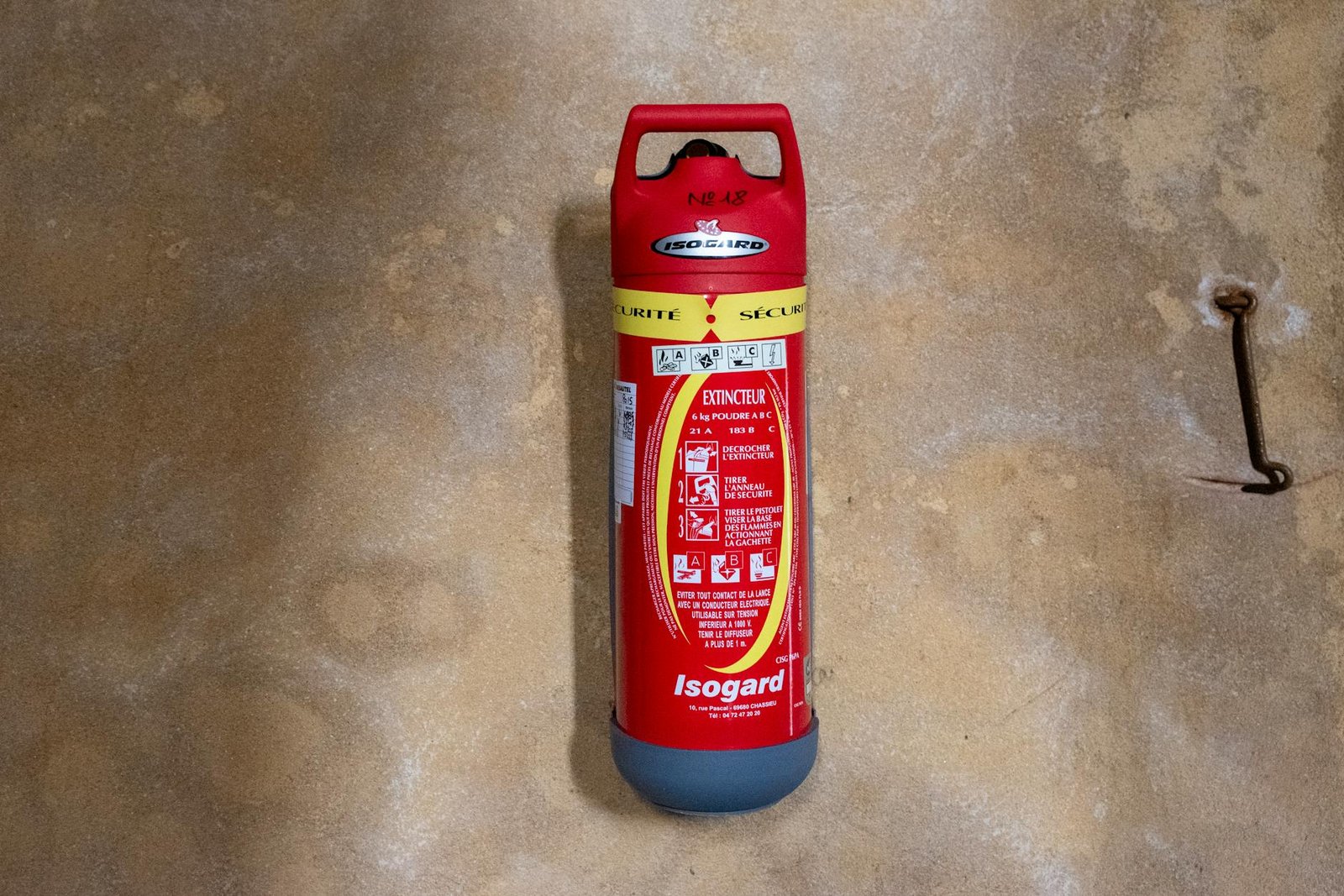
Historically, Indian fire extinguishers relied heavily on specific body colours to denote the extinguishing agent. However, modern global standards have shifted toward a more unified approach where the body of the extinguisher is typically “Signal Red.” To differentiate the contents, a distinct colour-coded band or label is applied to the upper portion of the cylinder.
For instance, a water fire extinguisher is identified by a red label, while a foam extinguisher is marked with a cream label. Dry chemical powder (DCP) extinguishers are identified by a blue label, and carbon dioxide (CO2) extinguishers are marked with a black label. Adhering to these markings is essential for compliance with IS 2190, which provides the code of practice for the selection, installation, and maintenance of portable fire extinguishers. Failure to maintain these standards can lead to severe legal liabilities and voided insurance policies in the event of a fire-related incident.
Decoding the Agent: Why Colour Matters in Emergency Response
The colour coding is intrinsically linked to the type of fire the extinguisher is designed to combat. Using the wrong agent can be catastrophic. For example, using a water-based extinguisher on an electrical fire can result in electrocution, while using a foam extinguisher on a grease fire can cause the fire to spread rapidly.
1. Water (Red Label): Ideal for Class A fires, which involve solid combustibles like wood, paper, and textiles. These are common in office environments and residential complexes.
2. Foam (Cream Label): Primarily used for Class B fires involving flammable liquids such as petrol, diesel, or paints.
3. Dry Chemical Powder (Blue Label): The most versatile option, often referred to as “ABC” powder, effective for Class A, B, and C fires (solids, liquids, and gases) and electrical fires.
4. Carbon Dioxide (Black Label): Specifically designed for electrical fires where leaving a residue would be damaging to sensitive equipment, such as server rooms or control panels.
When purchasing equipment, you will find that costs vary based on capacity and agent type. For a standard 2kg DCP extinguisher, you can expect to pay between ₹1,500 and ₹3,000. Larger industrial-grade 6kg or 9kg units typically range from ₹3,500 to ₹8,000, while specialized CO2 extinguishers for server rooms often fall in the ₹5,000 to ₹15,000 range depending on the cylinder capacity and valve quality.
Operational Protocol: The PASS Method
Regardless of the colour or the agent, every employee and facility staff member must be trained in the PASS method. This simple acronym ensures that when a fire is discovered, the extinguisher is used effectively:
Training sessions should be conducted at least bi-annually, as per the safety guidelines stipulated in the NBC 2016. A fire extinguisher is only as effective as the person operating it.
Compliance and Maintenance: The Role of NBC 2016
The National Building Code (NBC 2016) Part 4 emphasizes that fire safety is not a “set and forget” installation. It requires regular inspection and maintenance. IS 2190 mandates that extinguishers must be inspected monthly to ensure they are in their designated locations, the pressure gauges are within the green zone, and the colour-coded labels are clearly visible and legible.
In high-risk environments like chemical warehouses or manufacturing plants, the cost of non-compliance far outweighs the investment in professional fire safety audits. Penalties for failing to meet fire safety norms in India can include heavy fines, suspension of trade licenses, and in the worst-case scenario, criminal liability for facility owners if a fire leads to loss of life. By strictly adhering to IS 15683 and maintaining your equipment through certified professionals, you mitigate risk and ensure a safer operational environment.
Comparison Table: Extinguisher Characteristics
| Agent Type | Label Colour | Primary Use | Cost Range (Estimated) |
| Water | Red | Class A (Solids) | ₹1,500 – ₹3,000 |
| Foam | Cream | Class B (Liquids) | ₹2,000 – ₹4,000 |
| DCP (ABC) | Blue | Class A, B, C, Electrical | ₹1,800 – ₹5,000 |
| Carbon Dioxide | Black | Electrical Fires | ₹5,000 – ₹15,000 |
Frequently Asked Questions
Q: Why has the body colour of extinguishers changed in recent years?
A: Modern standards, including IS 15683, have moved toward a uniform “Signal Red” body colour to improve visibility and standardization, using specific colour-coded labels to identify the internal agent.
Q: How often should I replace my fire extinguishers?
A: While extinguishers have a service life, they must be hydrostatically tested and refilled as per the manufacturer’s guidelines and IS 2190 standards. Generally, a full replacement of the cylinder is required every 10-12 years, but pressure tests are more frequent.
Q: Can I use an ABC powder extinguisher on a server room fire?
A: While technically possible, it is not recommended. The powder can leave a corrosive residue that may permanently damage sensitive electronic components. CO2 (black label) is the preferred choice for electrical equipment.
Q: What is the most important step in the PASS method?
A: The most important step is “Aiming at the base of the fire.” Many people aim at the flames, which allows the extinguishing agent to pass through the fire without suppressing the actual fuel source.
Q: Are there specific price ranges for commercial-grade extinguishers?
A: Yes. A small 2kg unit typically costs between ₹1,500 and ₹3,000, while industrial-capacity units (6kg-9kg) can range from ₹5,000 to ₹15,000 depending on the agent type and technical specifications.
Q: Is compliance with NBC 2016 mandatory for all buildings?
A: NBC 2016 provides the national guidelines for fire and life safety. While state-specific fire acts may vary, compliance with the National Building Code is generally mandatory for commercial, industrial, and high-rise residential buildings to obtain an Occupancy Certificate and Fire NOC.
Resources
For further information on fire safety standards and compliance, please refer to the following official resources:
Conclusion
Fire safety is a pillar of operational continuity for any business in India. Whether you are managing a data center, a retail outlet, or a large-scale manufacturing unit, the correct identification and placement of fire extinguishers are non-negotiable. By understanding the colour-coding system, adhering to IS 15683, and ensuring your team is trained in the PASS method, you create a robust defense against potential fire hazards. Safex established 1972, and our commitment to providing expert guidance and high-quality safety equipment remains the cornerstone of our mission to keep Indian infrastructure fire-safe. Ensure your facility is compliant today to protect your people and your future.