Fire Extinguisher Selection, Maintenance, and Compliance: A Guide for Indian Facility Managers
Introduction
In the complex landscape of fire safety management across India, terminology often takes a backseat to technical compliance. While debates regarding the precise phonetic pronunciation of “fire extinguisher” may seem trivial, the operational reality of managing fire safety equipment is a serious endeavor. Whether you are overseeing a high-rise IT park in Bengaluru or a logistics warehouse in the industrial belts of Gujarat, the core responsibility remains the same: protecting lives and assets through strict adherence to the National Building Code (NBC) 2016. At Safex, we understand that effective fire safety is not just about having equipment on the wall; it is about ensuring that every piece of hardware meets the rigorous standards of the Bureau of Indian Standards (BIS). Safex established 1972, and for over five decades, we have been the benchmark for quality and reliability in the Indian fire safety industry, ensuring that our clients are never left vulnerable due to equipment failure or non-compliance.
The Critical Importance of IS 15683 Compliance
When procuring fire safety equipment, the most significant mistake a decision-maker can make is prioritizing cost over certification. In India, the governing standard for portable fire extinguishers is IS 15683. This standard dictates the performance requirements, design, and testing protocols for extinguishers to ensure they function correctly in a crisis.
Using non-ISI marked equipment is a violation of safety protocols and can lead to severe legal liabilities. Under the NBC 2016 Part 4 (Fire and Life Safety), facility managers are legally obligated to maintain fire suppression systemss that meet specific performance criteria. If an extinguisher fails during a fire incident because it was not built to IS 15683 standards, the facility manager or the building owner could face criminal negligence charges.
Beyond legalities, there is the issue of reliability. An extinguisher that looks identical to a compliant model but lacks the internal pressure-testing certification may fail to discharge when needed. For instance, in an industrial setting where chemical fires are a risk, using a substandard dry powder extinguisher could prove fatal. Always verify the ISI mark on the cylinder body and the pressure gauge. When budgeting for your facility, expect to pay between ₹1,500 and ₹3,000 for high-quality, ISI-marked 2kg-4kg portable extinguishers, while larger industrial-grade trolley-mounted units can range from ₹5,000 to ₹15,000 depending on the extinguishing agent and capacity.
Mastering the PASS Method for Emergency Response
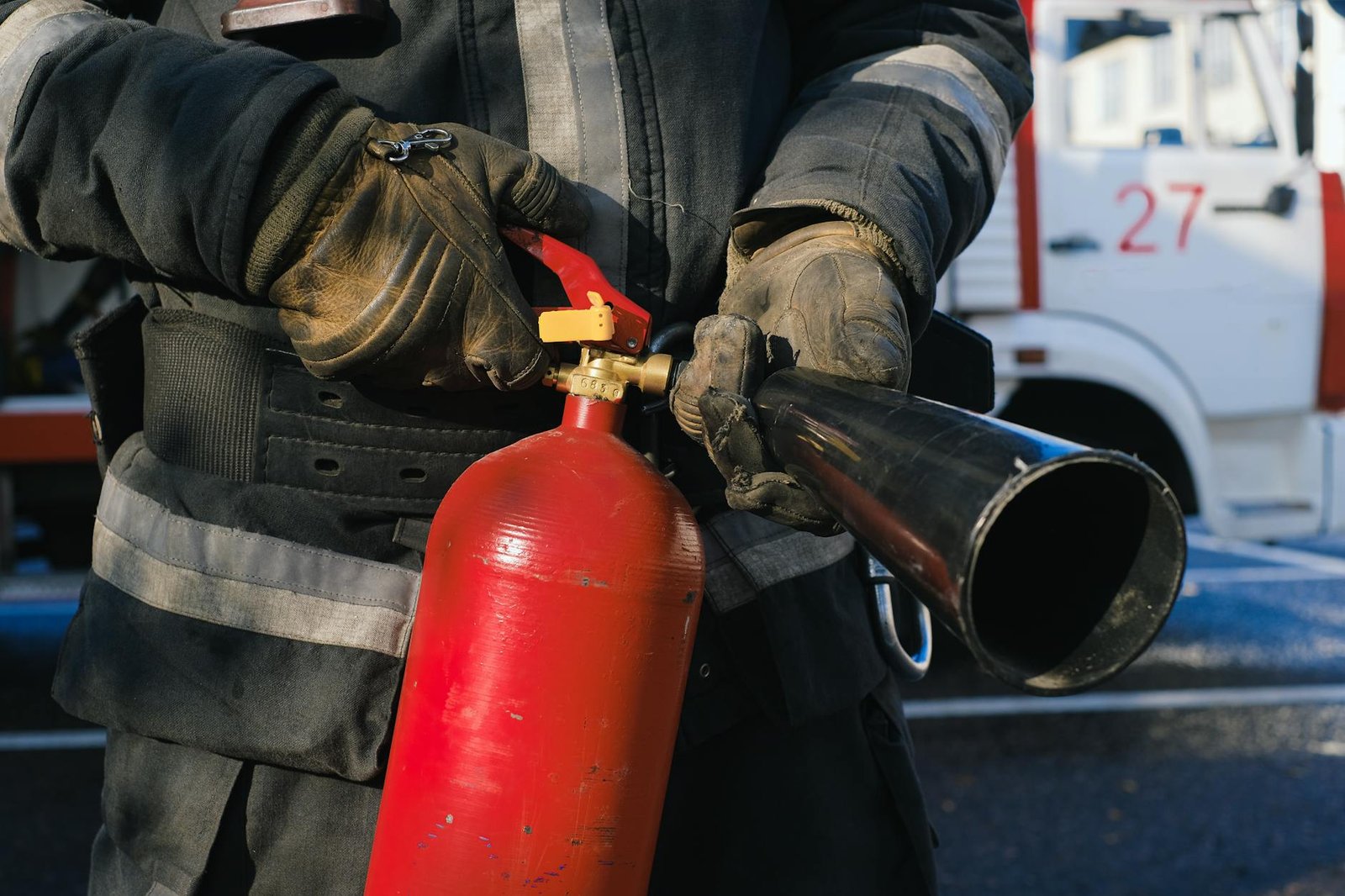
Having the equipment is only half the battle; the personnel on the ground must know how to deploy it effectively. The universal standard for using a portable fire extinguisher is the PASS method. This simple acronym is critical for training employees, security guards, and fire wardens in corporate and residential environments.
– Pull: Pull the pin at the top of the extinguisher. This pin releases the locking mechanism and allows you to discharge the extinguisher.
– Aim: Aim at the base of the fire, not the flames. The goal is to smother the fuel source, not just dissipate the smoke.
– Squeeze: Squeeze the handle slowly and evenly. This will release the pressurized agent.
– Sweep: Sweep the nozzle from side to side at the base of the fire until the fire appears to be out.
Training sessions should be conducted at least twice a year. In a high-density environment like an IT park or a shopping mall, the time between the detection of a fire and the deployment of an extinguisher is measured in seconds. If a staff member fumbles because they are unfamiliar with the PASS method, the fire can spread, leading to structural damage that far exceeds the cost of a proper training program.
Strategic Maintenance and IS 2190 Requirements
Maintenance is the backbone of fire safety. According to IS 2190, which provides the code of practice for the selection, installation, and maintenance of portable fire extinguishers, every unit must undergo periodic inspections. This is not a suggestion; it is a regulatory requirement.
Facility managers should maintain a fire safety register that logs the date of the last inspection, the pressure status of each unit, and the date of the next scheduled service. Environmental factors in India—such as high humidity in coastal cities like Mumbai or extreme heat in Rajasthan—can degrade the seals and powder inside an extinguisher faster than in other climates.
A professional maintenance service involves checking the weight of the agent, the condition of the hose, the integrity of the safety seal, and the functionality of the pressure gauge. If an extinguisher is found to be below the required pressure, it must be serviced or replaced immediately. Attempting to “save money” by skipping maintenance cycles is a false economy. The cost of a professional inspection is negligible compared to the potential loss of life and the catastrophic insurance implications of a fire safety system failure.
Understanding the Financials of Fire Protection
Investing in fire safety is an investment in business continuity. When planning your annual budget, do not view fire extinguishers as a one-time purchase. They are assets that require a lifecycle management approach.
For a standard commercial office space, you should be looking at a mix of CO2 and ABC powder extinguishers. A 2kg CO2 extinguisher typically costs around ₹2,000–₹3,500, whereas a 6kg ABC powder extinguisher is generally priced between ₹2,500 and ₹4,500. For large-scale industrial warehouses, high-capacity trolley-mounted units (50kg) may be necessary, which can range from ₹15,000 to ₹30,000.
Always factor in the cost of annual maintenance contracts (AMCs). An AMC ensures that a certified professional visits your site, verifies the integrity of your extinguishers, and provides the necessary documentation to satisfy local fire department audits. Failure to produce these documents during an inspection can lead to the immediate sealing of the premises by local authorities.
Comparison of Fire Suppression Approaches
| Equipment Type | Best Use Case | Compliance Standard |
| ABC fire extinguisher | General fires (Paper, Wood, Electrical) | IS 15683 |
| CO2 Extinguisher | Electrical fires, sensitive electronics | IS 15683 |
| Water-Based | Class A fires (Solid combustibles) | IS 15683 |
| Trolley Units | Large industrial/warehouse fires | IS 2190 / IS 15683 |
FAQ: Frequently Asked Questions
Q: How often must I service my fire extinguishers to remain compliant with IS 2190?
A: Portable fire extinguishers must be inspected monthly for pressure and physical condition, and they require a professional service check at least once every year to ensure they are fully operational.
Q: Is the PASS method suitable for all types of fires?
A: The PASS method (Pull, Aim, Squeeze, Sweep) is the industry-standard technique for operating portable extinguishers, regardless of the extinguishing agent inside.
Q: What is the average price range for a standard 4kg ABC fire extinguisher in India?
A: A high-quality, ISI-marked 4kg ABC fire extinguisher typically retails between ₹2,000 and ₹3,500 depending on the manufacturer and the quality of the gauge.
Q: Does the NBC 2016 mandate specific extinguisher placements?
A: Yes, NBC 2016 Part 4 specifies the distribution, travel distance, and mounting height of fire extinguishers based on the fire hazard classification of the occupancy.
Q: Why is IS 15683 certification critical for my business?
A: IS 15683 is the mandatory Indian Standard for portable fire extinguishers. Using non-certified equipment is a legal violation and poses a massive risk to life safety and insurance coverage.
Q: What should I do if my extinguisher gauge shows the needle in the red zone?
A: A needle in the red zone indicates the unit is under-pressurized or over-pressurized. It should be removed from service immediately and sent to a certified technician for recharging or replacement.
Resources
For further information regarding fire safety standards and professional requirements in India, please refer to the following official resources:
– Bureau of Indian Standards (BIS) – https://www.bis.gov.in
– National Building Code of India (NBC) – https://bis.gov.in/index.php/standards/electrotechnical-department/national-building-code/
Conclusion
Fire safety is an ongoing commitment to excellence, not a checkbox exercise. Whether you are dealing with the technicalities of fire extinguisher maintenance, ensuring your staff knows the PASS method, or verifying that your equipment meets the IS 15683 and NBC 2016 requirements, your diligence is what keeps your facility secure. At Safex, we have dedicated ourselves to this mission since our inception. Safex established 1972, and our legacy is built on the trust of clients who understand that when it comes to fire safety, there is no room for error. We remain committed to providing the technical expertise and high-quality equipment necessary to keep Indian industries safe, compliant, and prepared for any emergency.