Comprehensive Guide to Fire System Types: Ensuring Compliance and Safety in Indian Facilities
Fire safety is not merely a regulatory checkbox; it is the fundamental pillar of operational continuity for any enterprise in India. Whether you are managing an IT park in Bengaluru, a textile warehouse in Gujarat, or a high-rise commercial complex in Mumbai, the selection of appropriate fire protection systems is governed by stringent legal requirements and the practical necessity of protecting human lives and capital assets. Since Safex established 1972, we have observed that the most common failure in fire safety is the “one-size-fits-all” approach, which often leads to non-compliance with the National Building Code (NBC) 2016 and, more importantly, failure during actual emergency scenarios.
This guide explores the various fire system types, the standards that govern them, and the strategic considerations facility managers must prioritize to ensure a robust defense against fire hazards.
Understanding the Regulatory Landscape: NBC 2016 and IS Standards
In India, fire safety is strictly regulated. The National Building Code (NBC) 2016, specifically Part 4 (Fire and Life Safety), serves as the primary roadmap for architects, developers, and facility managers. It mandates specific fire suppression and detection requirements based on the building’s height, occupancy type (residential, commercial, industrial), and fire load.
When installing fire systems, compliance is non-negotiable. Using equipment that does not meet the relevant Indian Standards (IS) can lead to severe legal liabilities, including the revocation of a No Objection Certificate (NOC) from local fire departments. For instance, all portable fire extinguishers must adhere to IS 15683:2018. This standard dictates the performance, testing, and construction requirements for extinguishers, ensuring that when an occupant reaches for a device during an emergency, it functions reliably.
Furthermore, IS 2190 provides the essential code of practice for the selection, installation, and maintenance of these portable extinguishers. Facility managers should view these codes not as bureaucratic hurdles, but as the minimum baseline for safety. A proactive approach involves conducting periodic fire audits to ensure that the installed systems—whether they are hydrants, sprinklers, or gas-based fire suppression systems—remain in peak operational condition.
Active Fire Protection: Sprinklers and Hydrant Systems
Active fire protection systems are designed to detect and suppress fires automatically or through manual intervention. In large-scale industrial setups or high-rise buildings, these systems are the first line of defense.
fire sprinkler systems are perhaps the most effective tool for containing a fire before it spreads. They are activated by heat, which breaks the glass bulb of the individual sprinkler head, releasing water directly onto the fire source. According to NBC 2016, the design and installation of these systems must be meticulous, ensuring adequate water pressure and flow rates. In industrial zones where flammable liquids might be present, specialized foam-water sprinkler systems are often required to prevent the fire from spreading across the floor.
Hydrant systems, on the other hand, are designed for manual firefighting. A typical hydrant network includes a pressurized water supply, a fire pump house, and landing valves located at strategic points throughout the building. For a facility manager, maintaining these systems is a significant responsibility. Regular testing of the diesel and electric fire pumps is essential to ensure they kick in when the line pressure drops. Neglecting the maintenance of these systems can lead to catastrophic failure when the fire department arrives, as they rely on these internal connections to fight major infernos.
Portable Fire Extinguishers and the PASS Method
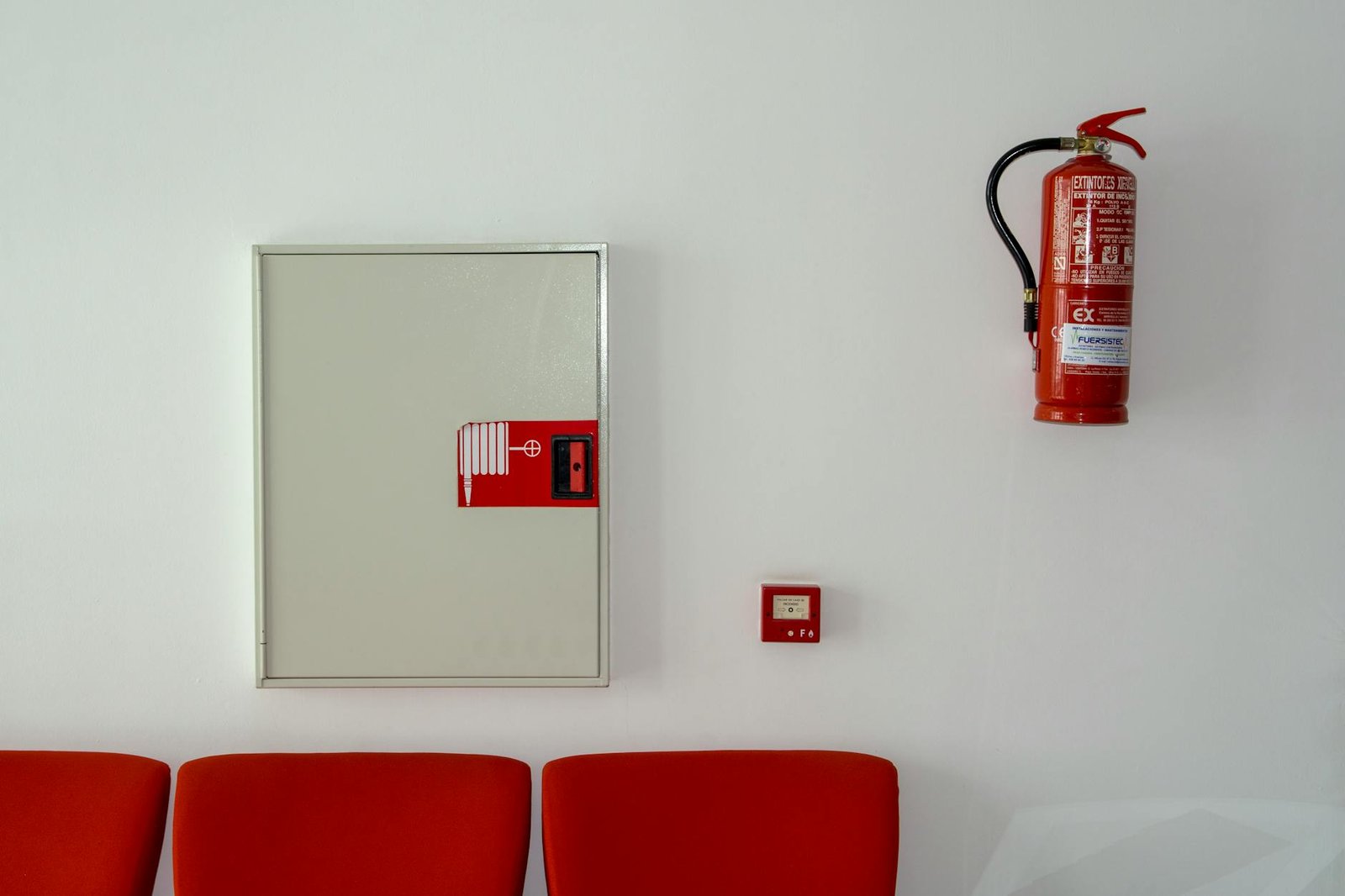
Portable fire extinguishers are the first responders to incipient fires. While they cannot handle a full-scale conflagration, they are invaluable for stopping a small fire from becoming a disaster. As per IS 15683, extinguishers must be serviced regularly and placed in highly visible, accessible locations.
In an emergency, knowing how to operate an extinguisher is as important as having the right type. We train staff on the PASS method:
– P (Pull): Pull the safety pin at the top of the extinguisher to break the tamper seal.
– A (Aim): Aim the nozzle or hose at the base of the fire, not the flames.
– S (Squeeze): Squeeze the handle to discharge the extinguishing agent.
– S (Sweep): Sweep the nozzle from side to side at the base of the fire until it appears to be out.
For procurement, businesses should budget appropriately. A high-quality 2kg Dry Chemical Powder (DCP) extinguisher typically ranges from ₹1,500 to ₹3,000, while larger 6kg to 9kg industrial units can cost between ₹3,500 and ₹6,000. Specialized CO2 or clean-agent extinguishers for server rooms and electrical panels may cost between ₹5,000 and ₹15,000 depending on the capacity and certification. Always verify the IS certification mark on the cylinder body before purchase.
Fire Detection and Alarm Systems
A fire system is only as good as its ability to detect a threat early. Modern fire detection systems utilize a combination of smoke detectors (optical or ionization), heat detectors, and multi-sensor detectors. In large commercial complexes, these are integrated into an Addressable Fire Alarm Control Panel (FACP).
The advantage of an addressable system is that it identifies the exact location of the detector that has been triggered, allowing security personnel to verify the threat immediately. This prevents unnecessary building evacuations while ensuring that real fires are addressed within seconds. NBC 2016 mandates specific requirements for alarm notification devices, such as hooters and strobe lights, to ensure that occupants in noisy environments are adequately alerted.
Integration is the key to modern fire safety. A well-designed system will automatically trigger the building’s fire pumps, release electromagnetic door locks, and interface with the HVAC system to shut off air supply to the affected zone, preventing the spread of smoke.
Comparison of Fire Protection Systems
| System Type | Primary Function | Typical Application | Maintenance Frequency |
| Portable Extinguishers | First-response suppression | Offices, small shops, vehicles | Quarterly/Half-yearly |
| Wet Riser/Hydrant | Manual firefighting | High-rise, warehouses, malls | Monthly pump testing |
| Automatic Sprinklers | Automatic suppression | Commercial, residential, industrial | Annual flow testing |
| Fire Alarm/Detection | Early warning/Alerting | All building types | Monthly/Quarterly |
FAQ: Common Concerns for Facility Managers
Q: What is the primary difference between IS 15683 and other international standards?
A: IS 15683 is specifically tailored to Indian environmental conditions, including humidity, temperature, and maintenance practices. It ensures that extinguishers are built to survive the Indian climate and are compatible with standard Indian firefighting hardware.
Q: How often should we conduct a fire audit?
A: NBC 2016 recommends annual fire safety audits. However, for high-risk industrial facilities, we suggest quarterly internal inspections to ensure that fire exits are clear and that extinguishers are within their pressure limits.
Q: What is the cost of setting up a basic fire system for a small office?
A: For a standard office space, you might spend between ₹15,000 and ₹40,000 for a combination of wall-mounted extinguishers, a basic manual alarm call point, and emergency exit signage, assuming no complex hydrant system is required.
Q: Can I use the same extinguisher for all types of fires?
A: No. Using water on an electrical fire is dangerous. Always look for the rating on the cylinder. Multi-purpose ABC dry powder extinguishers are common, but specialized areas like server rooms require clean-agent systems.
Q: What are the penalties for non-compliance with fire safety norms?
A: Failure to comply can lead to heavy fines, closure of business premises by local authorities, and, in the event of a fire, significant criminal liability for the building owner or facility manager.
Q: How does the PASS method help in an emergency?
A: The PASS method provides a simple, memorable framework that reduces panic. By following the Pull, Aim, Squeeze, and Sweep steps, users can maximize the effectiveness of the extinguishing agent and keep a safe distance from the fire.
Resources
For further reading on fire safety compliance and technical specifications in India, please refer to the following official resources:
– Bureau of Indian Standards (BIS) website for IS codes: https://www.bis.gov.in
– National Building Code of India (NBC 2016) details: https://www.bis.gov.in
Conclusion
Fire safety is an ongoing commitment to the protection of life and property. By integrating the right combination of detection, suppression, and manual firefighting equipment, facility managers can mitigate risks effectively. Remember that compliance with the NBC 2016 and adherence to IS standards like IS 15683 are not optional; they are the foundation of a safe working environment. Since Safex established 1972, our mission has been to provide the expertise and reliable equipment necessary to keep Indian businesses safe. Investing in quality fire protection today is the only way to ensure that your business remains resilient against the unpredictable nature of fire.